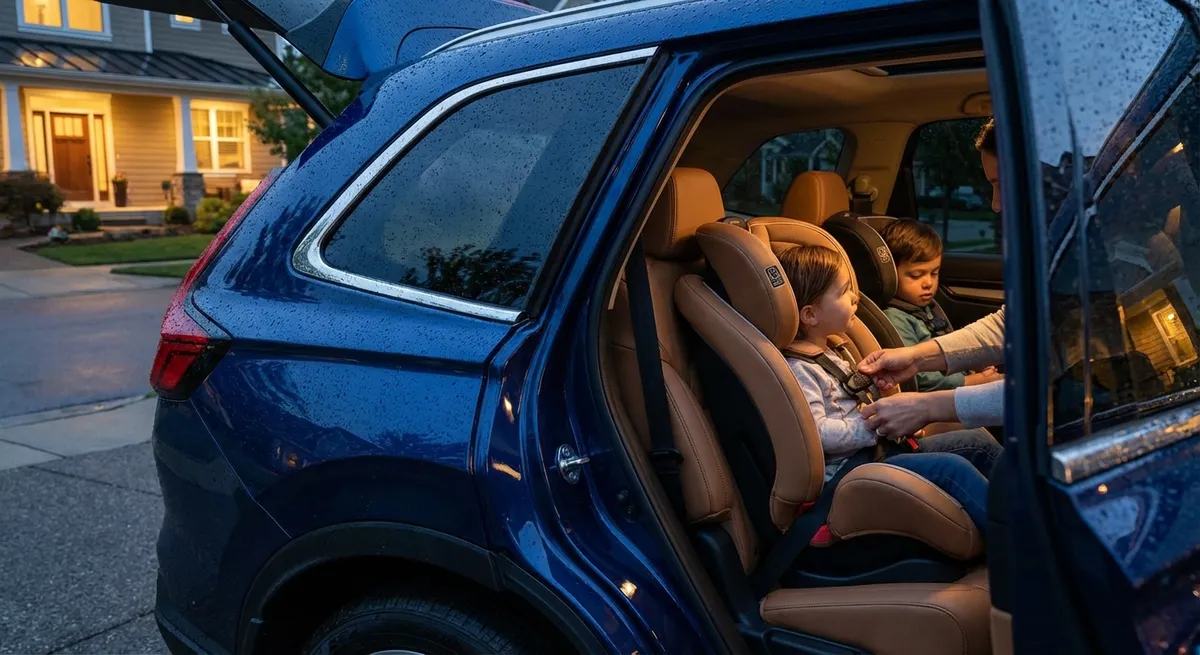
A genuinely premium family SUV experience is rarely about the badge alone. It is about how the vehicle makes everyday life feel more composed, more intuitive, and more comfortably under control—whether you are threading through school traffic or covering long motorway stretches with children asleep in the back. This guide looks beyond surface-level specifications to the subtle, often overlooked details that quietly separate a merely competent family SUV from one that feels like a considered, long‑term upgrade for your household.
Redefining “Space”: Cabin Architecture, Not Just Cargo Volume
Most brochures will highlight maximum cargo volume and three‑row capacity, but families quickly discover that space on paper and space in practice are not the same thing. The architecture of the cabin—how the seats slide, fold, and tilt; how the floor is shaped; how the roofline is contoured—determines whether your SUV feels airy and usable or cramped and awkward despite generous numbers.
Seek out models where the second row can slide fore and aft independently, rather than a single bench. This allows you to balance legroom between children and adults, or adjust space to accommodate rear‑facing child seats without forcing front passengers into an uncomfortable posture. Observe door openings and sill heights: a low, flat floor paired with wide rear doors dramatically eases the ballet of loading toddlers, school bags, and occasional grandparents.
Third‑row access is another real‑world differentiator. Look for one‑handed seat mechanisms that maintain a child seat in place on the second row while still allowing entry to the rear—some manufacturers now engineer specific latch‑and‑slide solutions for this scenario. Finally, consider ceiling design: panoramic roofs can enhance perceived space and reduce the sense of confinement for young passengers, provided they are well insulated to prevent excessive heat or glare in summer.
Comfort That Lasts: Ride, Seats, and the Subtlety of Suspension
True comfort reveals itself after two hours on a mixed‑surface drive, not during a short test loop. A refined family SUV should absorb broken tarmac, expansion joints, and speed bumps with composure—not softness for its own sake, but a controlled suppleness that maintains stability while sparing occupants from constant micro‑shocks.
Prioritize test drives on imperfect roads, ideally at both urban and highway speeds. Notice how the SUV responds to mid‑corner bumps, whether the body continues to bob after a dip, and whether smaller ripples in the road surface are transmitted through the seats and steering wheel. Adaptive suspension systems can help, but calibration matters far more than the mere presence of technology; some of the most composed family SUVs achieve their refinement through expertly tuned passive setups.
Seating design is equally pivotal. Look for multi‑way adjustability including thigh support, lumbar fine‑tuning, and a broad range of steering wheel reach and rake adjustments so that different drivers can achieve an unstrained position. In the second row, backrest recline and ample under‑thigh support can transform long journeys for older children and adults. Details such as breathable upholstery, seat contouring that supports rather than simply cushions, and well‑placed armrests all contribute quietly to how relaxed your family feels at the end of a demanding day of errands and activities.
Serenity as a Feature: Noise Management and Cabin Acoustics
Cabin noise is often the difference between arriving refreshed and arriving tense—with children, it can amplify quickly. A premium family SUV should treat sound management as deliberately as it does styling. Look for laminated (acoustic) front glass and, in higher‑end models, acoustic side glass, which significantly reduce wind and traffic noise. Pay attention to tire specifications as well; touring‑oriented compounds and taller sidewalls usually provide a calmer ride than aggressive, low‑profile setups.
During your test drive, turn the audio system off and listen carefully at typical family speeds: 30 mph in town, 50 mph on country roads, 70 mph on the motorway. You should be able to converse easily in the third row without raised voices. Note where noise originates—is it from the mirrors, the roof rails, the wheel wells? Excessive wind flutter around the mirrors can become particularly fatiguing over time.
Also consider how the vehicle handles its own mechanical soundtrack. Hybrid and electric SUVs often deliver a more serene baseline, but even combustion‑engine models can be impressively hushed when well insulated and properly isolated from vibration. Some premium systems employ active noise cancellation to counter specific frequencies; others rely on exemplary sealing and underbody insulation. A quieter cabin not only feels more luxurious, it makes voice commands, hands‑free calls, and rear‑seat entertainment usefully clearer.
Technology That Serves, Not Distracts: Interfaces for Real Family Life
Modern family SUVs are saturated with screens and menus, but luxury in a family context is about technology that feels almost invisible—effortless to use, forgiving of distraction, and resilient to sticky fingers and occasional chaos. When evaluating infotainment and driver aids, the aim is not maximum feature count, but polished execution and thoughtful hierarchy.
Examine the interface’s learning curve: can you adjust climate, seat heating, and audio volume with simple physical controls, or are you forced through several touch menus? Physical knobs and buttons for high‑frequency tasks remain a hallmark of user‑centric design. Check how quickly the system responds after startup, whether smartphone integration (Apple CarPlay, Android Auto) connects reliably and wirelessly, and if voice commands understand natural speech without repeated prompts.
Driver assistance systems deserve equal scrutiny. Adaptive cruise control, lane‑keeping assistance, and blind‑spot monitoring can meaningfully reduce fatigue when tuned with subtlety; poorly calibrated systems that brake abruptly or overcorrect steering can be more stressful than helpful. During a test drive, engage these systems on a familiar route and ask yourself whether they feel like a steady, discreet co‑pilot or a nervous passenger constantly grabbing for the wheel. Over years of family use, this distinction becomes profound.
The Long View: Efficiency, Resale Poise, and Ownership Experience
For many families, a new SUV is not just a purchase but a multi‑year partnership. Looking beyond the initial showroom impression towards long‑term refinement can protect both your comfort and your budget. Fuel efficiency—or energy efficiency, in the case of hybrids and EVs—should be considered not solely through official figures, but in the context of your real driving pattern. Urban‑heavy usage often favors full hybrids or plug‑in hybrids with sufficient electric range; frequent long motorway drives may suit efficient diesels or well‑tuned turbo‑petrol engines.
Complement efficiency with an assessment of ownership infrastructure. For electric or plug‑in models, investigate home charging options, local public charging reliability, and how the brand supports battery health over time. For all powertrains, examine warranty terms, complimentary maintenance provisions, and the proximity and reputation of service centers. A brand that offers transparent digital service histories, proactive software updates, and responsive customer support will often preserve both your time and the vehicle’s perceived quality in the eyes of future buyers.
Resale poise—the likelihood that your SUV will remain desirable in five to seven years—rests on a blend of brand reputation, safety record, reliability, and how current its technology is likely to remain. Families increasingly value advanced safety suites, good crash‑test ratings, and robust driver‑assist features, all of which can support residual values. By quietly prioritizing these elements now, you position your SUV not only as a daily sanctuary, but also as a considered financial decision over the life of your ownership.
Conclusion
Selecting a family SUV that truly feels like a step up is less about chasing the most dramatic headline features and more about tuning into the understated qualities that reveal themselves over time: intelligent space, enduring comfort, acoustic calm, genuinely supportive technology, and reassuring long‑term stewardship. When you evaluate a candidate SUV through this lens, you elevate the process from merely buying transport to curating a moving space that complements the rhythm and standards of your family’s life. The right choice will not shout for attention; it will simply make every journey feel more controlled, more composed, and quietly more rewarding.
Sources
- U.S. National Highway Traffic Safety Administration (NHTSA) – 5-Star Safety Ratings - Official crash-test ratings and safety information to help evaluate the protection level of family SUVs
- Insurance Institute for Highway Safety (IIHS) – Ratings & Research - Independent crashworthiness, crash avoidance, and headlight evaluations for modern vehicles
- U.S. Department of Energy – Fuel Economy Guide - Detailed efficiency data for gasoline, hybrid, plug-in hybrid, and electric SUVs
- Edmunds – Car Finance and Ownership Cost Guides - Insights into long-term ownership costs, resale considerations, and leasing vs. buying decisions
- Consumer Reports – Car Reliability & Owner Satisfaction - Data-driven assessments of reliability, comfort, noise, and usability from extensive owner surveys and testing
Key Takeaway
The most important thing to remember from this article is that this information can change how you think about Buying Guide.