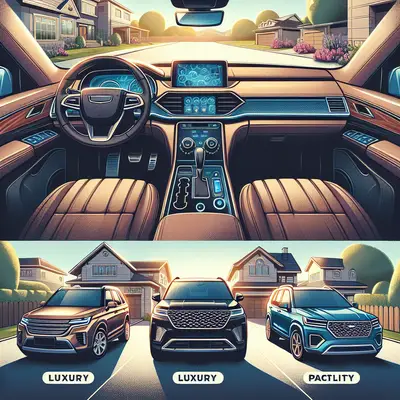
Modern family SUVs are no longer just about fitting car seats and strollers; they’re about orchestrating a seamless daily rhythm. From the school run to the long‑weekend escape, the most thoughtfully designed vehicles don’t shout for attention—they refine the background of family life. When you look past the headline specs and marketing buzzwords, a small group of understated features has an outsized impact on how your family actually lives with an SUV.
These details rarely appear on a billboard, yet they determine whether your SUV feels like a calm, organized extension of your home—or a rolling source of friction. Below, we explore five often‑overlooked, highly curated insights that families shopping for a premium-feeling SUV will quietly appreciate long after the first test drive.
The “Real Life” Third Row: Comfortable, Not Just Counted
Many spec sheets proudly list “three-row seating,” but the true test is whether that third row can comfortably host real people for real journeys. A refined family SUV doesn’t treat the third row as an afterthought; it considers legroom, hip room, and headroom together, as well as how long a teenager—or an adult relative—can sit there without fidgeting. Look for seat cushions with proper thigh support, backrests that recline, and side windows that don’t feel like portholes. These elements create a space that feels like a proper seat, not a punishment.
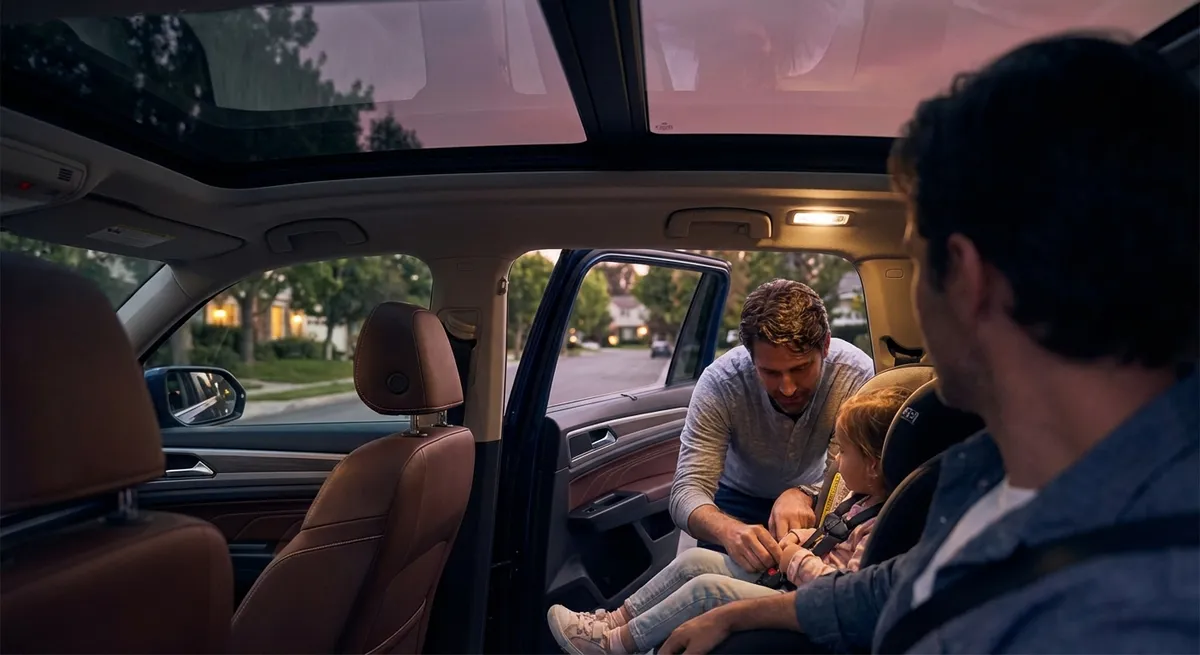
Access is just as important as comfort. Wide door openings, low step-in height, and simple one-touch mechanisms for sliding second-row seats make everyday use dramatically easier, particularly when you’re juggling a child on one hip and a bag in the other hand. Family-focused SUVs often hide thoughtful touches here: handles positioned where children can reach them, clearly marked latches for folding seats, and pathways wide enough to allow third-row access without removing a car seat from the second row. When evaluating a third row, think beyond “Is there one?” to “Would we willingly choose to sit here for two hours?” That shift in perspective quickly separates the merely spacious from the truly family-ready.
The Quiet Cabin: Sound Management as a Family Sanity Feature
A serene cabin is more than a luxury flourish—it’s a family survival tool. The difference between a well-insulated SUV and a noisy one becomes very clear on a rainy highway with a sleeping toddler in the back. Premium family SUVs use acoustic glass, targeted sound deadening, and carefully tuned aerodynamics to soften wind, road, and engine noise. The result is a calmer atmosphere, where conversations between front and second row don’t require raised voices and in-car audio (or children’s shows) can be played at lower, less fatiguing volumes.
Listen for the subtleties during a test drive. Pay attention to how the cabin sounds on coarse pavement, over expansion joints, and at highway speeds. Do you hear a low, consistent hum—or a mix of rattles, whistles, and tire roar? Also note how the climate system and seat motors sound when in use; on more thoughtfully engineered SUVs, even these background noises are muted and refined. For families, this quiet sophistication translates into children who are more likely to nap, conversations that are less strained, and long trips that feel far less exhausting. Noise control is not just an indulgence; it’s a hidden cornerstone of family comfort.
Storage That Anticipates Real Life, Not Just Luggage
Cargo capacity numbers can be misleadingly simple. A true family SUV is defined not only by “maximum cubic feet,” but by how intelligently every liter is used. Look for dual-level cargo floors that conceal messy items yet keep them easily accessible, side pockets that securely hold a soccer ball or a folded stroller, and hooks strong enough to keep grocery bags upright through a sharp turn. These details prevent your trunk from transforming into a rolling avalanche of loose items.
Inside the cabin, pay attention to where storage appears—and where it doesn’t. Are there deep door bins that can hold water bottles upright? Is there a designated place to drop phones, sunglasses, and house keys when you first settle into the driver’s seat? The most polished family SUVs include covered center-console compartments to hide clutter, slot-style trays to keep charging cables from tangling, and second-row storage that recognizes older children’s desire to keep devices and snacks within reach. The difference between a merely large SUV and a well-designed one is how often you feel the need to “reset” the cabin; the more the vehicle anticipates your daily objects, the more effortlessly tidy family life becomes on the road.
Lighting and Visibility: The Understated Safety Luxury
Thoughtful lighting design is one of the silent luxuries of a family SUV. Externally, high-quality LED headlights and well-tuned automatic high beams enhance visibility without dazzling oncoming drivers, which is especially valuable for early-morning commutes and late-night returns. But it’s the combination of exterior lighting with interior ambient lighting that subtly shapes how relaxed your family feels. Soft cabin illumination that doesn’t glare on side windows, footwell lighting that helps children find dropped items, and gentle overhead lights that won’t wake a sleeping infant all contribute to a composed, evening-ready environment.
Visibility from the driver’s seat is equally crucial. Slim roof pillars, large side mirrors with blind-spot indicators, and generously sized rear windows dramatically reduce stress in busy parking lots and tight school pick-up lines. Panoramic cameras and well-calibrated parking sensors further lower the mental load when maneuvering around bikes, scooters, or wandering toddlers. When evaluating an SUV, sit in each seating position and assess what can be seen—and what disappears behind pillars and headrests. A refined family vehicle doesn’t just protect you with technology; it is designed from the outset to make every vantage point feel clear and reassuring.
Cabin Technology That Organizes, Not Overwhelms
In an era of sprawling touchscreens and endless menus, the true measure of family-focused technology is how quietly it disappears into the background of everyday life. A well-executed infotainment system should be intuitive enough that you don’t need to explain it to a babysitter or grandparent. Essential functions—climate, audio volume, defrost—should be quickly accessible, ideally with a blend of physical controls and clear on-screen shortcuts. When you’re managing conversations, directions, and questions from the third row, an extra tap or two becomes more than a minor annoyance.
For families, multiple device charging options are no longer a luxury—they are a necessity. Look for well-placed USB-C ports in all rows, a wireless charging pad that securely holds a phone through quick corners, and rear-seat climate controls that older children can manage independently. Rear-seat entertainment, when offered, should support modern streaming habits rather than rely on outdated media formats. Equally important is how seamlessly the SUV integrates with your digital life: quick, stable smartphone mirroring, responsive voice commands, and user profiles that remember seat, mirror, and climate preferences for different drivers. When technology is thoughtfully curated, your SUV feels less like another device to manage and more like a quiet coordinator of your family’s movements.
Conclusion
The most satisfying family SUVs rarely rely on a single headline feature. Instead, they combine dozens of understated decisions—about sound, storage, seating, lighting, and technology—into an experience that feels composed, intuitive, and quietly premium. As you shop, it’s tempting to focus on the obvious metrics: horsepower, towing capacity, screen size. Yet the details that will shape your day-to-day contentment are more nuanced and more personal.
Take the time to sit, touch, listen, and move through each candidate SUV the way your family truly would: with backpacks, with devices, with car seats, and with the small chaos of real life. When you do, you’ll begin to recognize which vehicles have been engineered for families not just in name, but in every quiet, thoughtful detail. Those are the SUVs that will continue to feel like the right choice long after the keys are in your hand.
Key Takeaway
The most important thing to remember from this article is that this information can change how you think about Family Features.