Family SUV shopping today isn’t about sheer size or flashy tech; it’s about quiet excellence. The modern family wants an SUV that feels composed in chaos, considered in its details, and genuinely supportive of everyday life—school runs, late-night airport pickups, and everything in between. This guide steps beyond marketing gloss to explore five refined, often-overlooked insights that can dramatically elevate your ownership experience.
Insight 1: Cabin Architecture Matters More Than Cabin Size
Many spec sheets shout about cubic feet and headroom. What truly shapes daily comfort, however, is how that space is designed and layered.
Pay attention to sightlines: A gently rising beltline and carefully positioned pillars can give children a clear view out of the windows, reducing motion sickness and back-seat restlessness. Look at seat height relative to the door opening; the best family SUVs allow children and grandparents to slide in without climbing or dropping down. Subtle sculpting of the front seatbacks can also free up crucial knee room for the second row without making the cabin feel cavernous or bus-like.
Evaluate how the dashboard and center console taper toward the rear: A console that’s too wide can make the cabin feel pinched and limit leg movement for the front passenger, especially when installing a rear-facing child seat behind them. In contrast, an elegantly slim console with intelligent storage can create a sense of openness while still providing space for phones, snacks, and bags.
When test driving, have all family members sit in their “real” positions—car seats, booster seats, teens with backpacks, adults with laptops. You’re not just buying dimensions; you’re choosing a daily environment that either soothes or stresses every journey.
Insight 2: The Nuances of Ride Quality and Quietness
Families often scan for horsepower and fuel economy, but the truly premium experience reveals itself in the way an SUV moves and sounds.
Ride quality is about more than “soft” vs. “firm.” A well-engineered suspension will filter out harsh impacts from potholes while still controlling body roll in corners and during lane changes. Overly plush setups can induce motion sickness for rear passengers; overly firm ones can turn every expansion joint into an irritation. During your test drive, intentionally drive over imperfect roads, speed bumps, and uneven surfaces at various speeds—and ask rear-seat passengers for their impressions.
Cabin quietness is equally critical. Notice the type of noise you hear: Is it wind whisper around the mirrors, tire hum from coarse asphalt, or engine drone during acceleration? High-quality SUVs often use laminated side glass, strategic insulation, and acoustic windshields to dull harsher frequencies. This creates a calmer environment for sleeping toddlers and clearer voice pickup for phone calls and in-car voice assistants.
Also observe how the cabin sounds with the climate control running and the audio system off. A premium family experience should feel serene, not merely quiet—less like a vehicle, more like a well-appointed room that happens to move.
Insight 3: Tech That Serves the Family, Not the Other Way Around
Modern SUVs can be overflowing with screens and software. The most family-friendly designs use technology with restraint and intention, allowing you to stay connected without feeling overwhelmed.
Start with the basics: How quickly does the infotainment system wake up when you start the vehicle? A sluggish interface adds friction to every drive. Test voice recognition with real-life commands—asking for a specific podcast, changing climate settings, or routing to your child’s school. Voice systems that accurately understand natural speech reduce distractions, especially during busy urban driving.
Look for subtle but impactful integrations: multiple USB-C ports in all rows, wireless charging pads that secure phones even during sharp turns, and thoughtfully placed rear-seat vents with independent controls for passengers. Consider whether the rear entertainment, if available, is well-integrated or simply an afterthought—ideally, children should be able to operate it without parental intervention each time.
Equally important is how the vehicle’s advanced driver assistance systems (ADAS) behave in everyday use. Adaptive cruise control, lane-centring assistance, and traffic jam assist can be transformative on long drives, but only if they feel confident and natural rather than intrusive. During your test drive, engage these systems on both highways and city streets to ensure their interventions feel polished, predictable, and easy to override when necessary.
Insight 4: Thoughtful Versatility in Seating and Cargo, Not Just “Three Rows”
Nearly every family SUV highlights its three-row seating and generous cargo space, but families quickly discover that how that space transitions matters far more than the raw numbers.
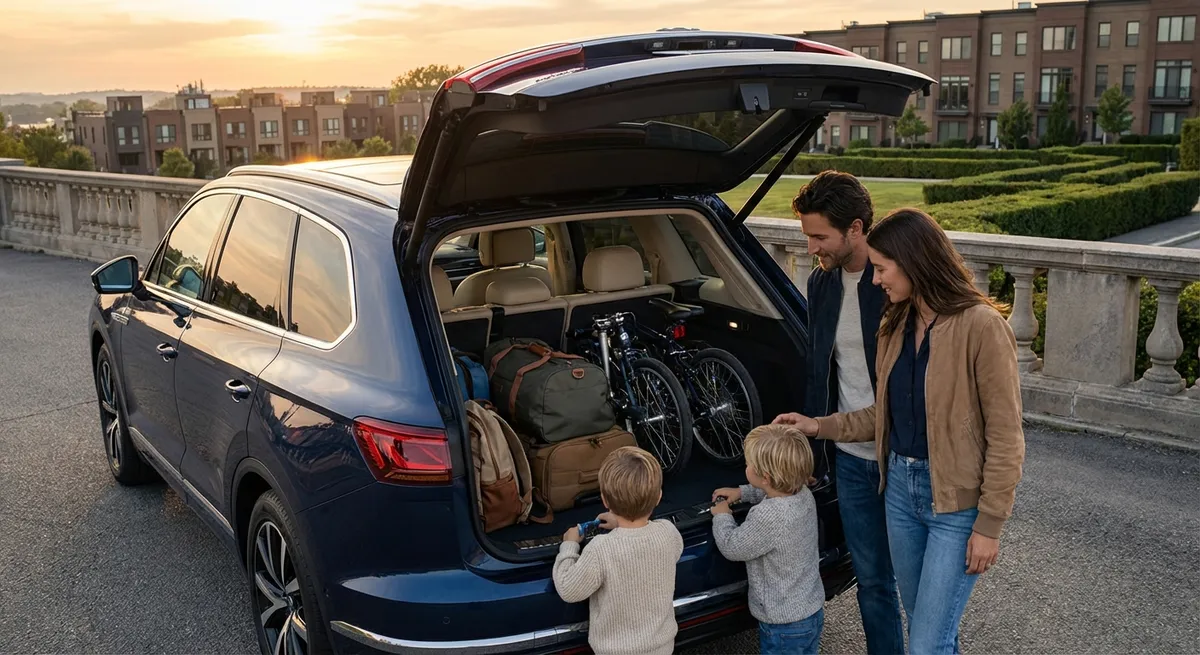
Inspect the third-row access with a realistic lens: Can a child enter independently when a high-back booster is installed in the second row? SUVs with “tip-and-slide” mechanisms that still function with a child seat attached can dramatically simplify daily logistics. Evaluate how flat the third row folds—and whether it creates a truly usable load floor for luggage, strollers, or large grocery runs.
Second-row flexibility is where many vehicles distinguish themselves. Sliding seat tracks with a generous range can trade legroom between rows depending on who’s riding where. Some SUVs offer captain’s chairs for easier access; others provide a bench with an adjustable recline that can be more practical for car seats and additional passengers. The right choice depends on your family’s routines: Do you more often carry multiple children, or a mix of children and adults?
Pay particular attention to small but luxurious touches: hooks strong enough to hold fully loaded school bags without creasing the leather, hidden compartments for valuables during road trips, or under-floor storage that can discreetly stow charging cables and emergency items. These details don’t dominate a brochure, but they quietly shape how refined your day-to-day experience feels.
Insight 5: Long-Term Livability and Ownership Grace
Beyond first impressions, the true sophistication of a family SUV emerges over years, not weeks. Families who think one step ahead tend to be happiest with their purchase.
Begin with safety and reliability data from independent organizations, but read beyond the star ratings. Note the availability of advanced safety features as standard rather than as costly add-ons: automatic emergency braking, pedestrian detection, blind-spot monitoring, rear cross-traffic alerts, and robust crash test performance all contribute to peace of mind. Consider how easily over-the-air software updates are delivered—this can keep your SUV’s tech relevant longer and potentially improve safety features over time.
Investigate the real-world cost of ownership: fuel or electricity use, insurance rates, tire sizes, and routine maintenance intervals. For plug-in hybrid or fully electric SUVs, research home charging installation, local incentives, and public infrastructure in your area. A well-matched powertrain can subtly transform your family’s rhythm, from fewer fuel stops to quieter daily commutes.
Interior durability is another hallmark of gracious long-term living. Look closely at stitching, door seals, and the feel of switches and knobs; these are the touchpoints you’ll interact with thousands of times. High-quality materials that resist scuffs, stains, and fading will preserve the cabin’s sense of occasion years into ownership. Ideally, your family SUV should age gracefully—acquiring memories, not squeaks and rattles.
Ultimately, think of your purchase as curating a mobile extension of your home. The right SUV will not only carry your family, but also quietly support its rituals, ambitions, and adventures.
Conclusion
An exceptional family SUV doesn’t shout for attention; it reveals its strengths in the way doors close with a muted thud, how children climb in without complaint, and how calm the cabin feels on a hectic weekday evening. By looking past spec-sheet superlatives and focusing instead on architecture, ride refinement, meaningful technology, intelligent versatility, and long-term livability, you position your family to enjoy a driving experience that feels composed, reassuring, and quietly luxurious—day after demanding day.
Sources
- [IIHS – Vehicle ratings](https://www.iihs.org/ratings) - Independent crash test results and safety feature evaluations for SUVs and other vehicles
- [NHTSA – 5-Star Safety Ratings](https://www.nhtsa.gov/ratings) - U.S. government safety ratings, recalls, and vehicle safety information
- [Consumer Reports – Guide to Car Safety Features](https://www.consumerreports.org/cars-guide-to-car-safety-features/) - Detailed explanations and comparative evaluations of modern driver-assistance systems
- [EPA – Fuel Economy Guide](https://www.fueleconomy.gov/feg/findacar.shtml) - Official fuel economy and energy consumption data for gasoline, hybrid, and electric SUVs
- [Edmunds – Car Buying Tips & Advice](https://www.edmunds.com/car-buying/) - Practical guidance on test drives, ownership costs, and evaluating vehicle features
Key Takeaway
The most important thing to remember from this article is that this information can change how you think about Buying Guide.