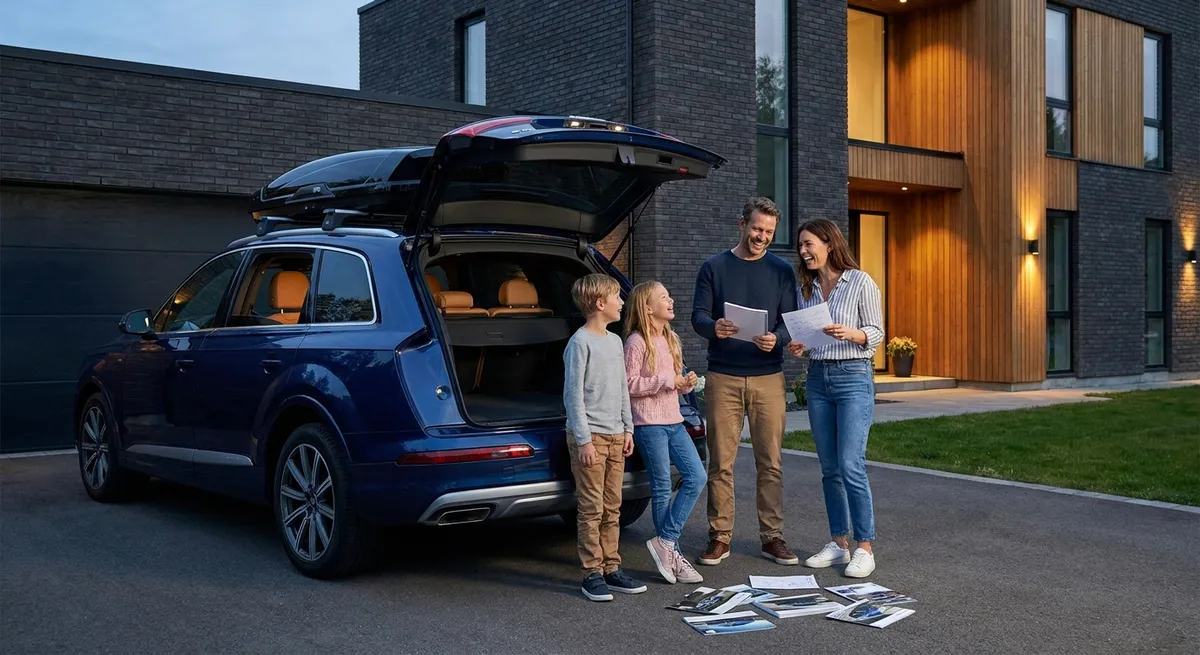
Choosing a family SUV today is less about following the crowd and more about curating a space that quietly supports every facet of your family’s life. The spec sheets and glossy ads tell only part of the story. The rest lies in details you can feel but not always quantify: how the cabin manages noise, how easily a grandparent can step inside, how gracefully the car adapts from school run to weekend escape.
This guide takes you beyond the obvious selling points and into five exclusive, but deeply practical, insights that sophisticated families increasingly prioritize when selecting an SUV.
The Architecture of Space: Cabin Design That Works in Real Life
On paper, cargo volume and legroom look impressive. In practice, the architecture of that space matters far more than its raw measurements. A refined family SUV pairs generous dimensions with intelligent design: low liftover heights for heavy strollers, wide door apertures for installing child seats without contortion, and cleverly shaped cargo bays that accommodate luggage and sports gear without a game of Tetris.
Look closely at the second row. A true family-centric SUV offers sliding and reclining seats with independent adjustment, allowing a teenager and a toddler to coexist peacefully on long drives. Pay attention to rear door opening angles; a wide swing can be the difference between an easy school drop-off and a daily annoyance. In the third row, evaluate not only legroom but also foot room under the second-row seats—often the unseen factor that makes or breaks long-trip comfort for older children.
Storage should be intentional, not random: dedicated spaces for devices, a secure spot for a handbag, a flat area for a laptop, and hidden compartments for valuables when the vehicle is parked in the city. When you test drive, bring your real-world items—car seats, backpacks, sports bags, stroller—and stage a quick “day in the life” load-in. The way the cabin absorbs your family’s actual belongings will tell you more than any spec sheet.
The Fine Print of Ride Comfort: Suspension, Seats, and Cabin Quiet
Many SUVs promise a “smooth ride,” yet families with refined expectations know that real comfort is a subtle orchestration of multiple elements. The suspension should filter broken pavement and speed bumps without feeling floaty or inducing motion sickness in the back rows. Multi-link rear setups, adaptive dampers, and well-tuned bushings can dramatically reduce fatigue on longer journeys.
Seats deserve almost clinical scrutiny. Look for well-contoured cushioning with proper thigh support, especially in the second row where children and adults spend the majority of time. Overly soft seats can feel indulgent at first but quickly become tiring; structured seats with gentle bolstering usually age better over a full day on the road. Pay attention to lumbar support mechanics—manual or powered—and whether the passenger seat receives the same care as the driver’s.
Cabin quiet is more than a luxury; it’s a form of mental space. High-quality family SUVs deploy acoustic glass, extensive door sealing, and sound-deadening materials in the floor and firewall. Listen for wind whoosh around the mirrors at highway speeds, tire hum on rough asphalt, and the way the engine sounds under gentle acceleration. A calm acoustic environment makes back-seat conversations easier, reduces fatigue on multi-hour journeys, and helps little ones sleep more peacefully between destinations.
The Subtle Art of Access: Ergonomics for Every Generation
A refined family SUV is designed not just for parents, but for grandparents, caregivers, and growing children. Accessibility and ergonomics are where sophisticated engineering quietly reveals itself. The ideal step-in height avoids forcing young children to climb or older adults to “fall into” their seats. Pair that with well-shaped grab handles and wide, non-intrusive door sills, and entry becomes a fluid, natural motion.
Rear doors that open close to 90 degrees create an elegant choreography for installing child seats, helping a grandparent into the second row, or loading a sleeping toddler without waking them. Look for ISOFIX/LATCH anchor positions that are easy to reach without digging between cushions—an underrated detail that can transform everyday usability.
At the rear, powered tailgates with adjustable opening heights protect against low garage ceilings and make grocery loading both graceful and efficient. Consider whether the third row can be raised or lowered from the cargo area with simple controls, and whether there’s a flat load floor when all seats are folded—vital when transitioning from family shuttle to weekend utility vehicle. These access details may seem minor, but collectively they set the tone for how the SUV fits into family rituals, from school pickups to holiday trips.
Digital Calm: Tech That Enhances, Not Overwhelms
In an era of screens and software, the difference between merely modern and truly refined lies in digital restraint and clarity. A premium family SUV offers technology that recedes into the background when not needed, yet responds instantly and intuitively when called upon.
The central infotainment system should be crisp, responsive, and logically laid out. Separate physical controls for high-frequency functions—temperature, volume, defrost—are more usable while driving than burying everything in touch menus. Wireless Apple CarPlay and Android Auto are no longer luxuries but essential tools for seamless navigation, communication, and media. Evaluate how quickly your phone connects and whether the system remembers your settings without fuss.
Consider how rear passengers interact with tech. Thoughtful touches include multiple USB-C ports across rows, integrated rear climate controls, and perhaps a simple rear display solution that doesn’t demand a separate subscription. A truly family-savvy SUV offers a combination of built-in connectivity (Wi‑Fi hotspots, connected navigation) and flexibility for your own devices, instead of locking you into a single ecosystem.
Critically, advanced driver-assistance systems should feel like a composed co-pilot, not a nagging overseer. Adaptive cruise control, lane centering, blind-spot monitoring, and rear cross-traffic alerts are now central to the driving experience. During the test drive, assess how natural the interventions feel, how clearly information is presented in the instrument cluster or head-up display, and whether you can easily tailor sensitivity to your preferences. Digital sophistication, at its best, creates a sense of calm command rather than digital clutter.
Ownership Experience as a Luxury: Warranty, Service, and Resale Grace
For families with a refined eye, luxury is not just how a vehicle feels on day one—it is how gracefully it lives with you over years. Ownership experience is where some otherwise impressive SUVs quietly fall short, and where the savvy buyer gains a real advantage.
Begin with warranty and maintenance coverage. A longer basic and powertrain warranty, paired with included scheduled maintenance, can significantly reduce cost and friction over the vehicle’s first years. Study the fine print on what is covered, how often service intervals occur, and whether you have access to loaner vehicles or concierge pick-up and drop-off—capabilities that matter when the SUV is the family’s daily anchor.
Consider the brand’s dealer network quality in your area: appointment availability, service lounge environment, and transparency in communication. Online reviews can hint at patterns, but a brief visit to the service department during your shopping process can be revealing. A best-in-class SUV paired with a cumbersome, disorganized service experience quickly loses its charm.
Finally, resale value is an understated form of luxury—a quiet assurance that your careful choice will hold its dignity over time. Look at historical depreciation patterns for the brand and model segment, paying particular attention to demand for well‑equipped, family-oriented trims. Residual strength not only protects your investment but often signals robust long-term reliability and enduring desirability in the used market.
Five Exclusive Insights to Refine Your Shortlist
Beyond the headline features, these five nuanced considerations can help you separate “good” from truly exceptional:
Third-Row Reality Check
Don’t just sit in the third row—simulate a real journey. Close the tailgate, adjust the second row for a tall passenger, and evaluate ventilation, window size, and ease of exiting. An airy, usable third row is a hallmark of thoughtful design, especially for growing families and multi-generation trips.
Nighttime Usability and Ambient Lighting
Visit the showroom or test drive in the evening. Observe how the cabin is illuminated: Are controls easy to find without glare? Is ambient lighting subtle rather than theatrical? The right lighting transforms night drives into a calm, cocooned experience and helps children settle more easily.
Refined Brake and Throttle Tuning
In stop-and-go traffic, abrupt brake or throttle responses quickly become tiresome for passengers. During the test drive, notice how smoothly you can come to a gentle stop and how predictably the SUV pulls away. Graceful low-speed manners are a key ingredient in everyday comfort, especially for motion-sensitive passengers.
Climate Control Depth, Not Just Zones
Dual or tri-zone climate sounds impressive, but finesse matters more than labels. Evaluate how quickly the cabin cools or warms, whether rear passengers can truly control their environment, and how quietly the system operates at higher fan speeds. Integrated sunshades, tinted glass, and heated/cooled seats in the second row are meaningful upgrades for family harmony.
Material Durability with a Premium Lens
Soft-touch materials and leather accents may feel indulgent, but the finish strategy is what determines how they age. Look for high-wear surfaces—door pulls, seat bolsters, cargo sill trim, steering wheel—and consider how they will look after years of school runs and weekend adventures. Easy-clean upholstery options, robust seatback plastics, and high-quality floor mats can preserve a sense of newness far beyond the first year.
Conclusion
A family SUV is more than transportation; it is a moving extension of your home, your routines, and your aspirations. The most rewarding choices emerge when you look past headline horsepower and screen size, and instead focus on how effortlessly the vehicle integrates into daily life—how it makes mornings smoother, journeys calmer, and family time more comfortable.
By examining cabin architecture, ride refinement, access ergonomics, digital serenity, and long-term ownership experience through a discerning lens, you move from simply buying a vehicle to curating a long-term companion. The result is an SUV that not only serves your family today but continues to feel precisely right as your needs, and your expectations, quietly evolve.
Sources
- IIHS – Vehicle Ratings and Safety Information – Independent crash tests and safety ratings to help evaluate family SUVs beyond marketing claims.
- NHTSA – 5-Star Safety Ratings – Official U.S. government safety scores and recall information for SUVs and other vehicles.
- Consumer Reports – Guide to Car Reliability & Owner Satisfaction – Data-driven insights into long-term reliability, ownership costs, and real-world owner feedback.
- Edmunds – New SUV Buying Guide – Detailed pricing, feature breakdowns, and expert reviews for comparing SUV models and trims.
- Kelley Blue Book – Car Values and Depreciation – Information on residual values and depreciation trends to understand long-term value retention.
Key Takeaway
The most important thing to remember from this article is that this information can change how you think about Buying Guide.