Choosing a family SUV today is less about chasing trends and more about curating the way your family moves through the world. The right vehicle becomes a quiet backdrop to milestones: school runs that feel unhurried, weekend escapes that actually relax you, and long drives where conversation isn’t drowned out by road noise. This guide looks past marketing headlines to the subtle, often-overlooked decisions that separate a merely “good” SUV from one that feels effortlessly, reassuringly right for your family.
Rethinking Space: Designing Around Real Family Routines
Most brochures emphasize cargo volume and seating capacity, but families rarely live in cubic feet and seat counts. The more telling question is how gracefully an SUV accommodates the choreography of your actual week.
Watch how the second row behaves in practice: Does it slide and recline independently, allowing a tall teenager and a rear-facing car seat to coexist without compromise? Are the lower anchors for child seats easily accessible, or buried so deeply that installation becomes an ordeal? A thoughtful layout allows you to keep one seat permanently configured for a child seat while still enabling simple access to the third row.
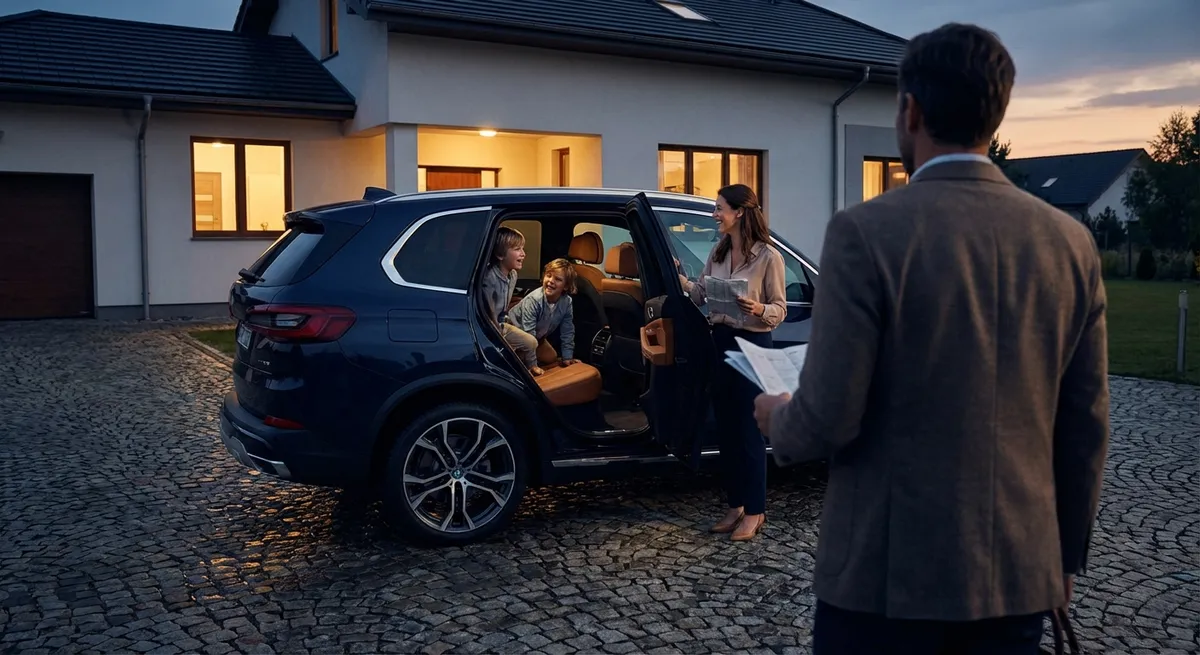
Consider loading and unloading on a rainy weekday evening. A low, wide cargo opening with minimal lip lets you glide strollers, sports bags, and grocery crates in without angling or lifting awkwardly. Power-folding third-row seats that operate quickly and quietly make transitions—from passengers to cargo and back again—effortless rather than chore-like. The most successful family SUVs give the impression that the interior has been sketched around real movements: a parent lifting a sleepy child, a teenager climbing past a folded seat, a grandparent settling in without acrobatics.
Five Exclusive Insights Discerning Families Often Overlook
Beneath the polished marketing language, a few nuanced details can transform daily life with an SUV from “perfectly adequate” to genuinely elevated. These five insights rarely appear in bold type, yet they matter profoundly in long-term satisfaction.
1. Cabin Acoustics Matter More Than Horsepower
Families tend to focus on engine size and acceleration figures, yet for daily use, the more meaningful luxury is how quietly and calmly an SUV moves. A well-insulated cabin with laminated glass, strategic sound deadening, and refined suspension tuning produces less fatigue over time—for children, for parents, and for anyone joining a longer drive.
Rather than comparing 0–60 mph times, pay attention during the test drive to how the cabin feels at 35–45 mph on imperfect roads where you’ll spend most of your time. Do you hear tire roar on coarse pavement? Does the engine sound strained when merging? Are you raising your voice to speak to someone in the third row? Quiet doesn’t just feel sophisticated; it can make communication and attention easier, indirectly supporting safety and patience on the road.
2. Climate Control Sophistication Is an Unsung Luxury
Climate systems are often treated as standard equipment, but their execution can be the difference between a serene drive and a rolling argument over vents and temperatures. Multi-zone climate control with separate controls for the second—and ideally third—row lets passengers tailor comfort without constant requests to the driver.
Look for ceiling-mounted vents in the rear, which distribute air more evenly, particularly important for rear-facing children who can’t adjust vents themselves. Subtle features like a “sync” button that returns all zones to the driver’s setting or an auto-defog function for humid mornings will matter far more in practice than an extra speaker or a slightly larger wheel. For families in colder climates, heated rear seats and a heated steering wheel are not mere indulgences; they reduce the temptation to overdress children in bulky coats that interfere with proper car seat harnessing.
3. The Quality of Driver Assistance, Not Just Its Presence
Nearly every modern SUV advertises a suite of driver-assistance technologies, but the crucial difference lies in how smoothly and intuitively they function. Lane-keeping assist that gently guides rather than abruptly tugs, adaptive cruise control that brakes and accelerates with human-like smoothness, and blind-spot monitoring tuned to avoid incessant false alerts all determine whether you’ll actually use these systems—or switch them off in frustration.
During the test drive, experiment with these features on a familiar route. Does the adaptive cruise maintain a comfortable buffer without frequent harsh braking? Does the lane-centering system feel natural, or does it “ping-pong” between lane markings? Systems that act like discreet, well-trained assistants instead of overzealous hall monitors are the ones that will truly add calm and confidence to your family journeys.
4. Charging Ecosystems Are the New Cupholders
As screens quietly replace books and toys in the back seat, a sophisticated family SUV acknowledges that power and connectivity are no longer optional. The question is not whether there are USB ports, but how thoughtfully they’re placed and how well they support your family’s devices.
Look for a mix of USB-A and USB-C ports distributed across all rows, not clustered in the front. Rear-seat passengers should have access without dangling cords stretching across walkways. Wireless charging pads with anti-slip materials and active cooling are notably more practical than shallow trays where phones constantly shift during cornering. Vehicles that integrate rear entertainment options with native apps or screen mirroring can also reduce the need for ad-hoc solutions with tablets and improvised mounts.
5. The “Graceful Aging” Factor: Materials and Wear Patterns
Families often assume that premium materials will look tired quickly under daily wear, but the more relevant question is how gracefully those materials are engineered to age. Subtle choices—like semi-matte finishes that hide scuffs, higher-density seat foam that resists sagging, and seat fabrics or leathers treated for stain resistance—will define how your SUV looks in five years.
Examine touchpoints closely: door pulls, steering wheel, center armrest, and the area around child footrests. Do plastics feel solid and slightly soft, or thin and shiny? Are the seatbacks easily wiped down after dirty shoe prints, or do they feel textured and absorbent? Consider lighter interior colors with durable finishes; a well-designed light cabin can feel airy and calming while still being surprisingly forgiving of everyday use. A family SUV that wears in, rather than wears out, will continue to feel like a considered choice long after the initial new-car allure fades.
Curating Comfort: Seating, Access, and Everyday Elegance
Beyond the basics of “roomy and comfortable,” a truly family-centric SUV tends to excel in the fine details of seating and access. The second row is your operational headquarters; it should deliver both flexibility and a quiet sense of order. Look for seats that tilt and slide in a single, fluid motion, allowing children to climb into the third row without a wrestling match. Some models enable third-row access even with a child seat latched in place—an invaluable feature if you routinely carry both younger and older passengers.
Third-row seats that are genuinely adult-friendly—offering adequate thigh support and headroom—provide more than just emergency capacity. They transform the SUV into a vehicle that can host visiting grandparents comfortably or ferry extra teammates without creative carpooling. Don’t hesitate to sit in the third row yourself; a few minutes there will reveal far more than any spec sheet.
Attention to lighting also elevates the experience. Soft ambient lighting that illuminates door handles, footwells, and cupholders at night reduces fumbling without overwhelming the cabin. Wide-opening rear doors and a relatively low step-in height are quiet luxuries, especially if you’re frequently guiding toddlers, helping older relatives, or loading bulky bags in tight parking spaces. These details together cultivate a sense that the SUV has been designed not just to carry your family, but to genuinely accommodate it.
Technology That Enhances, Not Distracts
From a distance, in-cabin technology may seem like a competition in screen size and button count. For a family, however, the true mark of sophistication is restraint and clarity. An intuitive interface that responds quickly, uses clear icons, and minimizes the number of taps required to adjust core functions (temperature, audio, navigation) will feel far more premium over time than a dazzling but cluttered display.
Evaluate how easily you can pair and switch between multiple phones—a practical requirement in households where more than one adult drives. Wireless Apple CarPlay and Android Auto can dramatically simplify daily use, but only if connections are stable. Physical controls for volume, temperature, and defrost functions remain an understated luxury: they permit quick, eyes-up adjustments in motion, which can be calmer and safer when children are chatting or requesting changes from the back.
Second-row passengers benefit from clearly labeled controls, anchors for tablet holders or headrest mounts, and storage spaces that keep devices secure yet accessible. Consider whether the technology supports your desired style of travel: do you value simplified navigation with real-time traffic, integrated voice assistants, or a more minimalist interface that leaves the cabin feeling less digital and more tranquil? The goal is a cockpit that feels composed, not chaotic.
Balancing Efficiency, Performance, and Long-Term Ownership
For families, the measure of performance isn’t how quickly the SUV sprints down a straight road, but how unruffled it feels as life demands pile up—full passenger loads, inclines, weather, and years of use. A smooth, confident powertrain that merges easily, climbs hills without frequent downshifts, and responds predictably to throttle input will prove far more satisfying than raw speed.
If you’re considering hybrid or plug-in hybrid options, look past the headline efficiency numbers and examine real-world range, ease of charging, and how much cargo space is compromised by battery placement. For many families, a well-executed hybrid can deliver quieter operation around town and notably lower fuel costs over years of school runs and errands. Just as important is the vehicle’s warranty coverage and maintenance schedule; more complex systems can benefit from extended powertrain or battery warranties, particularly if you plan to keep the SUV beyond its first ownership cycle.
Insurance costs, resale values, and reliability ratings are less glamorous but crucial components of the ownership experience. Models that maintain strong residual values and demonstrate consistent reliability can make a more premium SUV surprisingly rational when viewed across five to ten years. A refined family SUV isn’t just a pleasure to drive in its first year; it should remain confidence-inspiring as your family’s needs evolve.
Conclusion
A family SUV that genuinely suits your life is rarely defined by a single standout feature. Instead, it reveals itself in the way small decisions accumulate: doors that open just a bit wider than expected, a cabin that remains calm even when the day is not, technology that quietly supports rather than dominates, and materials that age with dignity. As you compare options, pay attention less to the loudest claims and more to how each vehicle supports the quiet rituals of your family’s days.
When you find the SUV that feels almost effortlessly aligned with your routines—where loading, settling in, connecting, and setting off all feel unhurried and natural—you will know you’ve chosen not simply transportation, but a considered extension of your home.
Sources
- National Highway Traffic Safety Administration (NHTSA) - Official safety ratings and information on crash tests and driver-assistance technologies
- Insurance Institute for Highway Safety (IIHS) - Independent crash-test results and safety evaluations for SUVs
- U.S. Department of Energy – Fuel Economy - Comparative fuel economy data for SUVs, including hybrid and plug-in hybrid options
- Edmunds SUV Buying Guide - Expert overviews of SUV segments, features, and ownership considerations
- Consumer Reports – SUVs - Reliability data, road tests, and comparative insights on SUV comfort, safety, and technology
Key Takeaway
The most important thing to remember from this article is that this information can change how you think about Buying Guide.