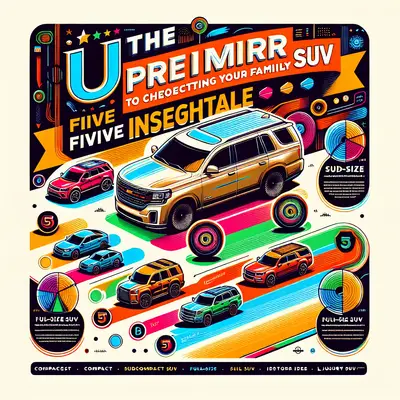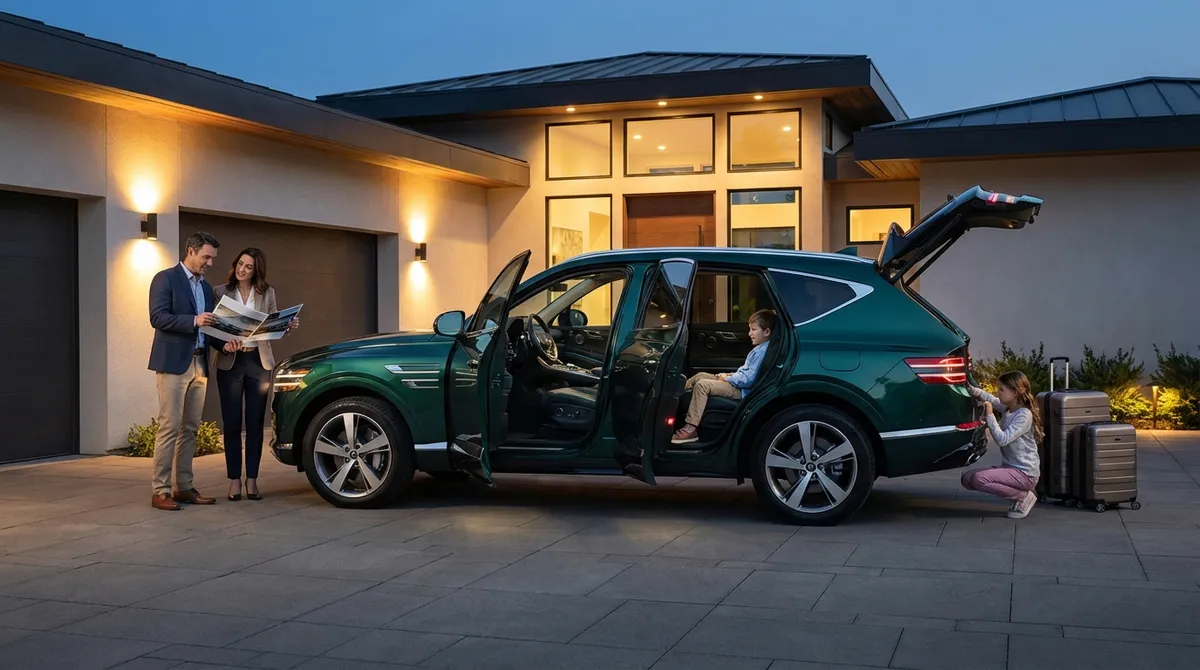
Choosing a family SUV today is less about following a trend and more about curating a mobile environment that quietly supports everything your household does. Between school runs, weekend escapes, and cross-country holidays, the right vehicle becomes an extension of your home—calm, capable, and considered. This guide steps beyond surface-level specs to explore five exclusive insights that help a discerning family separate polished marketing from genuinely well-resolved engineering and design.
Insight 1: Evaluate Cabin Calm, Not Just Cabin Space
Most brochures fixate on cubic feet; fewer address how that space actually feels. For families, the difference between a merely large cabin and a truly refined one is acoustic and tactile as much as dimensional.
Pay attention to how effectively the SUV manages sound: look for laminated front glass, generous door seals, and evidence of strategic insulation around the firewall and wheel wells. On a test drive, switch off the audio and assess road, wind, and engine noise at urban and motorway speeds. A calm cabin supports better conversations, reduces fatigue on long journeys, and allows children to rest more easily.
Scrutinize the materials you touch constantly: steering wheel, climate controls, seat adjustment switches, and door pulls. High-quality, soft-touch materials in these “high-frequency contact zones” indicate a brand that respects daily use, not just showroom impressions. Subtle details—like damped grab handles, soft-close storage lids, and a lack of harsh plastic edges at knee level—distinguish a genuinely premium family environment from one that simply photographs well.
Insight 2: Look for Intelligent Space, Not Just Three Rows
Third-row seating has become a marketing checkbox, yet many “7-seat” SUVs feel compromised in real life. For a family, intelligent packaging matters more than theoretical capacity.
Instead of asking, “Does it have three rows?” ask:
- Can an adult sit in the third row without contortion, even for 30–45 minutes?
- Can a child seat be installed in the second row without blocking access to the third?
- Can you tilt and slide a second-row seat with a child seat installed (using ISOFIX/LATCH), as some premium models now allow?
Consider the second row as the heart of the family cabin. Sliding and reclining rear seats, adjustable backrest angles, and thoughtfully placed USB-C ports can transform everyday comfort. Flat floors in the second row significantly improve middle-seat usability, especially as children grow taller.
Finally, test the boot with your actual lifestyle items: a stroller, sports kit, a week’s groceries. Check how much usable space remains with the third row in use, not only when it’s folded flat. The most family-friendly SUVs often prioritize a generous two-row configuration with an occasional-use third row, rather than squeezing in seven seats at all costs.
Insight 3: Judge Tech by Its Grace Under Pressure
Modern SUVs are saturated with screens and software; the real luxury is technology that stays out of your way when life gets busy. Families need interfaces that remain intuitive when you are sleep-deprived, running late, and fielding questions from the back seats.
On a test drive, deliberately stress-test the interface:
- Adjust climate settings, change navigation, and switch between audio sources without looking down for more than a second or two.
- Assess whether frequently used features (heated seats, defogger, fan speed) are always accessible via physical buttons or consistently placed shortcuts.
- Pair your phone, initiate Apple CarPlay or Android Auto, and see how quickly the system responds and reconnects after restarting the vehicle.
Also evaluate the thoughtfulness of rear-seat tech. Rear USB ports that charge quickly, rear climate controls that are easy to lock from the front, and the availability of rear sunshades and multiple device-charging options are all marks of a cabin designed with real families in mind. Over-the-air software update capability is increasingly important; it helps keep safety systems, infotainment, and navigation current without constant dealership visits.
Insight 4: Consider Subtle Safety Architecture, Not Just Star Ratings
Top safety ratings are now common among family SUVs, which paradoxically makes it harder to distinguish truly exceptional protection. A refined evaluation goes beyond the headline stars to the underlying safety architecture.
Study how the vehicle approaches active safety: not just whether it offers automatic emergency braking and lane-keeping assistance, but how these behave in practice. Systems that intervene smoothly and predictably inspire confidence; clumsy, overly aggressive corrections can encourage drivers to disable them. During your test drive, pay attention to how naturally adaptive cruise control modulates speed, and whether lane-centering feels supportive rather than intrusive.
Passive safety details matter just as much. Research where the brand places high-strength steel, how it manages side and rear impact protection, and whether head restraints and seat designs are optimized for whiplash protection. Check for rear side airbags, far-side airbags (between driver and passenger), and centre airbags where available—subtle engineering choices that can make a critical difference in a serious collision.
For families with young children, prioritize ISOFIX/LATCH anchor accessibility and the ability to securely fit multiple child seats. Some of the most family-centric SUVs now offer ISOFIX points not just on the outboard second-row seats but also in the front passenger seat or third row, offering unusually flexible seating configurations over the years as needs evolve.
Insight 5: Balance Powertrain Sophistication with Long-Term Ease
Under the bonnet, the conversation has shifted from raw power to intelligent efficiency. Families need drivetrains that feel effortless when fully loaded, remain composed in poor weather, and keep long-term running costs predictable.
Rather than scanning solely for fuel economy numbers, consider how the powertrain will behave in your actual life. Turbocharged petrol engines can feel brisk yet efficient in town, but evaluate low-speed smoothness and turbo lag when navigating school zones and tight car parks. Hybrids and plug-in hybrids offer impressive efficiency, especially for urban families, but assess the packaging compromises: is boot space reduced by the battery? Is the fuel tank smaller, affecting range on holiday trips?
Listen for refinement under load—especially during motorway merges or steep inclines with passengers and luggage. A well-matched transmission, whether traditional automatic or dual-clutch, should shift with near-imperceptible smoothness rather than constant hunting. All-wheel drive systems that can predictively route torque, rather than simply react to wheel slip, provide more secure and serene progress in adverse conditions without feeling heavy-handed.
Long-term ease also includes the ownership ecosystem: access to service centres, transparent warranty coverage on high-voltage components in electrified models, and the availability of roadside assistance. For many families, true premium ownership is defined less by initial specification and more by how quietly and effortlessly the vehicle integrates into everyday life over five to ten years.
Conclusion
A family SUV should be more than a set of numbers in a comparison chart; it is the moving framework for your family’s rituals, routines, and rare quiet moments. By looking past the obvious spec sheet highlights and focusing on cabin calm, intelligently used space, graceful technology, subtle safety engineering, and thoughtfully chosen powertrains, you equip yourself to choose with clarity rather than impulse.
In the end, the most satisfying family SUV is not the loudest or the most conspicuously equipped. It is the one that simply works—beautifully, dependably, and almost invisibly—so that the attention stays where it belongs: on the journeys you share, not the machine that carries you.
Sources
- [National Highway Traffic Safety Administration (NHTSA) – 5-Star Safety Ratings](https://www.nhtsa.gov/ratings) - Official U.S. government crash-test and safety ratings for vehicles, useful for evaluating SUV safety architecture beyond marketing claims.
- [Insurance Institute for Highway Safety (IIHS) – Ratings & Research](https://www.iihs.org/ratings) - Independent crash tests, child seat anchor evaluations, and advanced safety system assessments for many family SUVs.
- [Edmunds – SUV Buying Guide](https://www.edmunds.com/suv/) - Comprehensive overview of SUV types, features, and shopping tips, including real-world road test impressions and owner-focused insights.
- [Consumer Reports – SUV Ratings & Reviews](https://www.consumerreports.org/cars/suvs/) - Data-driven reliability, owner satisfaction, and safety information to help compare models on long-term performance.
- [U.S. Department of Energy – Fuel Economy Guide](https://www.fueleconomy.gov/feg/findacar.shtml) - Official fuel economy and energy use data for conventional, hybrid, and plug-in hybrid SUVs, helpful for assessing real-world operating costs.
Key Takeaway
The most important thing to remember from this article is that this information can change how you think about Buying Guide.