For families who view the SUV as more than a people-mover, the details matter. Not just the obvious bullet points on a spec sheet, but the subtle touches that change how a hectic weekday school run, a late-night airport pickup, or a long-distance holiday drive actually feels. This is where the most compelling family SUVs distinguish themselves—not through flashy gimmicks, but through understated intelligence woven into every interaction. Below are five refined, often-overlooked features that sophisticated family buyers are beginning to insist on, even if they never appear in the headline marketing.
Insight 1: Cabin Architecture That Anticipates Real-Life Movement
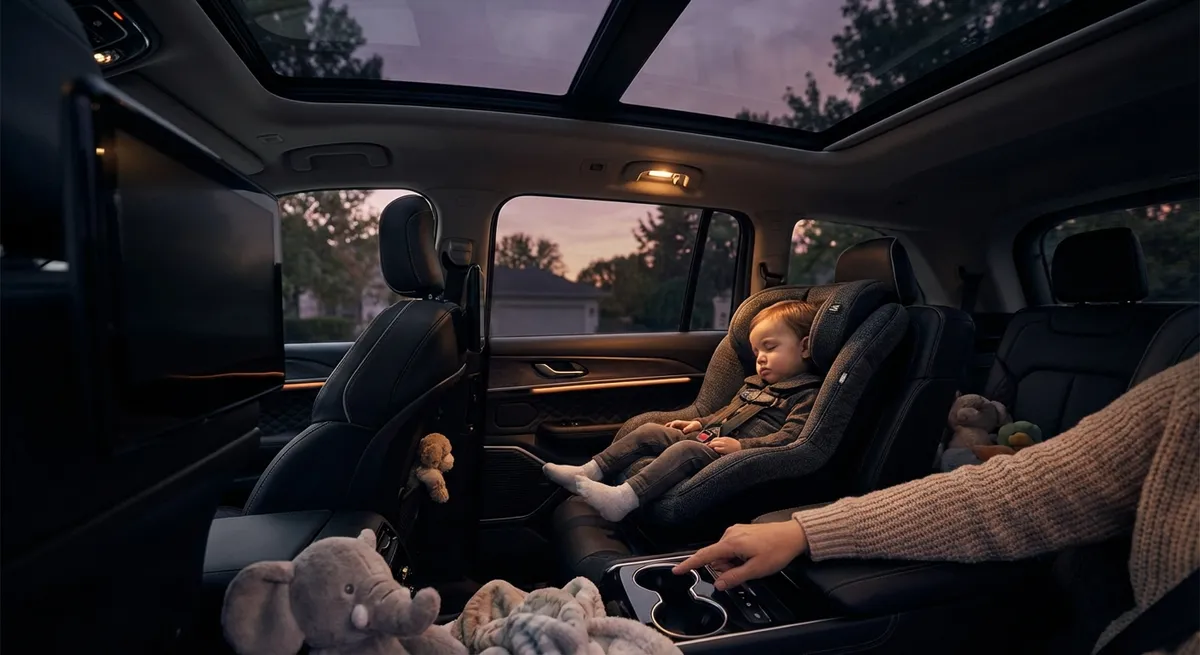
Most brochures talk about “roominess,” yet families live in dimensions that go beyond cubic feet. The most refined SUVs are designed around choreography: how a parent pivots with a sleeping toddler in their arms, how an older child exits with a backpack, how a grandparent steps into the second row without strain.
Look for wide door openings with a gentle, high-mounted grab handle and a low, flat floor—small choices that turn entry and exit into an unhurried experience rather than a minor athletic event. Sliding second-row seats with extended fore-aft travel give you the flexibility to balance legroom between second and third rows depending on who is riding where. Some of the best-packaged SUVs also allow the second-row seat to tilt and slide forward while a child seat remains installed (where allowed by design and local guidance), so you don’t have to dismantle your entire child-seat setup for a quick third-row access.
Thoughtful touches like sculpted seatbacks that create knee-space for taller teens, and subtly raised third-row cushions that allow children to see out of the windows, transform the rear of the cabin from “overflow seating” to a place where every passenger feels considered. This is what differentiates a large SUV from one that is truly livable for a multi-generational family.
Insight 2: Climate and Acoustic Comfort as Everyday Luxury
For families, genuine comfort is rarely about opulence; it is about consistency. An SUV that maintains a stable, pleasant environment—temperature, noise, and airflow—becomes an extension of home rather than a pause between destinations.
Multi-zone climate control is now ubiquitous, but the quality of its execution isn’t. Look for systems with independent rear controls that are easy enough for a child to use without constant instructions, ideally with roof-mounted vents for more even airflow to the third row. SUVs that offer pre-conditioning—either via key fob, smartphone app, or scheduled departure times—allow you to cool or heat the cabin before anyone steps inside, a subtle luxury on both winter mornings and summer afternoons.
Acoustically, the difference between “quiet enough” and genuinely serene can be surprisingly profound on long trips. Laminated front and, in some premium models, rear glass, enhanced door seals, and strategic sound-deadening materials create a cabin where conversation in the third row does not require raised voices. Pair this with thoughtful tuning of powertrains—particularly in hybrids and plug-in hybrids—to minimize harsh engine notes under load, and you have an environment that calms frazzled nerves instead of amplifying them.
Insight 3: Technology That Supports, Rather Than Distracts, Family Life
Family buyers are increasingly discerning about in-car technology—not just whether it is present, but how gracefully it integrates into daily routines. The most satisfying SUVs are those that elevate your habits rather than force new ones.
Wireless Apple CarPlay and Android Auto, paired with multiple device charging options (both USB-C and wireless pads), are now core expectations for many families. Yet execution matters: a wireless charging pad with intelligent cooling and grippy surfaces, placed where phones remain visible but not intrusive, is markedly better than a token tray that overheats devices or launches them under hard braking.
Rear-seat tech can also be a differentiator when handled thoughtfully. Instead of overcomplicated embedded entertainment systems that quickly feel dated, consider SUVs that provide simple HDMI or app-based streaming integration, rear USB-C ports, and well-placed tablet mounts. This empowers families to use their own content and devices, while the vehicle’s role is to provide structure, power, and connectivity.
Crucially, sophisticated buyers are also prioritizing advanced driver-assistance systems that feel natural rather than intrusive. Features such as adaptive cruise control with smooth, confident braking, lane-centering that avoids “ping-pong” steering corrections, and traffic-jam assist can make urban and motorway driving less fatiguing. The key is calibration: look for systems that are easy to adjust, easy to disable when desired, and clearly communicated through intuitive digital clusters or head-up displays.
Insight 4: Luggage, Lifestyle, and the Art of Configurable Space
Capacity figures are often quoted as a single number, yet family life rarely fits into a single configuration. The most impressive SUVs are those with interiors that flex elegantly—school week one day, sports-tournament weekend the next, impromptu IKEA run the day after.
A flat, low load floor with minimal lip at the tailgate is more important in practice than an extra few liters of volume, particularly when loading strollers, scooters, or large storage bins. Split-folding rear seats with multiple reclining and folding angles, including a 40/20/40 split in some second rows, create nuanced layouts: skis or a keyboard case down the middle, two comfortable outboard seats still usable.
Underfloor storage can transform the boot from a large cavity into a highly organized zone. Discreet trays for muddy shoes, sports equipment, charging cables (for plug-in hybrids and EVs), and emergency supplies preserve the main luggage area for clean, everyday use. Thoughtfully placed hooks for shopping bags, cargo rails, and privacy covers that retract smoothly all contribute to a sense of order.
Roof-rail systems that are rated for meaningful loads and compatible with branded or aftermarket boxes and racks are especially valuable for growing families. They shift bulky items—like pushchairs, camping gear, or skis—out of the cabin, preserving a tranquil space for passengers while still supporting adventurous weekends.
Insight 5: Materials, Touchpoints, and the Long Game of Durability
Families with a refined eye understand that the true measure of an SUV is how it feels in year five, not week one. Materials and touchpoints that age gracefully—resisting scuffs, stains, and shine—are a quiet hallmark of a carefully considered family vehicle.
High-quality synthetic leathers can be more forgiving than some natural hides, particularly where children and pets are involved, and many now offer an impressively supple feel with stain-resistant coatings. Fabrics engineered with easy-clean weaves and darker, subtly patterned designs can disguise light wear, while removable, washable floor mats and cargo liners become indispensable for active families.
Soft-touch materials at all primary contact points—armrests, steering wheel, door pulls—signal thoughtful design, but so do robust-feeling switches, solid door releases, and a tailgate that closes with a muted, confident thud. These tactile cues speak to underlying build quality that helps a vehicle feel cohesive over time.
Finally, consider how the brand supports longevity: clear maintenance schedules, transparent warranty coverage, and the availability of certified pre-owned programmes or extended warranties. Combined with restraint in screen-dependent controls—maintaining physical buttons for core functions like temperature and volume—these factors contribute to an SUV that remains intuitive, comfortable, and reassuring over a long family life cycle.
Conclusion
For families who value refinement as much as practicality, the most desirable SUVs are those that reveal their strengths silently, journey after journey. They choreograph movement through the cabin, keep the environment calm and controlled, integrate technology without overwhelming, and shape space around the unpredictable rhythms of family life. When evaluated through this lens, a family SUV becomes less a compromise and more a considered extension of your home—one that respects both your standards and your schedule, without needing to shout about it.
Sources
- [National Highway Traffic Safety Administration (NHTSA) – Car Seats and Booster Seats](https://www.nhtsa.gov/equipment/car-seats-and-booster-seats) - Guidance on proper child seat use and considerations for vehicle access and seating design
- [IIHS – Vehicle Safety Ratings and Safety Features](https://www.iihs.org/ratings) - Research-based evaluations of crashworthiness and driver-assistance systems that inform family-focused vehicle choices
- [U.S. Department of Energy – Fuel Economy Guide](https://www.fueleconomy.gov/feg/byclass/Sport_Utility_Vehicle.html) - Official data on efficiency for SUVs, including hybrids and plug-in hybrids frequently chosen by families
- [Consumer Reports – Car Seat and Vehicle Fit Information](https://www.consumerreports.org/cars/car-seats/car-seat-check/) - Independent assessments of how well child seats fit in various vehicles, relevant to family cabin usability
- [Volvo Cars – Interior and Safety Innovations](https://www.volvocars.com/us/v/safety) - Example of how a major manufacturer integrates safety, materials, and comfort in family-oriented SUV interiors
Key Takeaway
The most important thing to remember from this article is that this information can change how you think about Family Features.