Family SUV shopping has evolved from comparing cargo space and cup holders to something far more nuanced. Today’s discerning families are quietly evaluating cabin acoustics, digital ergonomics, charging ecosystems, and the subtleties of ride quality in ways spec sheets rarely capture. At Family SUV Review, we believe the most meaningful differences are often the ones you feel, not the ones shouted in bold type.
This article explores how to read SUV reviews with a more refined lens, highlighting five exclusive insights that help families distinguish the truly exceptional from the merely acceptable.
1. Ride Quality Is More Than “Comfortable”: Understanding the Chassis Character
When reviewers describe an SUV’s ride as “smooth,” it can mean very different things in practice. For families, the distinction between plush, controlled, and unsettled is vital—especially when carrying sleeping children, pets, or fragile cargo.
Look for reviews that go deeper than “soft” or “firm” and instead describe how the suspension handles broken pavement, speed bumps, and fast highway transitions. A well-tuned family SUV should filter out harsh impacts yet resist excessive body roll when changing lanes or navigating highway ramps at speed. This balance often comes from advanced suspension designs (multi-link rear axles, adaptive dampers, air suspension) and careful calibration rather than simply thicker tires or a “comfort” driving mode.
Families who frequently drive on imperfect suburban roads will appreciate SUVs that remain composed over patchwork asphalt and expansion joints. If a review notes that second- and third-row passengers experience more vertical motion or feel “busy” at the rear, that’s a sign the vehicle’s chassis refinement may not match its luxury aspirations. Prioritize reviewers who comment on the consistency of the ride across all three rows; that uniformity is what keeps everyone relaxed, not just the driver.
2. Cabin Quiet Isn’t Just About Decibels: The Quality of Silence
Many SUV reviews now quote interior noise levels, but a premium family experience hinges on the character of that noise, not merely the number on a sound meter. Parents juggling conversations, conference calls, and a quietly napping toddler need a cabin that feels cocooned, not cavernous.
When assessing reviews, pay attention to how they describe the type of sound: Is it a low, distant hum or a high-pitched wind whistle? Do reviewers mention door seals, double-pane acoustic glass, or active noise cancellation? A well-insulated family SUV should suppress wind noise around the mirrors and A-pillars, minimize droning from the tires on coarse pavement, and keep engine noise distant unless you’re accelerating hard.
Truly refined SUVs create a soundscape where voices carry at normal volume from the front row to the third, and rear passengers can hear softly played audiobooks or music without turning the volume up excessively. If a review notes that passengers in the third row must raise their voices on the highway, that may signal that the acoustic tuning stops short of the level many premium-minded families now expect.
3. The Third Row as a Real Seat, Not a Technicality
Many three-row SUVs claim to “seat seven,” but day-to-day usability can vary dramatically. Families who occasionally carry grandparents, teenagers, or friends will quickly discern whether the third row is a thoughtful space or an afterthought.
In reviews, look for nuanced commentary on:
- Knee and foot space: Are knees pinned against the seatback, or is there room to adjust feet comfortably?
- Hip and shoulder width: Can two teenagers sit side-by-side without feeling uncomfortably close?
- Cushion height and angle: A low, flat cushion forces a “knees-up” posture that becomes fatiguing on longer trips.
- Access and egress: Do second-row seats slide and tilt in a single, intuitive motion, or is it a multi-step process?
Refined family SUVs increasingly treat the third row as equal in importance to the first two, with dedicated air vents, USB ports, thoughtful storage, and cup holders placed where children can actually reach them. Reviews that mention third-row passengers’ comfort after an hour or more are particularly telling; first impressions can be misleading, but extended use reveals the truth.
4. The Digital Cabin: Subtle Tech That Reduces, Not Adds, Mental Load
Advanced infotainment systems can either soothe or overwhelm. Families today juggle navigation, playlists, driver-assistance alerts, and multiple smartphones—all while managing real-life conversations in the car. The most sophisticated SUV cabins reduce cognitive load instead of complicating it.
In SUV reviews, seek out observations on:
- Menu depth and logic: Are common functions—seat heaters, fan speed, audio source—available within one or two taps, or buried in submenus?
- Physical controls where they matter: Knobs for volume and temperature, dedicated defogger buttons, and tactile steering-wheel controls remain invaluable.
- Screen responsiveness and clarity: Lag, glare, or tiny touch targets become minor irritations that accumulate over time.
- Profile personalization: Memory settings that tie seat position, mirror angles, drive mode, and favorite media to each driver streamline daily transitions.
Sophisticated family SUVs also integrate driver-assistance features (adaptive cruise, lane centering, blind-spot monitoring) in a calm, predictable manner. Reviews that mention “subtle steering corrections,” “gentle alerts,” and “intuitive handover” suggest tuning that respects the driver’s attention rather than constantly competing for it. For families, tech should feel like a reassuring co-pilot—not an anxious backseat driver.
5. Charging, Storage, and the Hidden Infrastructure of Daily Life
The more refined the SUV, the more invisibly it supports family life. Beyond headline features—panoramic roofs, premium audio, leather upholstery—the true test lies in the vehicle’s ability to orchestrate a day filled with school runs, grocery stops, sports practices, and weekend getaways.
Pay close attention in reviews to:
- Charging ecosystem: Number, type, and location of USB-C and USB-A ports; wireless charging pad performance (especially with cases); and whether the ports are easily accessible from every row.
- Luggage space in “real-world” mode: With all three rows in use, can you still fit a stroller, soft duffel bags, or carry-on suitcases? Cargo volume numbers matter far less than how that space is shaped and accessed.
- Smart underfloor and side storage: Hidden bins that swallow backpacks, muddy shoes, or emergency supplies help keep the cabin visually calm.
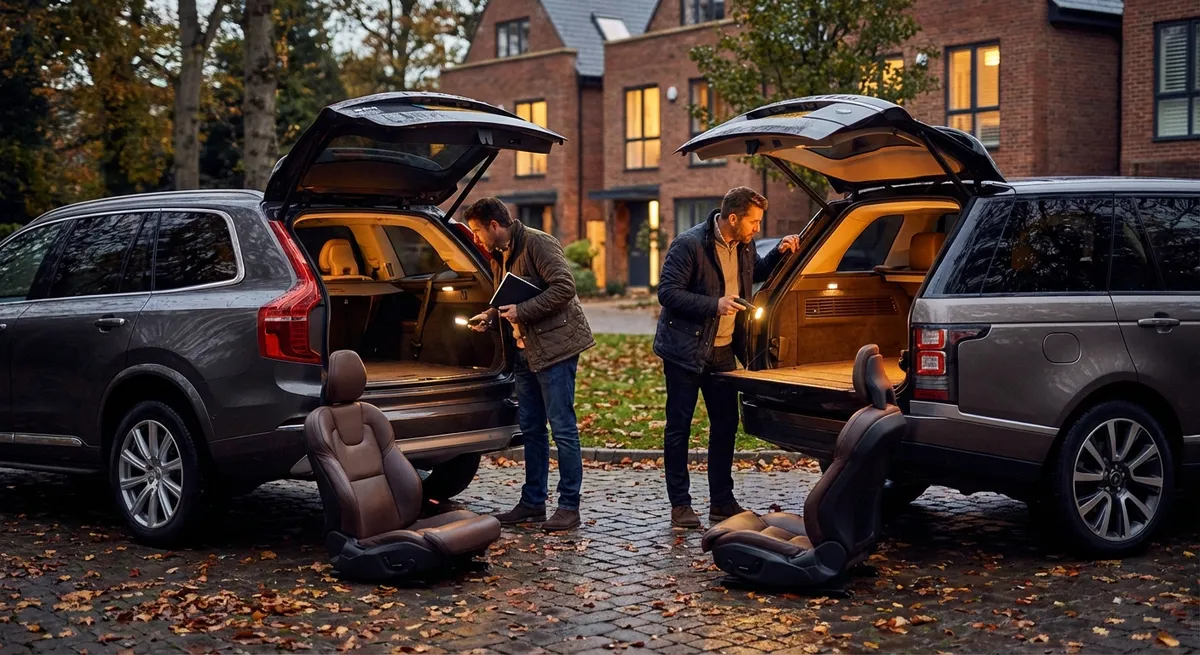
- Seat-folding elegance: One-touch folding, flat load floors, and the ability to fold from the cargo area transform shopping trips and vacation packing from logistical puzzles into simple routines.
The most thoughtfully designed family SUVs let you load two children, a week’s groceries, sports gear, and a family dog without a sense of clutter or compromise. Reviews that highlight how quickly seats reconfigure, how easy it is to secure child seats without contorting your back, and how gracefully the SUV adapts to different uses provide insights far beyond what any brochure reveals.
Conclusion
Reading SUV reviews through a more sophisticated lens means looking beyond horsepower, touchscreens, and marketing language. For families who value quiet composure, thoughtful ergonomics, and daily ease, the true differentiators are found in how an SUV rides, how it sounds (or doesn’t), how each seat feels after an hour on the road, how gracefully the tech recedes into the background, and how well the vehicle anticipates real family life.
The models that stand out are those that make the complex feel effortless—transforming school runs, commutes, and weekend escapes into experiences that are calm, cohesive, and quietly luxurious. When you read your next SUV review, read between the lines for these details; they are where a family vehicle stops being simply practical and becomes genuinely satisfying to live with.
Sources
- [National Highway Traffic Safety Administration (NHTSA) – Vehicle Safety Ratings](https://www.nhtsa.gov/ratings) - Official U.S. government crash-test ratings and safety information to complement any SUV review
- [Insurance Institute for Highway Safety (IIHS) – Ratings](https://www.iihs.org/ratings) - Independent crashworthiness and safety tech evaluations, including many family SUVs
- [Consumer Reports – SUV Road Tests & Reliability](https://www.consumerreports.org/cars/suvs/) - Detailed road tests, noise measurements, and usability insights across SUV categories
- [Edmunds – Car Reviews: SUVs](https://www.edmunds.com/suv/) - Professional reviews with road impressions, cargo measurements, and tech evaluations
- [Kelley Blue Book – Best Family Cars](https://www.kbb.com/best-cars/family-cars/) - Expert-curated lists and commentary on SUVs well-suited to family use
Key Takeaway
The most important thing to remember from this article is that this information can change how you think about SUV Reviews.