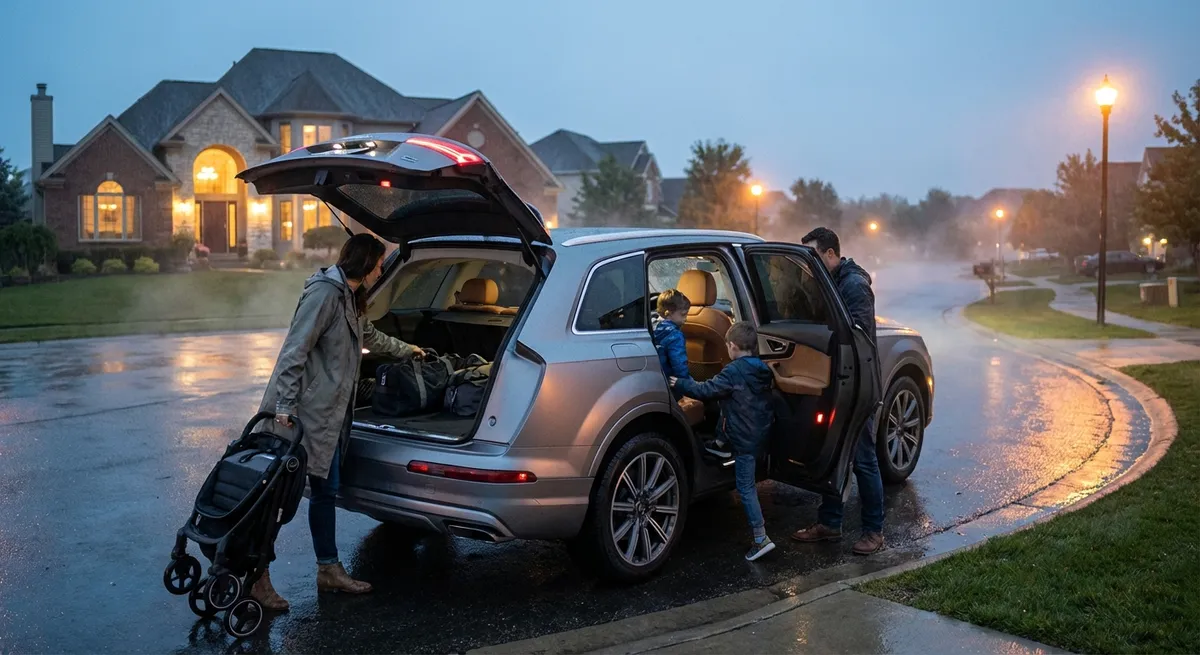
Family SUVs are no longer simply about shuttling children and luggage. For discerning households, they function as mobile extensions of home: a quiet office, a serene reading nook, a climate-controlled nursery, and a weekend escape vehicle. The most meaningful differences rarely sit in bold type on a spec sheet—they’re tucked into the way an SUV manages noise, organises chaos, anticipates fatigue, and softens daily routines.
This review philosophy looks past the obvious—horsepower, cargo volume, touchscreen size—to surface the subtler qualities that truly refine family life. The following five insights shape how we evaluate SUVs at Family SUV Review, and they will help you read between the lines of any test drive or review with a more practiced eye.
How an SUV Manages Silence, Not Just Sound
Many reviews casually mention “quiet cabins,” but for families, the character of that quiet matters more than the decibel number. On paper, two SUVs may measure similarly. In reality, one can feel calm and cocooned, while the other leaves you subtly tense after a long drive.
We pay close attention to where noise comes from and how it blends. Wind noise around the mirrors or A-pillars can be surprisingly fatiguing, especially for front passengers who work or take calls on the move. Road roar from the rear wheel wells can disturb a sleeping child, even when the driver thinks the car is “quiet enough.” The best SUVs blend acoustic glass, thoughtful door seals, and sound deadening around the cargo area to create a consistently hushed environment across all three rows.
We also consider how the climate control and ventilation system contribute to perceived silence. A powerful but loud fan can undermine an otherwise premium atmosphere, especially at highway speeds. The most refined systems move substantial air almost imperceptibly, even in the rear rows, so a baby’s nap or a teen’s study session is not disrupted by background mechanical noise. When reading reviews, look for notes on noise character—whistle, hum, drone, or rustle—rather than just a generic “quiet ride” statement.
Seating That Understands Real-World Schedules
It’s easy to admire leather, contrast stitching, and seat contouring in a showroom. What matters more is how those seats support you at the end of a long day—when you’ve sat at a desk, carried bags, and navigated school pick-up all before the ignition is pressed.
We examine seats for genuine long-haul comfort: thigh support that doesn’t cut into circulation on motorway journeys, lumbar adjustments that actually align with the natural curve of the spine, and headrests that cradle without pushing your head forward. This is particularly important for the driver and front passenger, who may spend the most continuous time in the vehicle. Subtle multi-step recline and tilt adjustments in the second row can transform a rushed post-activity snack stop into a restful pause.
Families should also look closely at how easily the interior adapts to different days. Can a child climb into the third row without someone contorting to reach a release lever? Does the second row slide and tilt in a single, graceful motion with a child seat installed? Premium family SUVs minimise awkwardness: the best designs let you reconfigure seats with one hand while holding a school bag in the other. In reviews, pay attention to the sequence of actions testers describe, not just whether a particular feature exists.
The Way an SUV Handles Fatigue and Driver Load
Most safety features are well-publicised—automatic emergency braking, lane keeping, blind-spot monitoring. The more telling difference is how these systems intervene and whether they support, rather than startle, a tired driver at the end of a long day.
We evaluate driver-assistance systems on subtlety and predictability. Lane-keeping aids that tug abruptly at the wheel can feel more stressful than helpful, especially on narrow country roads or in roadwork zones. In contrast, gentle, transparent support that nudges rather than yanks can lower mental load over a long journey. Adaptive cruise control that brakes smoothly, anticipates cut-ins calmly, and accelerates with decorum, rather than surging, can make the difference between arriving drained and arriving composed.
Thoughtful fatigue management goes beyond electronics. A well-designed driving position with excellent outward visibility, intuitive control placement, and a simple, glanceable instrument cluster prevents cognitive overload. Families should read reviews for comments on how quickly testers felt at ease behind the wheel, and whether the car still felt natural after an hour or two. True sophistication reveals itself on the last 20 minutes of a long drive, not the first five.
Technology That Enhances Calm, Not Clutter
Screens and connectivity are inevitable; the real luxury is a cabin that uses them with restraint and clarity. For family SUVs, our focus shifts from “how much tech” to “how thoughtfully it’s integrated.”
We assess whether core functions—temperature, defrost, audio volume—remain accessible via physical controls or at least large, fixed on-screen shortcuts that don’t disappear inside nested menus. For parents, needing three taps to adjust rear climate or demist a window while driving with children onboard is more than annoying; it’s a safety concern. Voice control that reliably understands natural commands (“I’m cold” instead of “Set cabin temperature to 22 degrees”) is a further mark of refinement, turning a potential distraction into a discreet aide.
Rear connectivity also deserves careful scrutiny. Dual or tri-zone climate with dedicated vents for the third row, thoughtful placement of USB-C ports that avoid cables snaking across footwells, and wireless charging pads that actually hold phones securely under braking all indicate a holistic design. In reviews, seek mentions of how intuitive the interface felt to new users, whether the system lagged or froze, and how easily drivers could adjust common settings without diverting their gaze from the road.
Storage That Anticipates, Rather Than Reacts
Cargo volume numbers tell only a fraction of the story. Families live in the in-between spaces: the school run with one stroller, a cello, two backpacks, and a set of football boots, or the weekend away where everyone brings “just one more bag.” The most impressive SUVs understand this nuanced reality.
We look beyond litres and cubic feet to the shape, access, and division of space. A low, wide opening with a flat load floor makes it far easier to slide in a pram or heavy suitcase without lifting awkwardly. Underfloor storage for muddy shoes, folded picnic blankets, or emergency supplies keeps the main area elegant and organised. A cargo cover that stows neatly without taking half the boot when removed is a small but significant luxury for families switching between school weeks and holiday packing.
Inside the cabin, genuinely useful storage is almost always subtle: deep door bins that comfortably hold large reusable water bottles, a lidded centre console that fits a tablet and headphones, and a dedicated spot that prevents a spare phone or house keys from sliding noisily around. When reading SUV reviews, note whether testers describe what they stored in each cubby and how easy it was to keep the car tidy. Refined design means everyday items disappear neatly from view without becoming hard to reach.
Conclusion
Choosing a family SUV at a premium level is less about chasing the largest screen or the highest trim badge and more about how thoughtfully the vehicle supports the quiet routines that define your days. Cabin acoustics that preserve calm, seating that respects long hours, driver aids that ease fatigue, technology that stays out of the way, and storage that maintains order—these are the true hallmarks of a sophisticated family SUV.
By reading reviews through this lens, you move past marketing language and into the reality of ownership. The right SUV will not simply transport your family; it will quietly refine how you move through your week, smoothing edges you may not even have realised were there.
Sources
- NHTSA – Vehicle Safety Features - Explains advanced driver-assistance technologies and their role in reducing crashes and fatigue
- IIHS – Ratings and Crashworthiness - Provides safety ratings and evaluation methods that underpin many family-focused SUV assessments
- Edmunds – Car Noise Levels and Cabin Quietness - Details how professional reviewers measure and interpret cabin noise and ride comfort
- Consumer Reports – Car Seat and Interior Comfort - Describes evaluation criteria for seating ergonomics, usability, and interior practicality
- Environmental Protection Agency – Fuel Economy Guide - Official database to compare SUVs’ efficiency, useful when balancing space and performance for family use
Key Takeaway
The most important thing to remember from this article is that this information can change how you think about SUV Reviews.