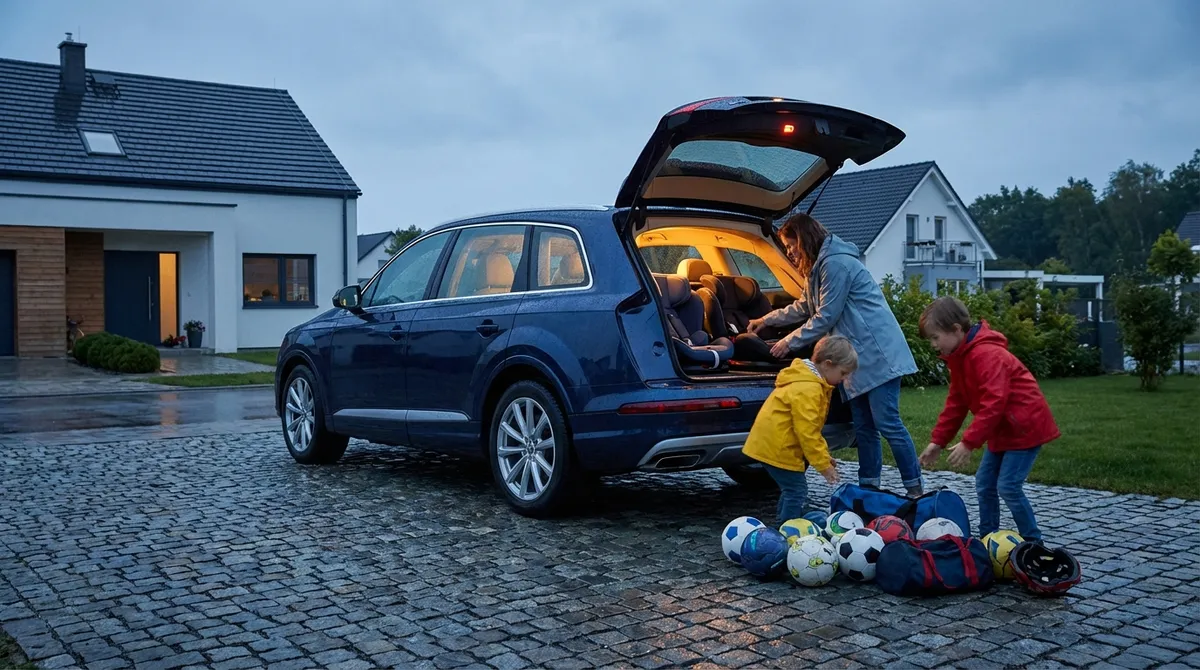
Families rarely live the way glossy brochures suggest. Real life is early-morning school runs, late-night airport pick-ups, wet soccer cleats, cello cases, laptops, and an iced coffee that absolutely must not spill on the leather.
This is where meaningful SUV reviews distinguish themselves: not by horsepower headlines, but by how a vehicle feels, flexes, and quietly supports your family’s rhythm. Below, we explore how to read SUV reviews with a more discerning lens—spotting five refined, often-overlooked insights that truly matter for family life.
1. The “Third Hour” Test: Comfort That Lasts Beyond the Commute
Most reviews tell you how a seat feels during a short test drive. Discerning family buyers should look for reviews that go further: how does the SUV feel after three hours, not thirty minutes?
Premium family-focused reviews will slow down and examine:
- Seat support over time – Look for comments about lower-back support, adjustable thigh bolsters, and how fresh the driver feels after a long stint at the wheel. True comfort is about posture, not just plushness.
- Ride quality on imperfect roads – High-quality reviews mention expansion joints, patched asphalt, and broken city streets. A refined family SUV should mute harshness without feeling floaty or disconnected.
- Noise fatigue, not just decibels – It’s not just how loud the cabin is, but the character of the sound. Reviews that talk about wind noise around the mirrors, tire thrum on coarse pavement, or how well the cabin isolates highway “whoosh” are the ones to trust.
- Climate consistency – Mentions of rear-seat air vents, tri- or quad-zone climate control, and how quickly the cabin cools or warms on extreme days are crucial for real families.
When an SUV review reads like a travel diary—detailing a full day’s use instead of a quick spin—you’re much closer to understanding how that vehicle will treat your family in real life.
2. Interior Intelligence: How Reviews Reveal Subtle Everyday Practicality
Premium family SUVs are not merely about leather and screens; they are about intelligence of layout. The best reviews go beyond “lots of cubbies” and tap into how a cabin actually works under pressure.
Pay attention to how reviewers describe:
- Ingress and egress – Do they mention how easy it is for a grandparent to exit the second row, or for a child to climb into a booster? Step-in height, door aperture, and grab handle placement matter far more than you see in basic spec sheets.
- Real-world storage – Look for very specific references: a stroller fitting behind the third row, a week’s groceries plus sports gear, a double stroller without dropping the third row. Vague “plenty of space” language is a red flag.
- Cabin ergonomics with children – Thoughtful reviews note how easy it is to hand snacks to the third row, whether the second-row console obstructs movement, and whether window switches and door handles are placed where young children can reach them.
- Material resilience – Reviews that comment on how leather feels after a spilled drink clean-up, whether piano-black trim shows micro-scratches, or how well seat fabrics hide day-to-day wear are far more useful than praise for “premium materials” alone.
The more an SUV review references real-life objects, routines, and multi-generational passengers, the more trust you can place in its verdict for family use.
3. Car Seat Clarity: The Hidden Benchmark of a Thoughtful Review
For families with infants or young children, the true test of an SUV is not 0–60 mph, but 0–3 car seats. Many reviews barely touch this, but the best family-oriented evaluations treat child-seat fitment as a central theme.
Look for SUV reviews that are explicit about:
- LATCH anchor accessibility – Do reviewers comment on whether anchors are buried deep between cushions, or easy to access without digging? Accessible anchors make daily use infinitely more civilized.
- Three-across reality – Specific mentions like “installed three convertible seats across the second row” or “only two car seats fit comfortably” are gold. Broad claims of “spacious second row” mean little without this detail.
- Third-row usability with car seats – Premium reviews explain whether the second row still slides or tilts with a child seat installed, and whether an adult can reach the third row without performing a contortionist act.
- Top tether locations – Many families miss this until too late. Insightful reviews will list tether points in the third row and explain whether you can safely install forward-facing seats back there.
When a reviewer clearly understands modern child passenger safety guidelines and writes in that language—LATCH spacing, tether points, booster belt geometry—you’re reading someone who is evaluating the SUV the way a vigilant parent would.
4. Tech That Serves, Not Distracts: Reading Past the Screen Size
It is easy to be seduced by massive touchscreens and ambient lighting. The more discerning question is: does the technology quietly serve family life, or demand constant attention?
In better SUV reviews, you’ll notice commentary around:
- Physical controls vs. touch-only – The most family-friendly vehicles still provide tactile knobs and buttons for climate and volume, so you can adjust them without taking eyes off the road. Reviews that praise this restraint often come from testers who value everyday usability over spec sheet glamour.
- Voice control that actually works – Look for reviews that test voice assistants with phrases like “I’m cold” or “navigate to the nearest gas station.” Reliable voice recognition can reduce distraction and make a chaotic cabin feel calmer.
- Rear-seat tech sanity – A sophisticated review doesn’t just cheer rear screens; it asks: Are there simple parental controls? Can you mirror a tablet? Are there enough USB-C ports, and are they well placed so cables don’t tangle across footwells?
- Over-the-air updates and digital longevity – Family buyers keep vehicles for years. Reviews that mention software update capability, long-term support, and how modern the interface feels compared with smartphones give you a sense of whether the tech will age gracefully or feel dated quickly.
Look for reviewers who talk about how swiftly you can perform core tasks—adjusting navigation, changing playlists, accepting a call—rather than celebrating a spec list full of complicated features few families will actually use.
5. Quiet Confidence on the Move: Reading Safety and Refinement Between the Lines
Every SUV claims to be safe; the distinction lies in how it protects and supports the driver’s focus. Elevated reviews translate acronyms into lived experience.
Pay closer attention when a review explains:
- How driver-assistance behaves, not just which features exist – Comments like “lane-keeping assist gently centers without ping-ponging” or “adaptive cruise slows smoothly when traffic cuts in” are a sign the reviewer has actually used these systems in real traffic.
- Forward visibility and blind-spot management – Premium SUV reviews consider the thickness of roof pillars, the height of the hood, and how easy it is to place the vehicle when parking near curbs or backing out around pedestrians.
- Headlight performance in real darkness – Look for road tests that mention beam spread, corner illumination, and auto high-beam responsiveness rather than simply stating “LED headlights included.” This is especially crucial for early school runs, evening practices, and winter driving.
- Braking and composure in emergency maneuvers – The most insightful reviewers describe how confident the SUV feels in sudden lane changes, hard braking, and evasive maneuvers—not merely quoting braking distances.
Pair what you read in reviews with objective safety ratings from trusted sources, but give extra weight to reviewers who can describe how these systems integrate into everyday family driving: from crowded school parking lots to late-night highway journeys.
Conclusion
A truly discerning approach to SUV reviews rejects the superficial: spec sheets, screen diagonal measurements, and vague statements about “roominess.” Instead, it asks finer questions about endurance comfort, interior intelligence, car seat practicality, quietly capable technology, and composed safety behavior.
When an SUV review feels as though the writer has lived a full week in the vehicle with a real family—juggling errands, luggage, children, and fatigue—you’ve likely found guidance worthy of your time and investment. Seek out this deeper layer of insight, and your next family SUV will not only impress on delivery day, but continue to feel like a carefully chosen companion many years down the road.
Sources
- National Highway Traffic Safety Administration (NHTSA) – 5-Star Safety Ratings - Official U.S. government crash-test ratings and safety information for SUVs and other vehicles
- Insurance Institute for Highway Safety (IIHS) – Vehicle Ratings - Independent crashworthiness and crash-avoidance ratings, including headlight and driver-assistance evaluations
- Edmunds – Car Seat Check and Family Car Reviews - Practical evaluations of car-seat fitment, LATCH accessibility, and family-focused usability
- Consumer Reports – Guide to Car Safety Features - In-depth explanations and evaluations of modern driver-assistance and safety technologies
- American Academy of Pediatrics – Car Seats: Information for Families - Evidence-based guidance on child passenger safety and car-seat best practices
Key Takeaway
The most important thing to remember from this article is that this information can change how you think about SUV Reviews.