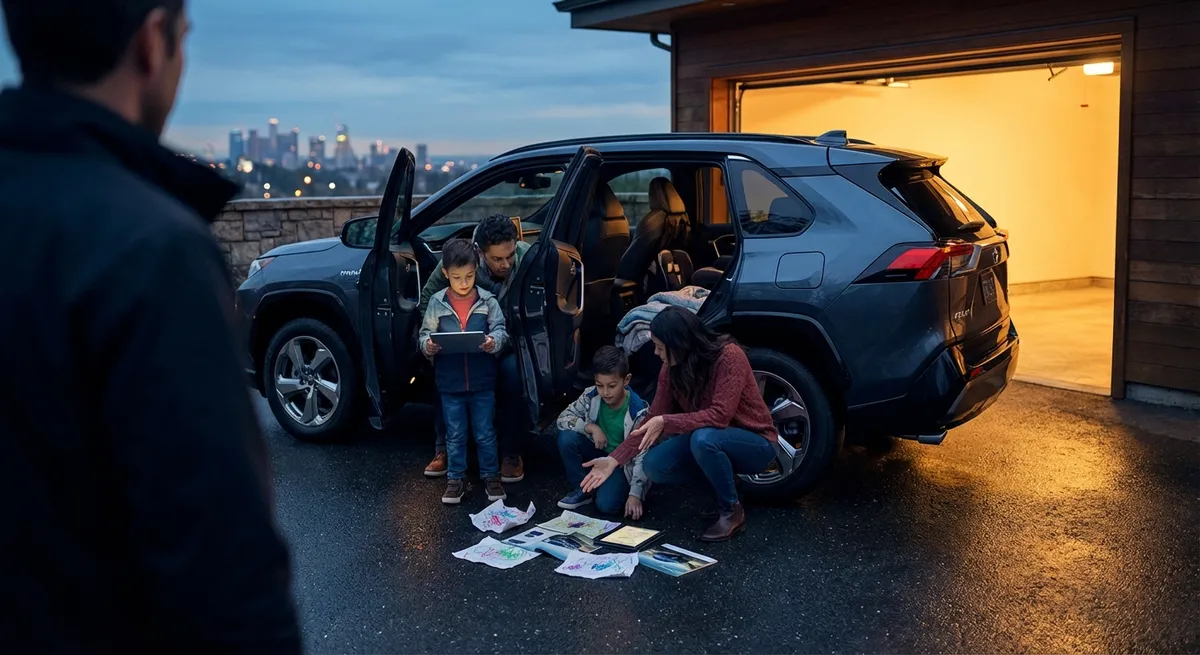
The most discerning families are no longer seduced by spec sheets alone. They are looking for a family SUV that feels curated rather than merely configured—something that understands the quiet choreography of real life: school runs and late flights, sleeping toddlers and conference calls, wet dogs and weekend bags. At Family SUV Review, we look past the showroom gloss to understand how these vehicles behave when the cameras are off and the car seats are in. Below are five exclusive, often-overlooked insights that shape how we review SUVs for families who expect more than just practicality.
How an SUV Manages Transitions Matters More Than Its 0–60
Family life is defined by transitions—home to school, office to airport, field to dinner. The most revealing test of a family SUV is how gracefully it handles these shifts, not how quickly it sprints.
We look closely at low-speed refinement: the ease of inching into a tight school drop-off zone, the smoothness of stop‑and‑go traffic, the absence of lurching when you feather the throttle to keep a child asleep. Transmission calibration, brake modulation, and steering weight at parking-lot speeds shape daily comfort more than any horsepower figure.
A premium family experience also depends on how quickly the cabin resets between uses. We evaluate how seamlessly the vehicle can go from child-focused (boosters, backpacks, snack containers) to adult-ready (clients, grandparents, date night). Are third-row seats truly one-hand operable? Can you restore a tidy cabin in under two minutes? The best SUVs allow your life to shift gears as effortlessly as the drivetrain.
The Subtle Luxury of Thoughtful Rear-Row Design
Many reviews obsess over the driver’s seat; we spend just as much time sitting in the second and third rows, because that is where your family spends its life.
Seat geometry—thigh support, backrest angle, and headrest design—often matters more than sheer legroom. We look for seats that keep a child’s head from flopping on long journeys and support a teenager’s lanky frame without complaint. Door opening angles and step-in height determine whether wrangling a rear-facing infant seat is a strain or a non-event.
We also pay close attention to how independently the rear rows function. Can second-row passengers control their own climate with precision, rather than simply “hot or cold”? Are there enough well-positioned USB-C ports that everyone’s devices stay charged without a tangle of cables draped across the cabin? True family luxury is when the back rows feel intentionally designed, not like an afterthought appended to a handsome front cabin.
Storage That Respects Real Life, Not Just Liters
Cargo volume in liters or cubic feet tells only part of the story. Our testing goes deeper, because families do not pack numbers—they pack strollers, sports bags, musical instruments, and unexpectedly large school projects.
We evaluate how useable the cargo space is: the height and width of the opening, the depth with all seats in place, and the shape of the floor. A flat load bay with minimal lip transforms weekly shopping from a juggling act into a smooth routine. Underfloor storage that actually fits a folded stroller, muddy shoes, or a compact vacuum becomes a quiet, daily luxury.
We also assess how the cargo area works when everyone is on board. Can the SUV still carry a proper grocery run with all three rows in use? Are there secure hooks for shopping bags, thoughtful wells for fragile items, and an easy way to separate sports gear from luggage? Family-ready SUVs respect that sometimes every seat is filled and every inch of cargo space must work intelligently.
Cabin Technology That Enhances, Not Distracts
Modern SUVs are saturated with screens and software. Our reviews distinguish between tech that looks impressive in a showroom and tech that genuinely elevates family life over years of ownership.
We examine the clarity and responsiveness of infotainment systems, but we’re equally focused on how quickly they boot up on a cold morning, how seamlessly they reconnect to your phone, and how easy it is to adjust core functions—temperature, fan speed, defogging—without diving through menus. The gold standard is a system that fades into the background, allowing parents to focus on driving and conversation rather than digital housekeeping.
We also simulate real-life digital demands: one parent using navigation, a child streaming from the back, another on a video call tethered through the car’s Wi‑Fi. How does the SUV manage connectivity under pressure? Are rear-seat entertainment options intuitive for kids without constant parental assistance? The best family tech experience is not the flashiest—it is the most discreetly competent.
Comfort That Holds Up on the Fourth Hour, Not Just the First
Anyone can engineer an interior that feels pleasant on a short test drive. We rate SUVs on how their comfort holds up after several hours on mixed roads with a full family on board.
Suspension tuning is critical: some SUVs feel plush on a smooth boulevard but become restless over broken tarmac, passing every vibration into the cabin. We look for a poised, settled ride that keeps conversation easy and fatigue low. Tire noise at highway speeds, wind management around mirrors and roof rails, and the tuning of active noise cancellation (if available) all influence how refreshed you feel after a long journey.
We also pay close attention to climate consistency across the cabin. True family‑grade engineering ensures that third-row passengers are not shivering while the driver is still waiting for the windscreen to clear. Quality of materials matters here too: breathable seat upholstery, well-damped armrests, and tactile switchgear all contribute to a sense of calm that lingers long after the novelty of a new vehicle has worn off. We prioritize SUVs that feel as composed on the fourth hour of a holiday drive as they did in the first fifteen minutes of a test route.
Conclusion
At Family SUV Review, our perspective is shaped by the small, telling details that transform a competent vehicle into a trusted companion. When we evaluate SUVs, we look beyond headline figures to the nuanced ways a car supports modern family life: how it manages transitions, respects rear-seat passengers, makes storage effortless, deploys technology judiciously, and sustains true comfort over time. For families who value refinement as much as reliability, these are the insights that separate merely good SUVs from those that feel quietly indispensable.
Sources
- [NHTSA: Buying a Safer Car](https://www.nhtsa.gov/ratings) - U.S. government guidance on vehicle safety ratings and what families should look for when choosing a safer vehicle
- [IIHS: Vehicle Ratings](https://www.iihs.org/ratings) - Independent crash test results and safety evaluations that inform our long-term assessment of family SUVs
- [EPA: Fuel Economy Guide](https://www.fueleconomy.gov/feg/byclass/Sport_Utility_Vehicle.html) - Official efficiency data for sport utility vehicles, useful for understanding real-world running costs for families
- [Consumer Reports: Guide to Car Reliability](https://www.consumerreports.org/cars-guide-to-car-reliability) - Long-term reliability insights that complement our focus on day-to-day family usability
- [Edmunds: Car Interior Comfort and Convenience Features](https://www.edmunds.com/car-buying/car-interior-comfort-and-convenience-features.html) - Overview of cabin comfort and convenience considerations relevant to evaluating family-friendly SUVs
Key Takeaway
The most important thing to remember from this article is that this information can change how you think about SUV Reviews.