Safety ratings have become the shorthand for peace of mind, but discerning families know the story doesn’t end with a five-star badge or a “Top Safety Pick+” emblem. Today’s SUVs are laden with technology and engineering subtleties that rarely make it into the headline scores, yet they profoundly shape how protected your family truly is. When you look beyond the brochure, safety becomes less about numbers and more about how intelligently a vehicle anticipates, mitigates, and, ideally, prevents danger altogether.
This is where a more refined lens proves invaluable. By understanding how safety ratings are earned—and which details quietly separate an adequate SUV from a truly exceptional one—you can make a decision that feels not only informed, but deeply confident. The following insights help you read those ratings with greater precision, ensuring the SUV you choose lives up to your standards on every school run, weekend escape, and late-night drive home.
Reading the Structure: The Hidden Value of Crash Test Methodology
Most shoppers glance at the overall score and move on. However, the way an SUV earns that score is far more revealing than the badge itself. Organizations like the National Highway Traffic Safety Administration (NHTSA) and the Insurance Institute for Highway Safety (IIHS) run multiple distinct tests—frontal, side, roof strength, small overlap impact, and more. Each one probes a different aspect of real-world crash performance.
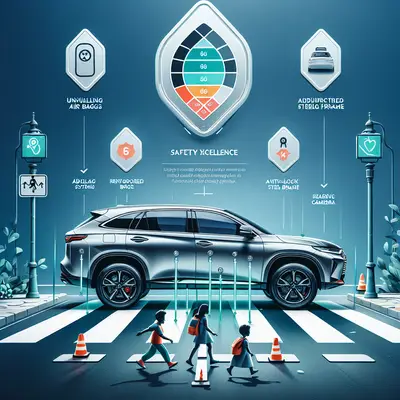
For family buyers, the small overlap and side-impact tests deserve particular attention. These simulate some of the most dangerous collisions—those involving the front corner of the vehicle or being struck at an intersection. An SUV that performs superbly in these demanding scenarios has usually been engineered with sophisticated crash structures: high-strength steel in key load paths, energy-absorbing front rails, and reinforced door sills and pillars. Look closely at sub-scores, not just the headline rating. An SUV with a flawless overall grade but a “marginal” result in a specific test may not align with the confidence you want when sitting in a busy cross-town intersection or navigating narrow suburban streets.
Cabin Geometry: Why Seating Position and Visibility Matter More Than You Think
Safety ratings focus heavily on how a vehicle behaves during a crash. Yet many incidents can be avoided entirely if the driver has superior outward visibility and an intelligently designed seating position. A thoughtfully engineered family SUV places the driver high enough for a commanding view, but not so elevated that close-in obstacles “disappear” near the corners of the vehicle.
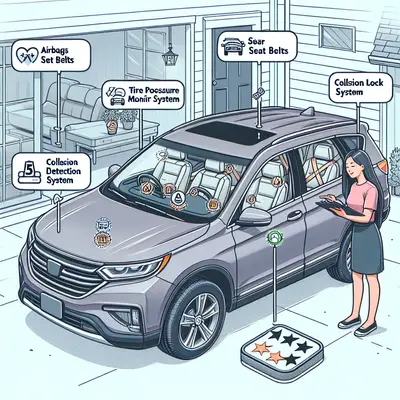
Pay attention to the shape and thickness of the roof pillars, especially the A-pillars at the front. While these are crucial for structural strength in rollover crashes, excessive bulk can create blind spots that hide pedestrians, cyclists, or small cars at junctions. Premium family SUVs strike a delicate balance: strong pillars that work in harmony with expansive glass, carefully contoured mirrors, and supplemental aids such as blind-spot monitoring and 360° camera systems. When you test drive, notice how easily you can track a child darting across a parking lot or see an oncoming cyclist in your periphery. Those quiet moments of clarity are as valuable as any test result.
Child-Centric Design: Safety Ratings Beyond the Booster Seat Icons
Most crash tests use adult-sized dummies, but real family life revolves around infants, toddlers, and growing children. This is where you must look beyond generic “child safety” labels and focus on how well an SUV accommodates actual child restraints and teen passengers. Ratings from organizations like IIHS include child-seat anchor (LATCH) evaluations, yet the lived experience is far more nuanced.
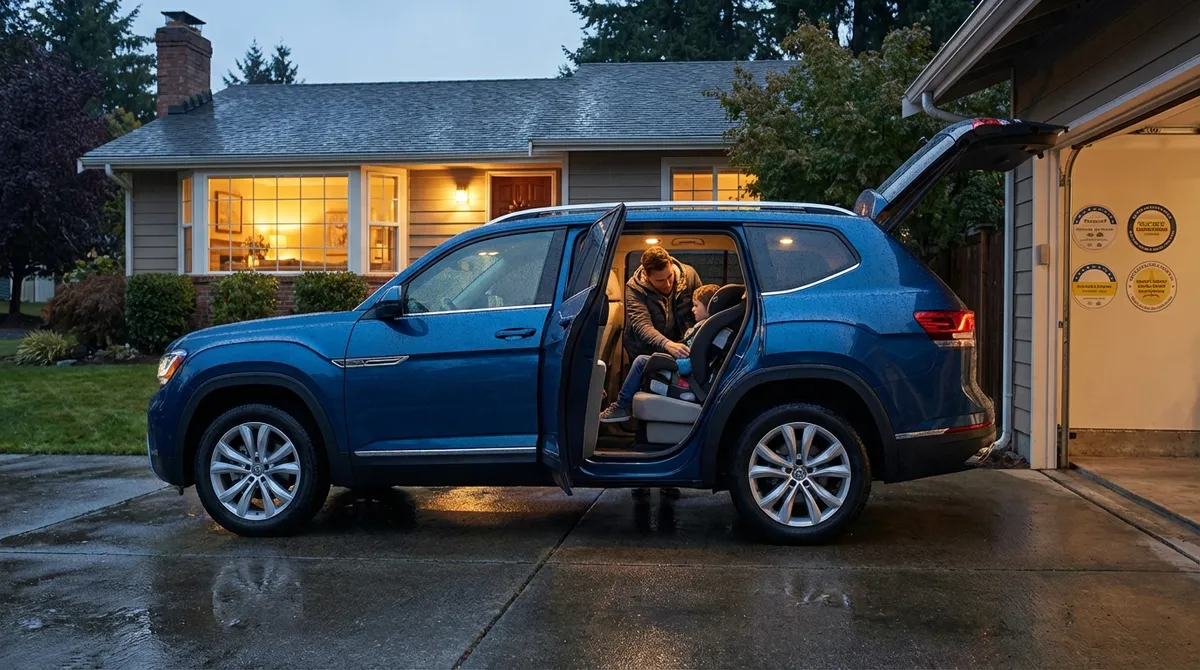
Consider the depth and contouring of the rear seats, which affect how securely a car seat nestles into place. Evaluate how easy it is to access the lower anchors without digging through tight upholstery, and whether top tether anchors are clearly marked and positioned in a way that doesn’t force awkward seat-back angles. In three-row SUVs, a premium safety experience means not having to choose between using the third row and safely installing child seats in the second row. Walk through your real scenarios: loading a sleeping toddler, buckling a teen with a backpack, or accessing the third row with two child seats in place. An SUV that accommodates these needs with effortless clarity is delivering child safety that goes well beyond a line item on a spec sheet.
Intelligent Assistance: Distinguishing Polished Driver Aids from Mere Gadgets
Advanced driver-assistance systems (ADAS) now appear on almost every spec list: automatic emergency braking, lane-keeping assist, adaptive cruise control, and more. On paper, many SUVs seem nearly identical. The difference, however, lies in calibration and integration—how smoothly and predictably these systems behave on real roads with your family on board.
A sophisticated family SUV will intervene early and subtly, rather than reacting harshly at the last moment. Lane-keeping should gently guide, not ping-pong you between lane markers. Adaptive cruise should manage speed gracefully when traffic thickens, avoiding sudden braking that startles passengers or sends tablets tumbling. Perhaps most importantly, look for models that have earned strong ratings in independent evaluations of front-crash prevention for both vehicle and pedestrian scenarios. The most advanced systems now recognize cyclists, night-time pedestrians, and even intersecting vehicles. When these technologies are polished rather than intrusive, you’re more likely to leave them activated—allowing the full safety benefit to quietly operate in the background, every mile.
Material Choices and Quiet Confidence: How Refinement Enhances Protection
An often-overlooked dimension of safety is how comfortable and composed you feel behind the wheel. High-quality materials, low cabin noise, and refined ride quality are not merely luxuries; they directly influence driver fatigue and attentiveness. A well-insulated cabin reduces the cognitive load of constant road and wind noise, helping you arrive fresher after long drives. Supportive seats with thoughtful cushioning and adjustability make it easier to maintain an alert, stable driving posture during late-night returns from weekend activities or long highway trips.
Underneath the tactile surfaces, material choices play another role. Strategic use of ultra-high-strength steel, aluminum, and tailored blanks allows engineers to direct crash forces away from the passenger cell. Some manufacturers go further, optimizing crumple zones to account for real-world variables such as varying occupant sizes and seating positions. While these details rarely appear in marketing copy, they are often documented in engineering briefs, safety award citations, and technical overviews. When an SUV combines this advanced structural engineering with a hushed, stable ride, it delivers a subtle but powerful form of safety: a calm environment that keeps the driver composed and the cabin structurally protected when it matters most.
Conclusion
Safety ratings are an invaluable starting point, but for families who expect more than the ordinary, they are just the beginning. By understanding the nuances behind crash tests, cabin design, child-seat compatibility, driver-assistance technology, and material engineering, you gain a more complete and discerning view of how an SUV will truly protect your family’s everyday life.
The most sophisticated family SUVs do more than excel in controlled laboratory tests. They anticipate the realities of modern family travel and translate advanced engineering into quiet assurance on every journey. When you evaluate safety through this more elevated lens, you’re not merely choosing an SUV; you’re curating the environment in which countless family memories—and moments of trust—will unfold.
Sources
- NHTSA 5-Star Safety Ratings - Official U.S. government crash test ratings and methodology explanations
- IIHS Vehicle Ratings - Detailed crash test results, small overlap tests, and child-seat anchor (LATCH) evaluations
- Euro NCAP Safety Ratings - Independent European crash testing with extensive data on adult, child, and vulnerable road user protection
- CDC – Child Passenger Safety - Evidence-based guidance on child restraints and factors affecting child safety in vehicles
- AAA Foundation for Traffic Safety Research Library - Research on advanced driver-assistance systems, driver fatigue, and real-world safety outcomes
Key Takeaway
The most important thing to remember from this article is that this information can change how you think about Safety Ratings.