Safety ratings have become the shorthand of reassurance in the SUV world—a quick constellation of stars or letters meant to summarize something profoundly complex. For families, however, genuine peace of mind lies in what those ratings don’t immediately reveal. This is where nuance matters: how, exactly, an SUV protects you when the unexpected happens, and how subtly it helps you avoid those moments in the first place.
Why a “Top Rating” Is Only the Beginning
Most reputable SUVs now score well in crash tests. On paper, many look almost indistinguishable. Yet the journey from “adequate” to “exceptional” safety is paved with details that a single overall rating cannot capture.
Safety agencies such as the National Highway Traffic Safety Administration (NHTSA) and the Insurance Institute for Highway Safety (IIHS) evaluate specific crash modes: frontal, side, rollover, and more nuanced events like small-overlap impacts. Each of these uncovers different vulnerabilities—some that matter more for adults in the front, others for children in the second row.
For a family buyer, the crucial shift is from asking “Is this SUV safe?” to “In what situations is this SUV at its best—and where is it merely average?” The answer often lives in technical sub-scores, detailed test notes, and the way advanced driver-assistance systems (ADAS) perform in real-world scenarios rather than in perfectly controlled tests.
Exclusive Insight #1: The “Second-Row Story” Hidden Behind the Headline Rating
When manufacturers spotlight their safety credentials, the emphasis is almost always on the front-row experience. Yet for families, the most precious passengers sit behind the driver, in the second row—or even the third.
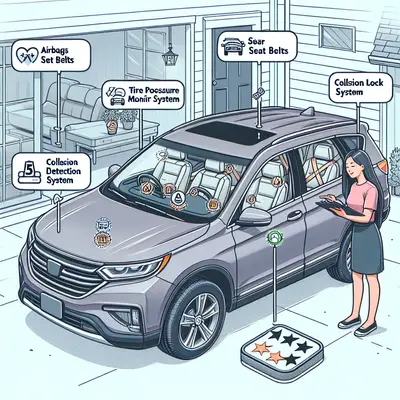
Look closely at safety reports and you’ll see discreet references to rear occupant protection, such as chest and head injury measures or comments on belt geometry and airbag coverage. In some SUVs, the front row might earn near-perfect scores while the rear row shows elevated forces, especially in certain side or small-overlap crashes.
For parents, this means:
- Treat overall star ratings as an invitation to dig deeper into rear-seat performance.
- Prioritize models where regulatory bodies or independent testers explicitly praise second-row crashworthiness.
- Pay attention to whether side airbags extend coverage generously across both rows, not just the front.
The most refined family SUVs translate their safety engineering all the way to the back of the cabin, not just where the driver sits.
Exclusive Insight #2: The Quiet Luxury of Predictable Driver Assistance
Advanced safety tech is now expected: automatic emergency braking, lane-keeping assist, blind-spot monitoring, and adaptive cruise control are common talking points. Yet the real luxury isn’t the presence of these systems—it’s how gracefully they integrate into daily driving.
Many ratings simply note whether a feature exists and, at best, whether it prevented a collision in a controlled test. What they rarely communicate is behavioral refinement: Is the lane-keeping assist smooth or twitchy? Does adaptive cruise brake abruptly or modulate its speed with subtlety? Does the forward collision warning system cry wolf in city traffic, training you to ignore it?
For a family SUV, that refinement matters enormously:
- Overly aggressive alerts lead to “alarm fatigue,” where meaningful warnings get tuned out.
- Jerky automatic braking can startle occupants—especially sleeping children—or unsettle the driver in slippery conditions.
- A well-calibrated system quietly supports a calm, confident driving style, reducing fatigue on long family journeys.
During a test drive, engage these systems deliberately. A truly premium safety experience will feel almost invisible—like a trusted co-driver, not an anxious backseat critic.
Exclusive Insight #3: Child Seat Compatibility Is a Safety Rating in Disguise
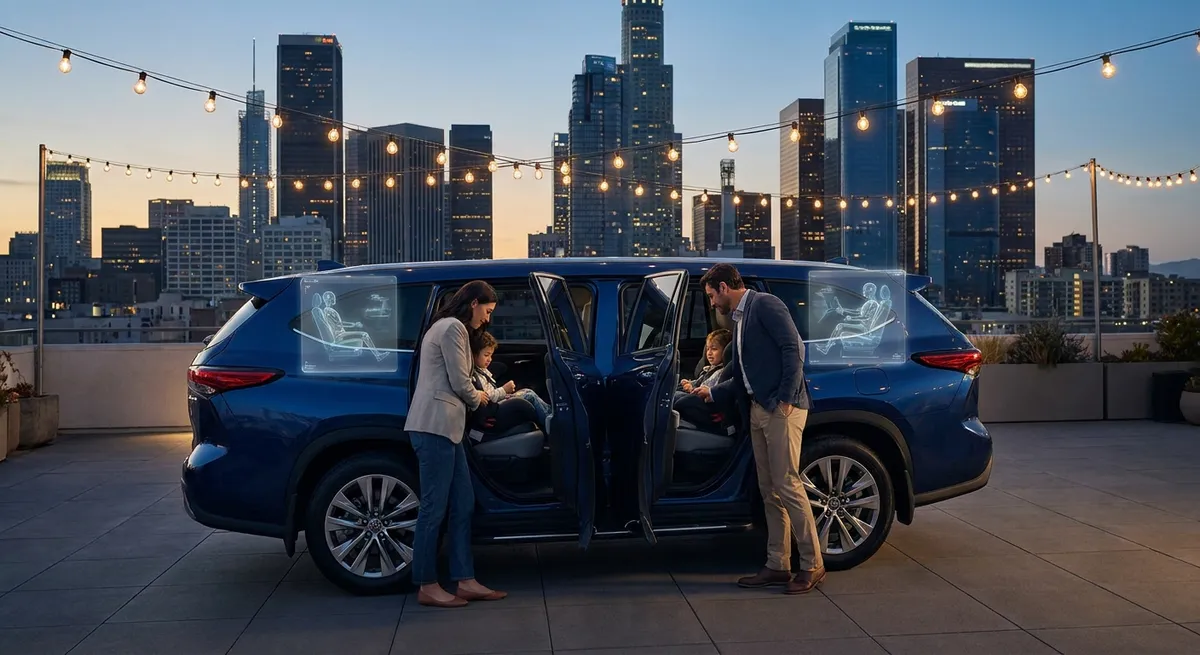
Official crash ratings typically assume adult occupants with seat belts and standard seating positions. Families, however, live in a different reality: multiple child seats, varying sizes, and sometimes three across a single row.
This is where safety goes beyond laboratory results and into the ergonomics of daily life:
- LATCH anchor accessibility can affect how securely a seat is installed; deeply buried anchors invite installation errors.
- The shape and firmness of the seat cushion influence how stable a child seat remains during cornering and braking.
- Some SUVs have dedicated ratings or notes for child seat installation ease; others quietly excel or struggle without much attention.
A seemingly minor detail—such as how easily you can tighten the top tether or whether seat belt buckles get trapped beneath a booster—has real implications in an emergency stop or collision. For discerning families, the most genuinely “safe” SUV is often the one in which installing and checking child seats becomes effortless, repeatable, and error-resistant.
Exclusive Insight #4: Structural Calm in Asymmetric Crashes
Not all impacts are head-on or symmetrical. Many modern crash tests now evaluate small-overlap or offset frontal collisions, simulating what happens when a vehicle clips an object like a pole, guardrail, or another vehicle’s corner.
This is where structural sophistication quietly separates the exceptional from the merely compliant:
- Some SUVs channel crash forces cleanly away from the cabin, preserving space for occupants even in awkward, partial hits.
- Others reveal more deformation at the edges of the firewall or the footwell, which can translate to higher injury risk for the front-row passenger—or even altered forces transmitted through the vehicle’s frame.
Families should pay particular attention to small-overlap or frontal-offset evaluations, as these events are common in real-world scenarios such as nighttime driving on narrow roads, evasive maneuvers gone wrong, or wet-weather skids.
The SUVs that handle these asymmetric impacts with composure tend to reflect a deeper engineering philosophy: the recognition that real roads rarely deliver textbook collisions.
Exclusive Insight #5: Nighttime and Pedestrian Safety as Markers of True Thoughtfulness
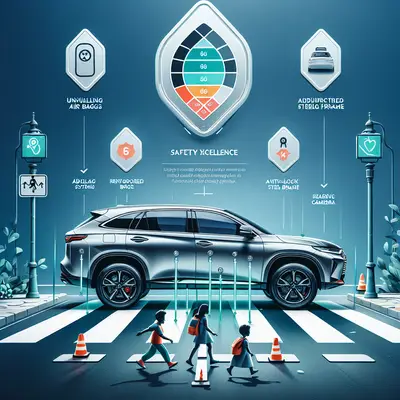
Traditional safety ratings were primarily focused on vehicle-to-vehicle collisions. Increasingly, however, the most thoughtful SUVs distinguish themselves in how they protect those outside the vehicle—and how well they support the driver in low-visibility conditions.
Modern evaluations now consider:
- Headlight performance: beam reach, glare control, and curve illumination.
- Pedestrian detection capabilities: especially at night or in lower-speed urban environments.
- Cyclist detection and cross-traffic alerts that help in crowded city settings or busy school zones.
For a family, the moments of greatest vulnerability often occur at dawn school drop-offs, dusk extracurricular pickups, or weekend city outings. An SUV that scores well for headlight performance and pedestrian detection does more than earn another badge; it demonstrates a design mindset that anticipates those nuanced scenarios where families actually live their lives.
In some ways, premium safety in 2026 is not just about surviving a crash but about gently, intelligently steering the vehicle away from danger long before contact occurs—particularly in complex, dark, and unpredictable environments.
Conclusion
Safety ratings remain a vital starting point, but for families seeking a truly elevated SUV experience, the real value lies in reading between the lines. Rear occupant protection, the behavior—not just the presence—of driver assistance systems, child seat compatibility, asymmetric crash performance, and nighttime and pedestrian safety all paint a far richer, more revealing portrait.
When you approach an SUV with this level of scrutiny, you move beyond the reassurance of stars and labels into something more meaningful: a calm, quiet confidence that the vehicle has been engineered around the way your family genuinely moves through the world. In that space, safety stops being a spec sheet number and becomes what it should have been all along—the most discreet form of everyday luxury.
Sources
- NHTSA 5-Star Safety Ratings Overview - Explains how U.S. government crash tests and star ratings are structured, including frontal, side, and rollover evaluations.
- IIHS Vehicle Ratings and Test Protocols - Provides detailed crash test results, small-overlap crash data, headlight ratings, and evaluations of advanced driver assistance systems.
- Euro NCAP Testing Protocols - Outlines European crash test procedures, including vulnerable road user and child occupant protection assessments.
- CDC Child Passenger Safety Guidelines - Offers evidence-based guidance on child restraints, booster seats, and rear seating recommendations.
- AAA Pedestrian & Headlight Safety Research - Summarizes studies on headlight performance, nighttime visibility, and their impact on pedestrian safety.
Key Takeaway
The most important thing to remember from this article is that this information can change how you think about Safety Ratings.