For families who refuse to compromise, safety is not a checkbox—it is a philosophy. The modern family SUV may arrive adorned with stars, scores, and acronyms, yet discerning parents know that not all “safe” vehicles feel equally protective in real life. Beneath the polished marketing lies a more nuanced reality: how an SUV manages energy in a crash, anticipates danger before it happens, and supports the driver during the everyday chaos of school runs and late‑night airport pickups.
This is an exploration of safety that moves past the obvious. Rather than simply asking, “How many stars?”, it asks, “How thoughtfully is this vehicle engineered for the way families truly live?” Below are five exclusive insights that help you read between the lines—and choose a family SUV where safety feels quietly, confidently assured.
Crash Tests Are Only the Overture, Not the Whole Symphony
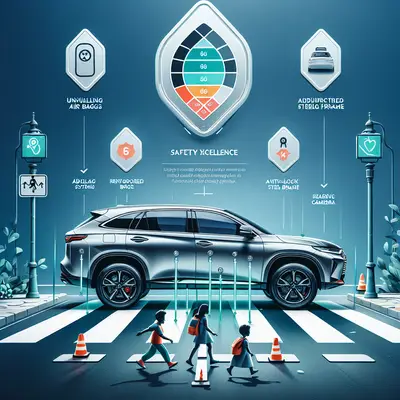
The familiar safety ratings from NHTSA and IIHS are essential, but they tell only part of the story. A five‑star or “Top Safety Pick+” vehicle has cleared an important bar, yet two SUVs with similar scores can behave quite differently in real‑world conditions. What matters for families is not just surviving a crash, but how intelligently the cabin preserves space for children and adults in every seating row.
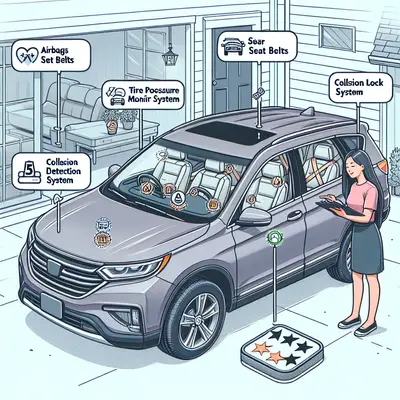
Pay particular attention to small overlap and side impact tests, which simulate the kinds of severe, real‑world collisions most likely to threaten the passenger cell. Vehicles that excel here often have more advanced crumple zone engineering and stronger occupant cages. Families with teens or frequent adult passengers in the rear should examine rear-impact whiplash and side-curtain airbag coverage specifically; some models extend the most advanced protections only to the front seats. A truly family-centric SUV maintains structural integrity around all three rows, not just the driver.
The Geometry of Safety: Seating Layout, Tethers, and LATCH Done Properly
Perhaps the most underrated dimension of SUV safety is how gracefully it accommodates child seats. On paper, many models claim multiple LATCH anchors and top tether points; in practice, some of these are buried behind trim, obstructed by headrests, or rendered nearly inaccessible once all three rows are in use. The result is a subtle but very real compromise: families end up using less-than-ideal seating positions simply because the best ones are awkward to reach.
When evaluating a family SUV, consider the “geometry of safety” inside. Are the LATCH anchors easy to see and access without forcing you to contort your wrist between seat cushions? Can you comfortably install three child seats across the second row if needed, or does the seat contouring make that unrealistic? If there is a third row, can you enter it gracefully with a child seat installed on the outboard second-row seat, or does that block access entirely?
Premium safety is not just about the presence of features; it’s about the thoughtfulness of their execution. SUVs that truly understand family life allow secure installations with minimal improvisation—no stacking towels under bases, no half‑latched tethers, no constant re-adjustments to keep everything level.
Predictive Protection: Active Safety that Feels Intuitive, Not Intrusive
Advanced driver assistance systems (ADAS) have become nearly universal, but they are not created equal. Two SUVs might both list forward collision warning, automatic emergency braking, lane-keeping, and blind-spot monitoring, yet deliver entirely different driving experiences. For families, the distinction between “present” and “polished” is critical; poorly tuned systems can cause fatigue, while refined setups quietly prevent misjudgments in the background.
Focus on how predictive and natural these systems feel in use. Does adaptive cruise control brake smoothly, or does it surge and lurch in traffic? Are lane-keeping interventions gentle and reassuring, or abrupt enough to startle passengers? Does the blind-spot system offer rich information—clear visual cues in the mirror, perhaps a subtle steering assist—rather than just a single warning light?
Look for systems that integrate multiple functions—such as combining navigation data, camera input, and radar—to anticipate hazards more intelligently, like slowing for upcoming curves or recognizing pedestrians at night. The most sophisticated SUVs use technology not to overwhelm the driver with beeps and flashing icons, but to cultivate a sense of calm, almost invisible guardianship over every journey.
Subtle Safeguards: Materials, Interfaces, and The Calm Cabin Effect
True safety is not only about surviving the worst day on the road; it is also about reducing the likelihood of that day ever arriving. Cabin design plays a larger role in this than many rating charts capture. A quiet, low‑vibration interior, intuitive controls, and high‑quality materials that age gracefully all contribute indirectly to safety by preserving driver focus and reducing fatigue.
Consider how the dashboard and center console are laid out. Are climate and volume controls physical, tactile knobs and switches that can be located without taking your eyes off the road, or are critical functions buried inside layered touch-screen menus? Are frequently used buttons—defrost, hazard lights, drive mode—positioned where your hand naturally falls? At night, does the ambient lighting create a calm, legible environment without glare on the windows?
Premium family SUVs also excel in visibility. Slimmer roof pillars, well‑designed mirrors, and thoughtfully placed cameras combine to reduce blind spots. Even the choice of interior materials and seat contouring can affect posture and long‑distance comfort, which in turn shapes how alert you feel after hours behind the wheel. A cabin that stays quiet at highway speeds, filters harsh vibrations, and keeps temperature consistent across rows is not just more pleasant—it is subtly, meaningfully safer.
Safety Over Time: Resale, Repairs, and the Longevity of Protection
Safety is not frozen at the moment of purchase. Over years of ownership, the cost and availability of repairs, the ease of software updates, and the durability of key systems determine whether your SUV remains as protective as the day it left the showroom. Two vehicles with similar ratings when new can diverge dramatically after a decade of family life.
Investigate how the brand handles over‑the‑air updates for safety and driver assistance systems. Some manufacturers continuously refine braking behavior, lane-centering, and even pedestrian detection through software–keeping your SUV’s safety performance evolving instead of aging. Also consider the repair ecosystem: Are replacement sensors, cameras, and ADAS-related components readily available and reasonably priced? Sophisticated systems are only an advantage if they can be restored to full function after a minor collision.
Insurance costs can also hint at real-world claim patterns and repair complexity. A model with exceptionally costly repairs or frequent claims may signal that, while advanced, its technology is fragile in everyday use. A wisely chosen family SUV is one where the protection it offers today can be maintained—precisely and affordably—for years of school commutes, road trips, and new-driver practice sessions.
Conclusion
For families who value refinement as much as reassurance, safety is measured in more than stars and scores. It is found in the way an SUV structures its cabin to protect every row, in the effortless precision of its driver assistance systems, in the quiet clarity of its controls and sightlines, and in how gracefully its safety technology ages.
The most compelling family SUVs weave all these nuances together into an experience that feels composed and protective—whether you are merging onto a rainy freeway, threading through city streets at dusk, or gliding home with sleeping children in the back. When safety is thoughtfully engineered into every detail, confidence stops being something you have to think about. It simply surrounds you.
Sources
- National Highway Traffic Safety Administration (NHTSA) 5-Star Safety Ratings - Official crash test ratings and methodology for evaluating vehicle safety performance
- IIHS Vehicle Ratings - Detailed crash test results, small overlap tests, and child seat anchor evaluations across SUV models
- SaferCar: Car Seats and LATCH Information - U.S. government guidance on proper child seat use, LATCH systems, and installation best practices
- AAA Foundation for Traffic Safety Research - Studies on driver assistance systems, driver distraction, and factors influencing real-world crash risk
- Consumer Reports: Car Safety & Reliability - Independent evaluations of vehicle safety features, usability of controls, and long-term reliability considerations
Key Takeaway
The most important thing to remember from this article is that this information can change how you think about Safety Ratings.