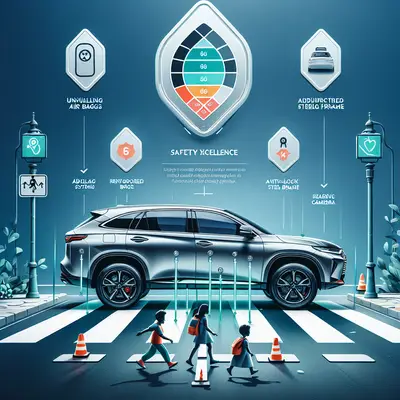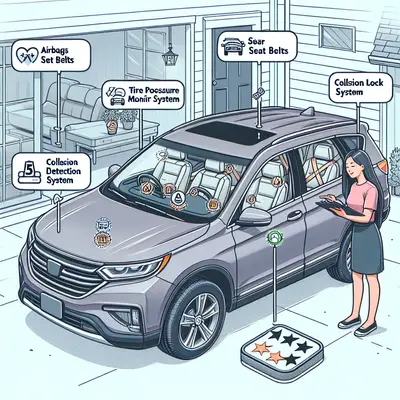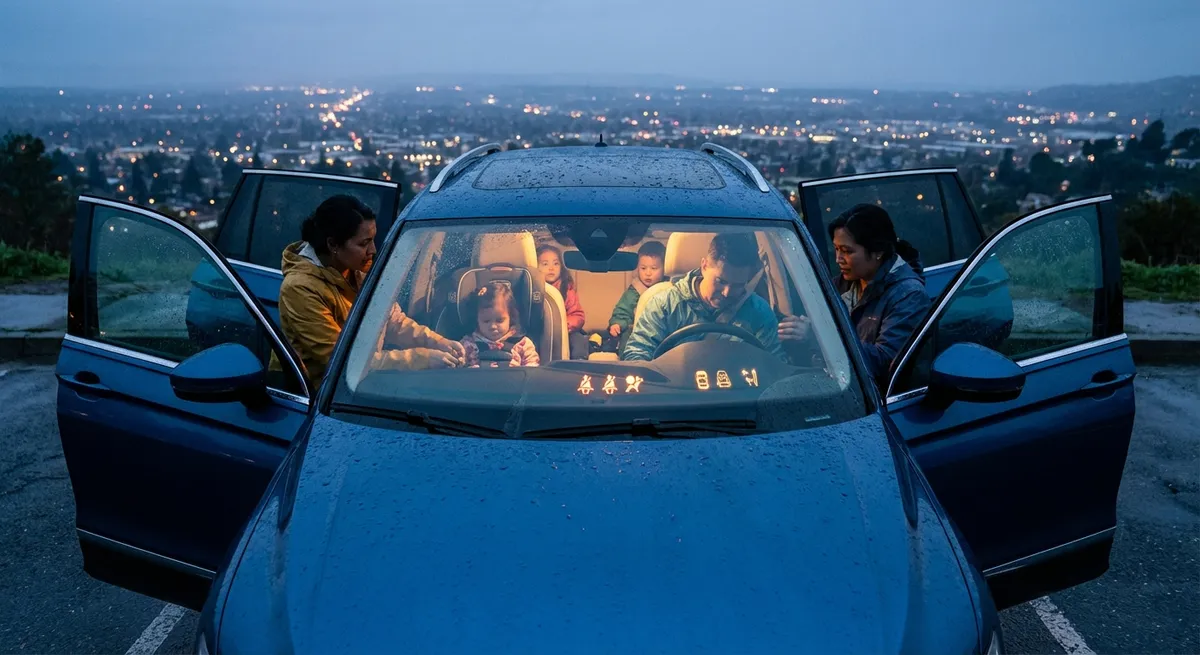
For families who take safety as seriously as comfort and style, a crash-test “5-star” is only the beginning of the conversation, not the end. The modern family SUV has evolved into a remarkably complex protector—layered with sensors, structural engineering, and quietly intelligent software that rarely gets mentioned in showroom conversations. Understanding the nuance behind safety ratings can help you move beyond the brochure and choose an SUV that genuinely aligns with your family’s needs, driving style, and long-term plans.
Below, we explore five exclusive, often-overlooked safety insights that reward a more discerning eye—details that transform a merely “safe” SUV into a thoughtfully protective one.
Why Safety Ratings Only Tell Part of the Story
Safety ratings from organizations such as the National Highway Traffic Safety Administration (NHTSA) and the Insurance Institute for Highway Safety (IIHS) remain the starting point for any informed buyer, but they cannot capture the full texture of real-world protection.
Ratings are derived from specific test scenarios—frontal impacts, side collisions, rollovers, and, increasingly, pedestrian protection and crash-avoidance performance. These tests are standardized for fairness, but your family’s reality is never standardized: different road conditions, driving habits, and passenger configurations create variations that no single score can fully describe.
This is why two SUVs, both wearing top safety awards, can feel very different in practice. One may excel at protecting front occupants in frontal crashes, while another prioritizes rear-occupant protection and intelligent crash-avoidance systems. For families with young children, teenagers, or multi-generational passengers, that nuance matters. The goal is not to dismiss ratings but to treat them as a foundation—then layer on deeper questions about where and how your family truly drives.
Insight 1: Rear-Seat Safety Is Quietly Becoming the New Luxury
For many families, the most precious cargo sits in the back. Yet safety conversations overwhelmingly focus on the driver and front-passenger seats. Modern test programs are beginning to catch up: the IIHS, for example, now evaluates rear-seat occupant protection in frontal crashes with greater scrutiny, and some previously top-rated SUVs have seen their ratings adjusted downward as a result.
This shift is important. Historically, safety systems such as advanced seatbelt pretensioners, load limiters, and multi-stage airbags focused on the front row. Some newer family SUVs now extend these refinements into the second row—offering rear side airbags, improved head restraints, and carefully tuned seatbelt systems designed for both adults and children in booster seats. In the third row, thoughtful manufacturers are engineering better structural reinforcement and curtain-airbag coverage that reaches every seating position, not just the outboard ones.
When comparing SUVs, look beyond the headline rating and explore the details: Does the vehicle’s safety report mention rear occupant protection specifically? Are there load limiters and pretensioners in rear belts? How extensively do side curtain airbags cover the third row? Families who routinely carry children or grandparents in the back will find that these discreet details make a profound difference.
Insight 2: Not All Driver Assistance Tech Is Created Equal
Advanced driver-assistance systems (ADAS) are now central to many safety ratings, but the real-world experience varies dramatically between brands. Terms like “lane-keeping assist” or “automatic emergency braking” suggest uniformity where there is none. The execution—how early a system warns, how smoothly it intervenes, how reliably it detects pedestrians and cyclists—depends on each manufacturer’s philosophy and hardware.
Some systems are tuned conservatively, stepping in early and assertively. Others favor minimal intervention, providing subtle nudges rather than firm corrections. For a family SUV, the ideal balance often lies somewhere in the middle: confident enough to prevent or mitigate a crash, yet refined enough not to startle the driver or disturb sleeping children with abrupt braking or steering inputs.
Moreover, top safety organizations now test crash-avoidance capabilities specifically against pedestrians and, increasingly, nighttime scenarios. This is where premium-level engineering shines. Higher-end SUVs may combine radar, cameras, and sophisticated software to identify vulnerable road users even in low visibility, while others may struggle with more complex situations. When evaluating an SUV, pay attention to the depth of its ADAS coverage, including pedestrian detection, junction assist (for turning across traffic), and blind-spot intervention—not just blind-spot warning. The subtler, more seamlessly integrated these systems feel on a test drive, the more likely they are to be used consistently rather than switched off in frustration.
Insight 3: Structural Integrity Is the “Silent Design Language”
Beneath the leather seats and ambient lighting lies a hidden architecture of safety: how an SUV’s body channels impact forces, preserves cabin space, and keeps the structure intact during severe collisions. This is where engineering sophistication, materials science, and design discipline converge.
Top-performing family SUVs often use a blend of ultra-high-strength steel, strategic reinforcements, and energy-absorbing crumple zones that deform in a controlled way while preserving the occupant cell. Look closely at a vehicle’s safety documentation and test results, and you may find references to “small overlap” crash performance or roof strength—both key indicators of structural integrity in challenging real-world crashes such as offset frontal impacts or rollovers.
Advanced SUVs increasingly incorporate multi-path load distribution: instead of allowing crash forces to travel through a single structural member, the impact is spread through several routes, reducing cabin intrusion. Roof-strength testing, too, provides a window into rollover protection—vital for taller vehicles like SUVs. For families who drive in regions with winding roads, uneven surfaces, or winter conditions, this quiet structural excellence can be just as valuable as any tech feature.
Insight 4: Child-Seat Practicality Is a Safety Feature, Not an Accessory
For parents with infants, toddlers, or booster-age children, the way an SUV accommodates child seats is effectively a core safety system. Lab tests assume proper installation, but many real-world mishaps stem from difficult access, awkward angles, or confusing anchor placement. This is where a premium family SUV distinguishes itself not only in materials but in thoughtful design.
Some models provide clearly marked, easily reachable LATCH anchors that do not require fishing between cushions or compressing seat bolsters. Others offer extra tether points for the third row, allowing safe installations beyond the second row—a real boon for larger families or carpoolers. Wide-opening rear doors, generous legroom, and flat, well-shaped seat cushions also simplify correct installation and reduce the temptation to take shortcuts.
Side-curtain airbag coverage over child-seat positions is equally important. For forward-facing children, the interaction between head restraints, seatbacks, and airbags can influence injury outcomes. Carefully read both crash-test commentary and the owner’s manual sections on child restraint placement. An SUV that makes it genuinely easy to install, inspect, and adjust child seats reduces day-to-day risk far more effectively than any single piece of technology.
Insight 5: Long-Term Safety Includes Maintenance and Software Support
Safety is not frozen at the moment you drive off the lot. It evolves over the lifespan of your SUV—especially now that core safety systems depend on sensors, cameras, and software updates. A modern family SUV may receive over-the-air updates that refine braking algorithms, improve lane-keeping performance, or expand pedestrian-detection scenarios over time.
However, this only matters if the manufacturer has a strong track record of long-term support. Some brands proactively issue updates to enhance safety systems in response to real-world data and regulatory guidance. Others may be slower or more limited in scope. Likewise, the placement of sensors—behind windshields, in bumpers, or within grilles—has implications for repair costs and accurate post-repair calibration after minor collisions. An SUV with easily damaged radar units but complex recalibration requirements can be both more expensive to maintain and more vulnerable to degraded safety performance if repairs are not done precisely.
For a family planning to keep an SUV for many years, it is worth asking: How long does the manufacturer typically support software updates? How robust is the dealer network’s calibration capability? Are there documented service procedures for ADAS systems? Safety in year eight should be treated with the same seriousness as safety on day one, and premium-level brands increasingly recognize that lifecycle support is an integral part of the safety proposition.
Conclusion
Discerning families today are not satisfied with simply ticking the “five-star” box and moving on. The most reassuring family SUVs combine high crash-test scores with deeply considered engineering in the areas that matter most: rear-seat protection, well-tuned driver assistance, strong structural design, genuine child-seat practicality, and long-term support for the systems that quietly watch over every journey.
By asking more refined questions—about rear occupant protection, ADAS sophistication, underlying structure, child-seat usability, and software longevity—you move from buying an SUV that is “technically safe” to selecting one that aligns gracefully with the rhythms and realities of your family’s life. In that space between the headline rating and the subtle detail is where true peace of mind resides.
Sources
- [NHTSA 5-Star Safety Ratings](https://www.nhtsa.gov/ratings) - Official U.S. government crash-test ratings and explanations of test procedures
- [IIHS Vehicle Ratings](https://www.iihs.org/ratings) - Detailed crash-test and crash-avoidance evaluations, including rear-seat and small-overlap tests
- [SaferCar Child Safety Seat Information (NHTSA)](https://www.nhtsa.gov/equipment/car-seats-and-booster-seats) - U.S. government guidance on child-seat use, LATCH, and proper installation
- [Euro NCAP Safety Assist and Occupant Protection](https://www.euroncap.com/en/vehicle-safety/the-ratings-explained/) - European crash-test protocols with emphasis on ADAS and vulnerable road users
- [CDC Child Passenger Safety](https://www.cdc.gov/transportationsafety/child_passenger_safety/index.html) - Research and best practices on child passenger protection and real-world injury prevention
Key Takeaway
The most important thing to remember from this article is that this information can change how you think about Safety Ratings.