The family SUV has quietly become the modern household’s most-used living space on wheels. It manages school runs, weekend escapes, business meetings, and late‑night airport drives—often in the same week. Selecting the right one, then, is less about chasing the latest trend and more about curating a calm, capable environment that supports your family’s rhythm with grace. This guide moves beyond spec-sheet comparisons to reveal five exclusive, often-overlooked insights that matter deeply to families who value refinement, practicality, and long-term ease.
The Art of “Calm Cabin” Engineering
A truly elevated family SUV doesn’t announce itself with noise—it disappears into the background of your day. While many buyers fixate on horsepower and screen size, the more transformative factor is cabin composure: how quiet, stable, and relaxed the vehicle feels at 30 mph in the school queue and 70 mph on the freeway.
Begin with noise, vibration, and harshness (NVH). Look for laminated side glass, generous door seals, and sound‑deadening materials in the floor and firewall. On the test drive, deliberately turn off the audio system and note how the vehicle handles coarse pavement, expansion joints, and crosswinds. The goal is a hushed, unflustered cabin where a conversation in the third row doesn’t require raised voices.
Pay attention to ride quality, especially with your actual passengers and gear on board. An SUV that feels crisp and sporty with one driver may become jittery and fatiguing when loaded with children, luggage, and a stroller. Adaptive suspension or multiple drive modes can help tailor the ride, but what matters most is the underlying tuning: a balance of composure and suppleness that doesn’t punish you for imperfect city streets.
Finally, assess seat comfort with the time horizon in mind. Ten minutes in a showroom is insufficient. During your test drive, spend at least 20–30 minutes in the driver’s seat and, if possible, rotate another adult into the second row. Firm, supportive cushions with proper thigh support and adjustable lumbar will feel slightly “structured” at first—but they’re the ones that protect your back on long drives. The true luxury is arriving without needing to stretch.
Family Flow: Subtle Design That Respects Your Routine
The most refined family SUVs are designed not just to impress on delivery day, but to remove friction from everyday life. Focus on how fluidly people and belongings move through the vehicle—what might be called your “family flow.”
Start with ingress and egress. Door openings should be wide without being awkward, and the step-in height should allow young children and grandparents alike to enter without a struggle. Consider how easy it is to secure a child in a car seat without contorting your back or bumping your head on the headliner. A slightly lower beltline and generously sized rear door aperture make these daily rituals far more graceful.
Next, evaluate second- and third-row access in real terms. If you use car seats, test how the sliding and tilting mechanisms behave with a seat installed. Some SUVs allow tilt-and-slide even with a forward-facing seat in place; others effectively “lock” the second row once a seat is installed, making third-row access cumbersome. This is exactly the sort of subtle detail that separates a thoughtful family SUV from a merely stylish one.
Storage deserves the same scrutiny. Rather than asking “How big is the trunk?”, ask “Where does everything actually live?” Look for deep door bins that can hold water bottles upright, a secure place for handbags or briefcases, and covered storage to hide everyday clutter. Underfloor compartments in the cargo area are invaluable for organizing sports gear, emergency kits, and lightweight strollers without sacrificing a clean, uncluttered space.
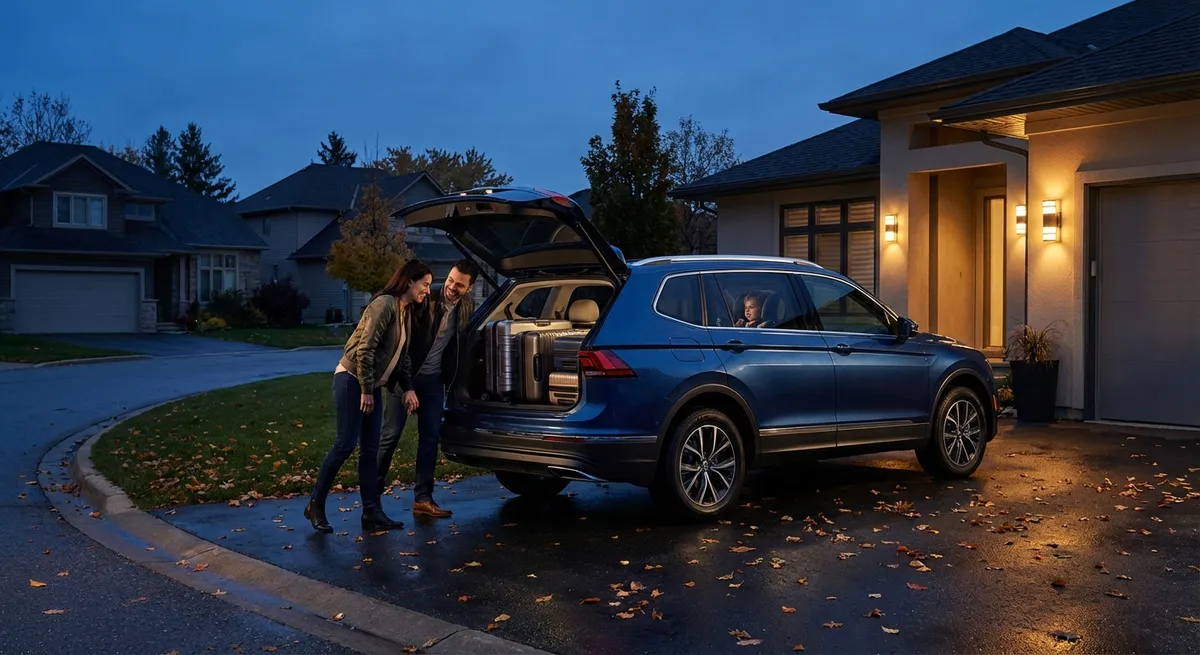
Finally, consider your routine: school drop-offs, grocery runs, weekend sports, and occasional road trips. Bring your actual items—stroller, cooler, backpacks, sports bags—to the test drive and load them. Observe whether the SUV accommodates your life with quiet competence or forces compromises you’ll resent later. A truly premium choice disappears into your routine rather than demanding constant workarounds.
Technology That Enhances, Not Distracts
In family SUVs, technology should serve as a discreet but capable assistant, not a noisy centerpiece demanding constant attention. The most sophisticated systems feel almost invisible—intuitive, consistent, and cooperative across drivers of all tech comfort levels.
Begin with the central interface. When you first sit in the vehicle, resist the urge to explore every feature. Instead, ask yourself: Could a visiting grandparent operate the climate control and audio with minimal explanation? Temperature and volume should be adjustable via physical knobs or clearly marked buttons, even if the vehicle also offers touch controls. Overly complex menus, tiny icons, or buried settings will become a daily annoyance.
Driver-assistance features deserve particular attention. Modern SUVs often include adaptive cruise control, lane-keeping assistance, and blind‑spot monitoring, but implementation quality varies dramatically. During the test drive, enable these systems on a familiar route. You’re looking for smooth, predictable behavior: gentle corrections, confident braking, and unobtrusive alerts. If you feel you’re “fighting” the technology, that’s a red flag for long‑term frustration.
Connectivity matters too—but focus on reliability over novelty. Test Apple CarPlay or Android Auto with your own phone, confirm that the system reconnects seamlessly after short stops, and check whether multiple devices can be paired and prioritized. Rear-seat USB-C ports, a 120V outlet, and a wireless charging pad in a stable, non-slippery location are the kinds of quiet luxuries that keep a busy family moving without cable chaos.
Finally, consider future-proofing. Over‑the‑air software updates, long-term map and traffic support, and a proven track record from the manufacturer in maintaining digital features all point toward an SUV that will feel modern—rather than dated—halfway through your ownership. Technology that ages gracefully is a sophisticated form of value.
Refinement Meets Reality: Materials, Durability, and Cleanability
A premium family SUV must strike a difficult balance: materials that feel elevated to the touch yet stand up to daily life with children, pets, and cargo. Instead of being seduced by high-gloss finishes and delicate textiles, look for refined robustness—surfaces that age elegantly rather than anxiously.
Begin with seat materials. Genuine leather is often equated with luxury, but high-quality synthetic leathers can be more resistant to spills, staining, and stretching while still offering a supple, upscale feel. Ask about the specific upholstery type and, if possible, how it’s treated for stain and UV resistance. Light-colored cabins can feel airy and sophisticated, but examine how easily marks and scuffs wipe away, and whether darker lower panels protect high-touch areas.
Touchpoints deserve particular scrutiny: steering wheel, armrests, door pulls, and console lids. These should feel solid, with minimal flex, and be wrapped in materials that won’t peel or become sticky over time. Soft-touch plastics in key areas signal attention to detail; sharp edges and hard, shiny plastics in places your knees or elbows frequently contact hint at corners cut.
Flooring and cargo solutions matter more than many realize. Look for high-quality floor mats that cover the full footwell (ideally with raised edges to capture debris) and a cargo floor that resists scratching from strollers or luggage. A low, wide load lip not only eases heavy lifting but also minimizes scuffs to the bumper over time. Split-folding seats that fold nearly flat help maintain a clean, versatile space when you occasionally need the SUV to function as a utility vehicle.
Ventilation and air quality are often overlooked but deeply important. Multi‑zone climate control with vents reaching the third row ensures comfort for all passengers, while available cabin air filtration or allergen‑reduction systems can be particularly valuable for families with sensitivities. Subtle details like rear sunshades integrated into the door can provide both comfort and a sense of sanctuary for younger passengers.
Long-Term Grace: Ownership, Efficiency, and Resale Poise
A truly sophisticated family SUV isn’t just impressive during the test drive—it remains composed and rewarding through years of changing needs. Thinking several steps ahead can transform your purchase from a short‑term convenience into a long‑term asset.
Efficiency is about more than miles per gallon. Consider your family’s pattern of use: frequent short city trips, longer highway drives, or a mix. Hybrids and plug-in hybrids can offer unusually serene, low‑noise operation in stop‑and‑go traffic and significantly lower fuel costs over time, particularly if you have convenient home charging. If you’re not ready for full electrification, look for powertrains with a proven reliability record and sensible, not overly stressed, output.
Ownership costs should be approached with the same calm discernment. Investigate the recommended maintenance schedule, average service costs, and whether the manufacturer includes scheduled maintenance or extended warranties. Some brands offer concierge services, pickup and delivery for service visits, or robust loaner programs—quiet benefits that dramatically reduce disruption during busy family weeks.
Resale value is a subtle but powerful dimension of refinement. Models known for durability, safety, and restrained styling often age more gracefully and command stronger resale prices. Research independent reliability ratings, insurance costs, and real‑world owner satisfaction. A carefully chosen SUV can feel indulgent to live with yet remain financially prudent over a longer horizon.
Finally, consider adaptability. Children grow, routines evolve, jobs change, and occasionally, cities do too. An SUV with flexible seating configurations, a comfortable second row for emerging teenagers, and enough towing or cargo capacity for new hobbies (from camping to boating) will feel increasingly well-chosen as your life develops. The most sophisticated vehicles are not just beautiful objects; they are quietly capable partners in a life well lived.
Conclusion
Selecting a family SUV with sophistication is less about following the crowd and more about honoring the way your family actually lives. A calm, well‑engineered cabin, intuitive technology, durable yet elevated materials, and thoughtful long‑term value collectively define an ownership experience that feels quietly luxurious day after day. When you evaluate your candidates through these five lenses, you move beyond the noise of marketing and into a more discerning, confident place—one where your chosen SUV doesn’t simply move your family, but genuinely supports them with poise.
Sources
- [National Highway Traffic Safety Administration (NHTSA) – 5-Star Safety Ratings](https://www.nhtsa.gov/ratings) - Official crash-test ratings and safety information for comparing family SUVs
- [Insurance Institute for Highway Safety (IIHS) – Ratings & Research](https://www.iihs.org/ratings) - Independent safety evaluations, including crashworthiness and crash-avoidance technology performance
- [FuelEconomy.gov – Official U.S. Government Fuel Economy Site](https://www.fueleconomy.gov/feg/findacar.shtml) - EPA fuel economy data and cost-of-ownership insights for conventional, hybrid, and plug-in SUVs
- [Consumer Reports – Car Reliability & Owner Satisfaction](https://www.consumerreports.org/cars/) - Long-term reliability trends, owner satisfaction, and road-test evaluations across SUV segments
- [Edmunds – Car Value & Depreciation Insights](https://www.edmunds.com/car-buying/how-fast-do-cars-depreciate.html) - Analysis of depreciation patterns and resale value considerations for different vehicle types, including SUVs
Key Takeaway
The most important thing to remember from this article is that this information can change how you think about Buying Guide.