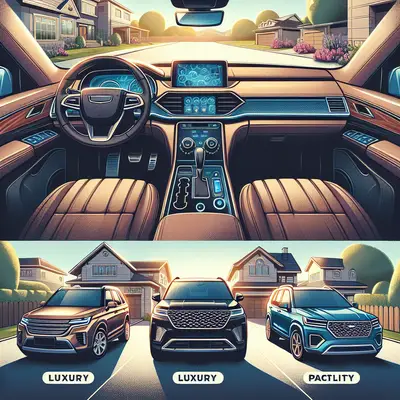
For many families, the SUV has replaced the front hall as the true entryway to daily life. School runs, airport pickups, impromptu weekend escapes—your vehicle is the moving backdrop to all of it. Choosing the right family SUV is less about horsepower and more about how gracefully it manages the chaos of real life, while still feeling like a considered, premium space. The most rewarding models blend practicality with quiet sophistication, turning every journey into an experience that feels composed rather than compromised.
Below are five exclusive, often-overlooked insights that help distinguish an ordinary family SUV from one that feels genuinely elevated in day‑to‑day use.
1. Cabin Layout That Anticipates Real Family Routines
The finest family SUVs are designed not just for passengers, but for patterns—how your family actually lives and moves.
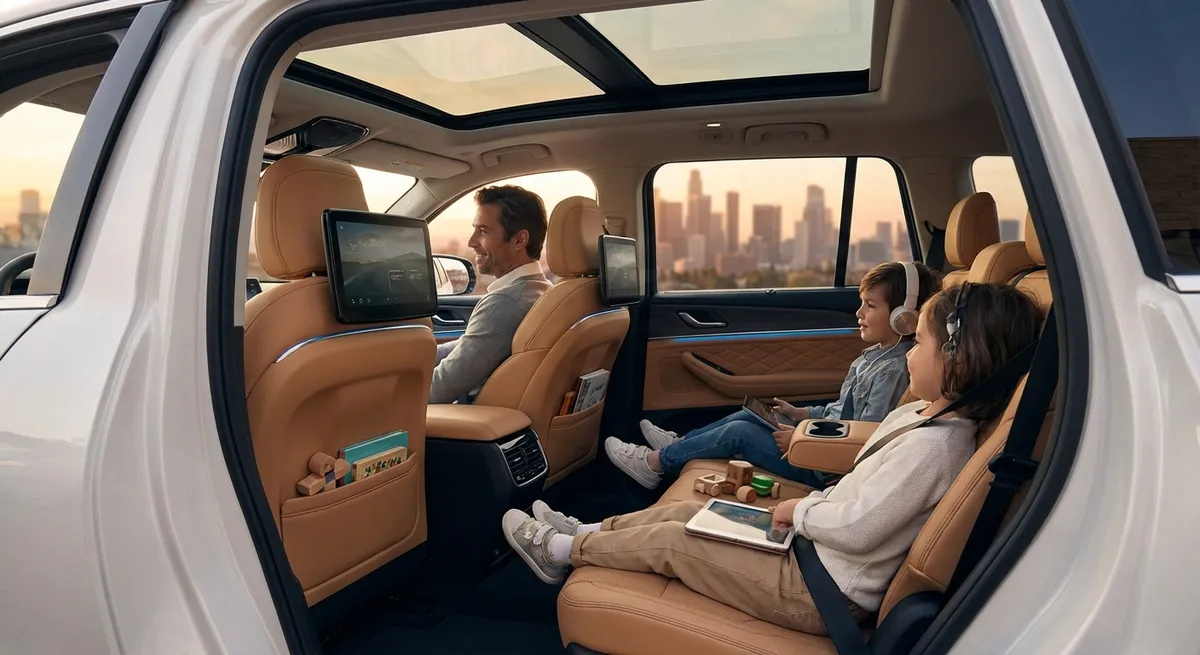
Look for cabins where the second row is more than a bench. Sliding and reclining seats that adjust independently allow you to tailor legroom between the second and third rows without negotiation. A slightly raised second row can also give children a better view out of the windows, reducing motion discomfort and preventing the restlessness that comes with staring at seatbacks.
Thoughtfully placed storage transforms daily clutter into quiet order. Covered compartments that swallow handbags, tablets, and snacks keep the cabin visually calm, while narrow but deep door pockets are ideal for reusable water bottles. Pay attention to how easily you can access items from the driver’s seat without twisting—a refined family SUV keeps essentials within a natural reach, preserving both posture and poise.
Finally, observe the “flow” of the cabin with everyone aboard. Can a child pass between second‑row seats to reach the third row without contortions? Can grandparents step in and out without ducking or pivoting awkwardly? Those small, human details are where thoughtful design quietly reveals itself.
2. Acoustic Comfort: The Invisible Luxury Families Rarely Ask For
In a truly family‑oriented SUV, sound is managed, not merely tolerated. When you combine highway speeds, multiple conversations, streaming audio, and the occasional toddler meltdown, cabin acoustics become a core family feature.
Premium family SUVs use laminated glass, generous insulation, and refined engine mounts to keep ambient noise low. That quiet isn’t a mere luxury—it’s what allows you to speak in a normal tone to the third row without raising your voice, or to hold a calm conversation while a baby naps. Test this intentionally: at a steady speed, turn off the audio and notice the level and quality of the sound around you. A refined cabin will feel more like a well‑insulated living room than a metal box.
Also consider the quality of the sound system beyond sheer wattage. Families often listen at moderate volumes; a well‑tuned system will maintain clarity and richness without needing to be loud, reducing listener fatigue on long drives. When navigation directions, podcasts, and phone calls are all clearly intelligible, the day simply runs more smoothly.
Noise management is one of those understated advantages you tend not to notice—until you spend time in a vehicle that doesn’t do it well.
3. Child‑Centric Safety That Works in the Real World
Safety ratings are essential, but the best family SUVs go beyond crash scores to offer everyday child‑friendly usability.
First, inspect the accessibility and positioning of LATCH anchors. Premium family models hide them behind subtle flaps or zippers—neat to the eye, but easy to reach without fighting the upholstery. Ideally, you should be able to install and remove a child seat without feeling like you are disassembling the interior. If you plan on using the third row, verify whether it offers full LATCH positions or only seat belts; this can be a deciding factor for families with several young children.
Second, consider how safety technology interacts with family routines. Rear seat reminders, for example, are more than a modern convenience—they are designed to help prevent tragic forgetfulness in hectic moments. Similarly, high‑quality surround‑view camera systems with clear, high‑resolution images reduce stress in school parking lots, busy driveways, and tight urban garages.
Finally, explore how configurable the driver assistance features are. Being able to adjust sensitivity for lane‑keeping or forward collision alerts allows you to fine‑tune the car’s “supportive presence” to your comfort level, so advanced safety feels like a calm partnership rather than constant nagging.
4. Climate, Light, and Materials That Support Calm
Families spend an astonishing number of hours in their vehicles; over time, the environment of your SUV subtly influences everyone’s mood.
Multi‑zone climate control is no longer a mere upgrade; it is a tool for harmony. Separate zones for front, second, and sometimes third rows allow each passenger to dial in personal comfort. Look for intuitive controls that children can understand at a glance, with clear icons and minimal menus, so you aren’t constantly mediating temperature disputes from the driver’s seat.
Lighting also plays a surprisingly powerful role. Large windows, thoughtful use of high‑quality LED lighting, and (when desired) a panoramic roof can keep the cabin feeling open and airy even on overcast days. However, you’ll want a robust sunshade as well, so you can quickly darken the interior for naps or evening drives. Subtle ambient lighting that doesn’t glare on screens or windows contributes to a sense of calm, especially on longer night journeys.
As for materials, prioritize those that feel refined to the touch yet are genuinely forgiving. High‑quality, coated leather or premium synthetic alternatives can be wiped clean without absorbing every spill, while textured surfaces on high‑contact areas resist visible wear. Soft‑touch door tops and armrests, even in the second and third rows, signal that every passenger—not just the driver—was considered in the design.
5. Quiet Tech Integration That Serves the Family, Not the Dashboard
Modern SUVs can easily become rolling gadget galleries, but the most sophisticated family vehicles use technology as a discreet assistant rather than a distraction.
Start with the interface. A large touchscreen is not inherently better; what matters is clarity and simplicity. Menus should be shallow, common tasks (like changing audio sources or adjusting navigation) should be obvious, and there should be physical controls for critical functions such as volume and defrost. When a system is well designed, you can adjust what you need by feel, glancing briefly, not staring.
For families, rear‑seat connectivity and charging are as important as front‑row features. Multiple USB‑C and USB‑A ports distributed across rows, possibly supplemented by a household‑style outlet, prevent simmering conflicts over battery life. If rear entertainment screens are available, think of them less as in‑car televisions and more as shared screens for your family’s existing devices and subscriptions—systems that integrate smoothly with your digital life will age more gracefully.
Finally, consider how the vehicle updates and evolves. Over‑the‑air software updates, when implemented thoughtfully, can add new capabilities and improvements without dealership visits. The goal is a car that quietly stays current in the background, rather than one that feels outdated as soon as your children reach their next growth spurt.
Conclusion
A truly sophisticated family SUV is not defined by sheer size or flashiest feature list, but by the way its details quietly accommodate real life. When cabin layout anticipates your routines, when sound and climate are managed with care, when safety and technology feel like calm companions rather than showpieces, the daily drive becomes less of a chore and more of a composed, shared space.
Focusing on these deeper family features—how the vehicle feels, functions, and supports your family’s rhythm—will help you distinguish between an SUV that merely carries you and one that genuinely enhances the way you live.
Sources
- [National Highway Traffic Safety Administration (NHTSA) – Car Seats and Booster Seats](https://www.nhtsa.gov/equipment/car-seats-and-booster-seats) - Authoritative guidance on child seat use, LATCH systems, and safe installation practices
- [Insurance Institute for Highway Safety (IIHS) – Ratings & Vehicle Safety](https://www.iihs.org/ratings) - Comprehensive crash test results and safety feature evaluations for SUVs and family vehicles
- [Environmental Protection Agency (EPA) – Fuel Economy Guide](https://www.fueleconomy.gov/feg/findacar.shtml) - Official fuel economy data useful for comparing family SUVs and understanding efficiency trade‑offs
- [Consumer Reports – Guide to Car Safety Features](https://www.consumerreports.org/cars/car-safety-features-guide/) - Independent overview of modern safety and driver‑assistance technologies and how they perform in everyday driving
- [Edmunds – Car Interior and Comfort Features Explained](https://www.edmunds.com/car-technology/car-interior-and-comfort-features-explained.html) - Detailed explanations of interior, comfort, and tech features relevant to evaluating family‑friendly SUVs
Key Takeaway
The most important thing to remember from this article is that this information can change how you think about Family Features.