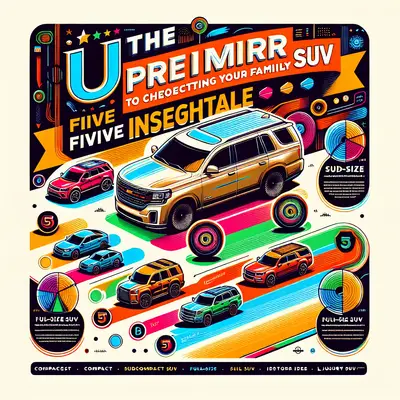
Choosing a family SUV today is less about chasing the latest trend and more about curating the right environment for the life you actually live. The modern family vehicle is a rolling living room, a mobile office, and—on long weekends—a miniature hotel suite. In this landscape, the most satisfying choice is rarely the flashiest spec sheet; it is the SUV that quietly anticipates your family’s rhythms and rises to meet them. This guide is designed for parents who value refinement, subtle intelligence, and long-term ease over short-lived novelty.
Redefining “Space”: How the Cabin Actually Works for Your Family
Cabin space is often reduced to numbers—legroom in millimeters, cargo volume in cubic feet—but for a family, what matters is how that space behaves when life gets complicated. A truly family-ready SUV allows you to reconfigure the interior quickly, without wrestling with heavy seats or obscure levers. Pay close attention to how the second row slides and reclines, and whether it adjusts independently for each passenger. This is the difference between a peaceful school run and daily negotiations over “whose seat is smaller.”
Third-row access is another subtle but critical point. Test whether a child can realistically climb to the back without requiring every other passenger to evacuate. Look for one-touch tilting or sliding mechanisms that work even with a child seat installed—many families discover too late that installing a bulky seat effectively locks the third row out of use. Evaluate how the cargo area functions with all rows in place; an SUV that only becomes practical once you fold seats flat will not serve a growing family gracefully. And finally, consider the shape of the cargo bay as much as its size: a low load floor, a wide opening, and minimal intrusions make weekly grocery hauls and luggage for four feel effortless rather than precariously stacked.
Ride, Noise, and Comfort: The Everyday Luxury That Actually Matters
For a family SUV, true luxury is found less in the badge on the grille and more in the way the vehicle isolates your family from fatigue. Ride quality and noise levels become deeply important once you factor in school traffic, weekend sports, and long highway stretches to visit relatives. During a test drive, pay close attention to how the SUV behaves over broken pavement and speed bumps at neighborhood speeds. A well-tuned suspension should absorb imperfections without feeling vague or floaty, and it should remain composed when fully loaded with passengers and luggage.
Cabin quietness is another point where spec sheets rarely tell the full story. Turn off the audio system and notice how much wind and tire noise reaches the cabin at 40–60 mph—these are the speeds where you will spend most of your time. Double-pane front windows, acoustic glass, and thoughtful door sealing add up to conversations that don’t require raised voices and children who nap more easily on longer drives. Seat comfort is equally crucial; evaluate not just the front seats but the second and third rows for proper thigh support, cushioning density, and natural seating posture. An SUV that prioritizes all-row comfort will feel like an investment in every family member’s well-being, not just the driver’s.
Technology That Simplifies, Not Distracts: Curating the Right Features
In the current market, nearly every SUV is “tech-forward.” The real question is whether that technology serves your family or demands constant attention. Begin by assessing the central screen and the basic controls you use most often: climate adjustments, audio volume, drive modes, and navigation. Ideally, these should be accessible through intuitive physical buttons or straightforward on-screen layouts that can be operated with a brief glance, not a deep dive into menus. Beware of vehicles that bury everyday functions several taps deep; the irritation multiplies quickly in real-world use.
For families, wireless smartphone integration (Apple CarPlay, Android Auto) is particularly important, not just as a convenience but as a way to simplify your digital life in the car. Confirm that the system connects reliably and reconnects gracefully on subsequent drives; a fussy connection routine will quickly become tiresome. Then look at the “quiet helpers” that age exceptionally well: multiple USB-C ports across all rows, a dedicated space to store and charge phones out of sight, a robust rear-seat entertainment solution if it suits your family, and easy-to-manage user profiles if multiple drivers share the vehicle. The goal is not to maximize screen count, but to minimize friction—every journey should begin with calm, not troubleshooting.
Safety with Nuance: How the SUV Protects Real Families in Real Situations
Most family SUVs will tout impressive safety ratings and a long list of advanced driver assistance features. The distinction lies in how cohesively those systems operate and how well they align with your driving style. When you test drive, gently explore adaptive cruise control, lane-keeping assistance, and blind-spot monitoring on a familiar route. Systems that intervene abruptly or feel overly intrusive will be turned off and forgotten; look for those that support your driving with subtle corrections and clear, non-alarming alerts.
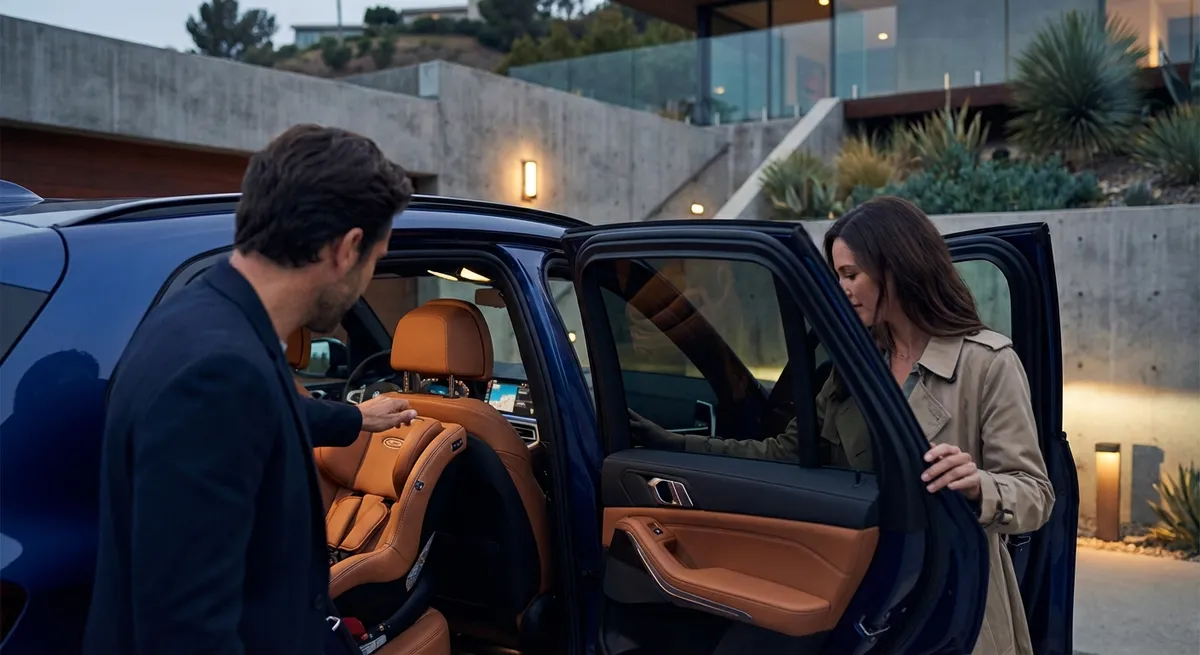
Examine child-focused safety as closely as headline ratings. Investigate how many sets of LATCH anchors are available and how accessible they are behind the upholstery. Test installing and removing a child seat if possible; some SUVs offer cleverly angled doors and wider openings that make this routine task noticeably easier. Consider also the visibility for the driver—large windows, well-placed mirrors, and effective 360-degree camera systems reduce stress during school pickup and urban parking. Finally, evaluate headlights at dusk if you have the opportunity; good illumination is one of those safety advantages you appreciate every single evening and on every unfamiliar road.
Ownership Experience: The Often Overlooked Luxury
The refinement of a family SUV extends well beyond the showroom experience; it lives in the way the vehicle integrates with your daily and yearly routines. Look carefully at scheduled maintenance intervals, warranty coverage, and the availability of service centers near your home, workplace, and common travel routes. A slightly more expensive SUV with longer maintenance intervals and strong dealer support can prove far less demanding—and more luxurious—in the long run.
Running costs matter, too, but not in a purely mathematical sense. Consider the fuel type, real-world fuel economy (including with a full load), and whether a hybrid or plug-in hybrid configuration aligns with your driving patterns and home charging possibilities. An efficient SUV that allows you to run mostly on electric power for short school runs and errands can transform not just your fuel budget but the quietness and cleanliness of your everyday trips. Also look at residual values and reliability records; a vehicle that holds its value and behaves predictably as it ages gives you the comforting sense that you’ve made a seasoned, not impulsive, decision. The most satisfying family SUV is the one that feels like a calm, capable constant through years of changing schedules, growing children, and evolving priorities.
Five Exclusive Insights for the Discerning Family SUV Buyer
- Test the “chaos scenarios,” not just the test-drive route. After the conventional drive, simulate real family moments in the dealership lot: loading a stroller and groceries simultaneously, buckling a child seat while another door is open, practicing third-row access with bags in hand. The SUVs that excel in these unscripted moments are often the ones that feel quietly brilliant in everyday life.
- Evaluate “transition time” from driveway to driving. Time how long it takes to get everyone buckled, adjust the climate, connect your phone, and set navigation—from the moment you open the door to rolling out of your driveway. An SUV with thoughtful seat belts, intuitive tech, and efficient climate controls can consistently trim several minutes from that process, easing the rush of busy mornings.
- Scrutinize cabin materials for how they will age, not just how they look today. Soft-touch surfaces and light-colored leathers are appealing, but consider their resistance to scuffs, fingerprints, and dye transfer from clothing. Gently press, scratch lightly with a fingernail, and imagine five years of after-school snacks, sports gear, and family holidays. The most luxurious cabins are those that still look composed after years of use, not just on delivery day.
- Listen for “quiet quality” in the small interactions. The weight of the doors, the smoothness of seat adjustments, the damping of the glovebox and center console, the precision of steering wheel buttons—these tactile details are often more indicative of long-term satisfaction than a long feature list. Vehicles that feel solid in these minor touches tend to age with more grace and fewer squeaks or rattles.
- Match the SUV’s personality to your family’s pace of life. Some SUVs are tuned with a more athletic, responsive character; others prioritize serene, unhurried comfort. Reflect honestly on how you truly drive most days: are your routines calm and predictable, or do you regularly navigate tight urban streets, busy commutes, and time-sensitive drop-offs? Choosing a vehicle whose driving character complements your natural pace will make every trip feel more intuitive and less strained.
Conclusion
A family SUV is not just a purchase—it is a long-term companion to your daily rituals and your most memorable journeys. When approached thoughtfully, the decision becomes less about chasing the “most” of anything and more about curating the “right” set of qualities: space that flows with your family’s movements, technology that dissolves into the background, safety that feels quietly protective, and an ownership experience that respects your time and energy. Prioritizing these refined, often-overlooked details will guide you toward an SUV that doesn’t simply carry your family, but genuinely supports and elevates the life you share.
Sources
- National Highway Traffic Safety Administration (NHTSA) – 5-Star Safety Ratings - Official U.S. government crash-test ratings and safety information for comparing SUVs
- Insurance Institute for Highway Safety (IIHS) – Ratings - Independent safety evaluations including crashworthiness, crash avoidance, and headlight performance
- U.S. Department of Energy – Fuel Economy Guide - Authoritative fuel-efficiency data for SUVs, including hybrid and plug-in hybrid options
- Edmunds – Car Seat Fit and LATCH Guides - Practical evaluations of child-seat installation and family-friendly features across various SUVs
- Consumer Reports – Vehicle Reliability and Owner Satisfaction - Research-based reliability ratings and owner feedback to help assess long-term SUV ownership experience
Key Takeaway
The most important thing to remember from this article is that this information can change how you think about Buying Guide.