Selecting a family SUV today is less about chasing trends and more about curating a space that quietly elevates daily life. Between school runs, weekend escapes, and the occasional airport dash, the right vehicle becomes an extension of your home—one that balances calm, safety, and subtle sophistication. This guide steps beyond the obvious talking points and focuses on refined, real-world details that discerning families often appreciate most once the honeymoon phase of a new purchase has passed.
The “Third Row Truth Test”: Space That Works Beyond the Spec Sheet
Most brochures will celebrate a “7-seat” configuration, but the true measure of usability is how that third row performs in real life. Bring your actual passengers—children in boosters, teens, or grandparents—and conduct what we’ll call a Third Row Truth Test.
Sit adults in the second and third rows at the same time and adjust the seats as you would for a typical journey. Note how easily you can access the third row with child seats installed in the second row, and whether the third row’s floor height forces knees uncomfortably high. Inspect headroom with and without a panoramic roof, as glass panels can subtly reduce ceiling space. Check whether air vents reach all rows so no one is left too warm or too cold. Lastly, fold and unfold the third row repeatedly; premium family convenience is often found in the smoothness of that daily ritual. What looks generous on paper can feel cramped or awkward in practice—your time in the showroom should reveal that before the first road trip does.
The Cabin as a Sanctuary: Acoustic Refinement and Ride Comfort
For families, genuine luxury is often measured in decibels and heart rates, not just in leather grades. A quiet, well-damped cabin can turn a chaotic commute into something closer to a moving sanctuary. When you test-drive, turn the audio system off. Listen at low speeds and on the highway for wind noise around the mirrors and A-pillars, tire roar on imperfect pavement, and subtle vibrations through the steering wheel or seat base.
Ask about laminated side glass, active noise cancellation, and the type of suspension tuning—these technical choices translate directly into how relaxed you feel after an hour of traffic. Pay attention to how the SUV handles broken roads and speed bumps at neighborhood speeds; a well-resolved suspension will absorb imperfections without float or harshness, so sleeping children stay asleep and conversations remain calm. True family refinement is the ability to arrive at your destination with everyone just a little less tired and frayed.
Technology That Assists, Not Overwhelms: Curating the Digital Experience
Modern SUVs can resemble smartphones on wheels, but the goal for a family is not maximum screen count—it is minimal friction. Before being dazzled by large displays and animated menus, evaluate how the technology behaves when you are running late, juggling bags, and answering questions from the back seat.
Assess how quickly the system starts from a cold start, how intuitive the navigation entry is, and whether wireless Apple CarPlay or Android Auto connects reliably without repeated taps. Inspect the placement and size of physical controls; climate knobs and volume dials are still invaluable when you prefer eyes on the road. Explore driver-assistance features such as adaptive cruise control, lane-centering, and blind-spot monitoring, but pay special attention to their tuning: intrusive beeps, abrupt steering inputs, or overly sensitive alerts can become fatiguing. The most sophisticated systems work in the background, offering confidence rather than constant commentary.
Materials That Age Gracefully: Quiet Indicators of Long-Term Quality
For a family SUV, elegance must coexist with inevitable wear: muddy shoes, spilled drinks, and the occasional craft project gone rogue. Rather than focusing only on initial visual impact, look closely at how materials are likely to age.
Run your hand along the lower door cards and seat backs—areas children often kick. Hard, glossy plastics may scratch and show every scuff, whereas subtly textured or soft-touch surfaces disguise daily use more gracefully. Consider whether the upholstery is leather, leatherette, or high-quality fabric, and ask about stain resistance and recommended cleaning products. Examine stitching quality, panel gaps around the center console, and how solidly the doors close; these micro-details often correlate with long-term durability and lack of squeaks and rattles. A family-focused luxury is not about being precious with the cabin; it is about choosing materials that look composed even after years of genuine use.
An Ownership Experience That Anticipates Real Life
The value of a family SUV extends far beyond the purchase price. True sophistication is found in how the ownership experience supports your family over the next five to ten years. Begin by examining warranty terms, scheduled maintenance intervals, and whether routine service is included for a period. For busy households, complimentary maintenance and transparent service pricing can be as important as the initial discount.
Look into reliability data and recall history from independent sources to understand how the brand has performed over time. Explore the availability of mobile service, loaner vehicles, or pickup-and-drop-off options from local dealerships, as these details determine how disruptive future maintenance will be to your calendar. Finally, consider the manufacturer’s commitment to over-the-air software updates and long-term support for navigation maps and driver-assistance systems. A thoughtfully designed SUV should not feel outdated after a few years; it should quietly evolve, remaining aligned with your family’s needs as they change.
Five Exclusive Insights Families Quietly Appreciate
Child-Seat Reality Check
Bring every child seat you use—infant, convertible, booster—and install them all during the test drive. Confirm that you can access the third row with two child seats installed in the second row, and ensure all seatbelt buckles are reachable, not buried in cushions.
After-Dark Usability
Revisit the vehicle at dusk or in a dim showroom. Evaluate cabin lighting, backlit buttons, and ambient illumination. Subtle, well-placed lighting helps children read or nap without glare and makes nighttime loading less stressful.
Loading Without Contortions
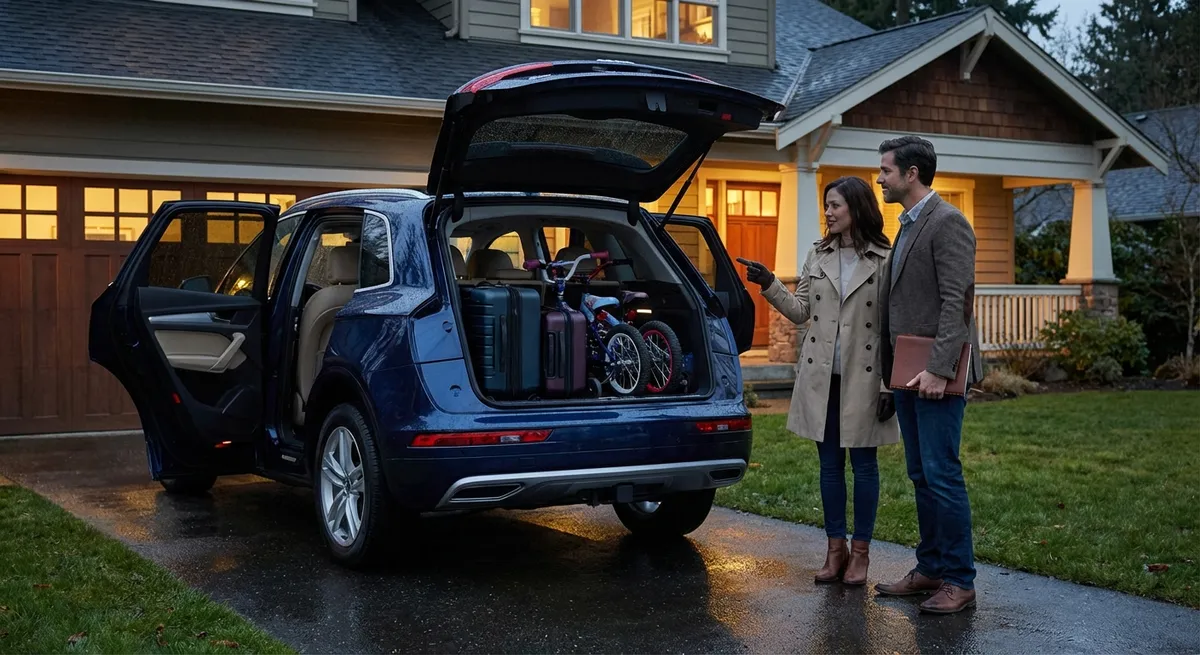
Simulate your actual life: load a stroller, sports gear, a week’s groceries, and a couple of carry-on suitcases. Notice the lift-over height, how flat the load floor is when seats are folded, and whether there are hooks or side cubbies to stop items rolling around.
Climate Comfort for Every Row
Check if each row has separate vents and, ideally, its own temperature or fan settings. Ask to run the system from a cold start and see how quickly the cabin stabilizes. Children in the third row should feel as comfortable as the driver on hot or cold days.
Subtle Safety Enhancements
Beyond crash ratings, look for nuanced safety touches: rear-seat reminder systems, safe-exit alerts that warn of approaching vehicles or cyclists when opening doors, and high-quality rear and surround-view cameras with clear resolution for low-light parking. These elements rarely feature in headline specs but make everyday family use meaningfully safer.
Conclusion
Choosing a family SUV is ultimately an exercise in thoughtful editing—sifting through features, finishes, and promises to identify what will genuinely enhance your daily rhythm. Beyond horsepower and screen size, the most satisfying vehicles offer quiet strengths: a cabin that calms, technology that helps without demanding attention, materials that accept real life with grace, and an ownership experience that respects your time.
By focusing on real-world usability—the Third Row Truth Test, acoustic serenity, curated technology, enduring materials, and supportive ownership—you shift from simply buying an SUV to selecting a long-term partner for your family’s evolving story. The right choice will feel less like a statement and more like an understated advantage, there for you every single day.
Sources
- [National Highway Traffic Safety Administration (NHTSA) – 5-Star Safety Ratings](https://www.nhtsa.gov/ratings) - Official U.S. government crash-test ratings and safety information for comparing SUVs
- [Insurance Institute for Highway Safety (IIHS) – Vehicle Ratings](https://www.iihs.org/ratings) - Independent crash-test results and safety evaluations, including headlights and crash-avoidance tech
- [Consumer Reports – Guide to Car Seat Fit and Vehicle Compatibility](https://www.consumerreports.org/cars/child-car-seats/how-we-test-car-seat-vehicle-fit-a1080100188/) - Detailed methodology and advice on how well child seats fit in various vehicles
- [Edmunds – New SUV Buying Guide](https://www.edmunds.com/suv/) - Practical overview of SUV categories, features, and considerations for shoppers
- [U.S. Department of Energy – Fuel Economy Guide](https://www.fueleconomy.gov/feg/findacar.shtml) - Official data on fuel economy and energy use, including hybrid and plug-in SUV options
Key Takeaway
The most important thing to remember from this article is that this information can change how you think about Buying Guide.