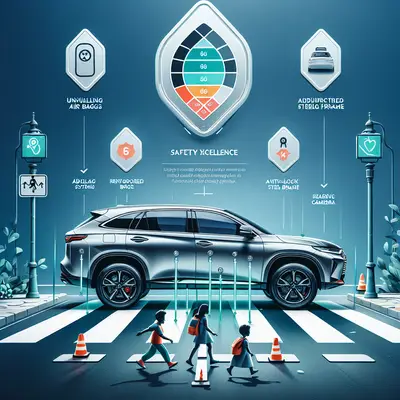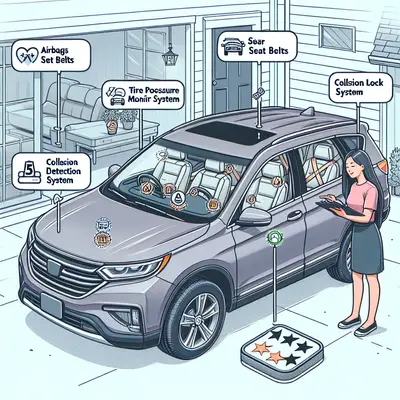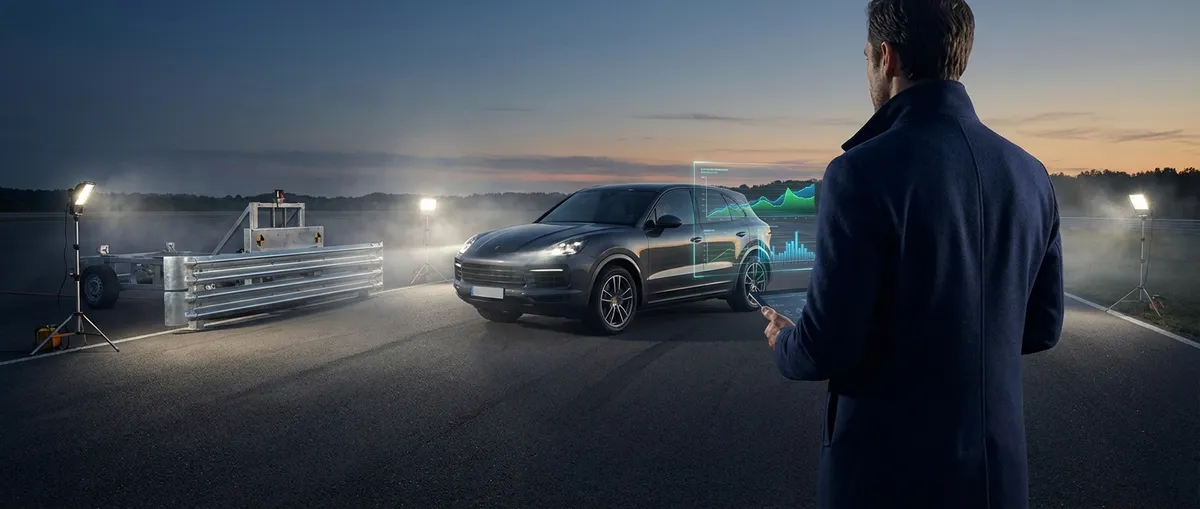
For discerning families, true luxury is not stitched in leather or measured in screen size—it is the quiet assurance that everyone arrives safely, every time. Yet the modern safety landscape is layered, technical, and often reduced to star counts and acronyms. This guide steps beyond the brochure language and into the deeper cues that separate merely “safe enough” from genuinely confidence‑inspiring family SUVs, offering five exclusive insights that help you evaluate safety ratings with the same discernment you bring to every other facet of your life.
Understanding the Safety Rating Landscape—Without Getting Lost in It
Safety ratings emerge from a trio of powerful but distinct arbiters: the National Highway Traffic Safety Administration (NHTSA), the Insurance Institute for Highway Safety (IIHS), and, in Europe, the New Car Assessment Programme (Euro NCAP). Each organization conducts its own series of tests, prioritizing slightly different crash scenarios, crash-test dummies, and evaluation metrics. For U.S. families, NHTSA’s 5-Star Safety Ratings and IIHS’s Top Safety Pick designations form the backbone of informed decision-making.
NHTSA’s program focuses largely on frontal, side, and rollover resistance in controlled crash environments, resulting in a simple 1–5 star score. IIHS, by contrast, leans into more nuanced tests, such as small overlap crashes and advanced driver-assistance system (ADAS) performance, then grades vehicles from “Poor” to “Good” or “Basic” to “Superior.” Together, these frameworks create a multi-dimensional profile of a vehicle’s protective capabilities. The art, for the sophisticated shopper, lies in reading these ratings not as standalone badges, but as complementary chapters of the same safety story.
Insight 1: Why the “Small Overlap” Test Matters More Than You Think
While frontal crash ratings often receive headline attention, the small overlap frontal test conducted by IIHS is one of the clearest differentiators among family SUVs. This test simulates a scenario in which only the outer edge of the front end hits another vehicle or object—precisely the kind of real-world crash that can bypass major structural components intended to absorb impact.
A family-focused SUV that earns a “Good” rating in both the driver- and passenger-side small overlap tests suggests that the manufacturer has reinforced the cabin with robust load paths, high-strength steel, and carefully engineered crumple zones that protect occupants where structures are typically weaker. For families, this isn’t just an abstract engineering detail; it speaks directly to how the vehicle behaves in the kinds of imperfect, off-center collisions that occur on narrow suburban roads or during evasive maneuvers. When comparing SUVs, treat a weak small overlap rating as a signal to dig deeper, no matter how polished the showroom narrative may be.
Insight 2: The Subtle Power of Rear-Seat Protection and Child Seating Geometry
Safety ratings often place the driver in the spotlight, yet for many families the true VIP section is the second row—and increasingly, the third. Here, the IIHS’s rear-seat evaluations and child-seat anchor ratings reveal subtleties that are easy to miss during a quick test drive. Rear-seat crash protection now considers not just basic restraint systems, but how well the seat belts and airbags manage forces on smaller, lighter occupants.
Equally critical is the geometry and accessibility of LATCH (Lower Anchors and Tethers for Children) systems. Ratings that classify LATCH usability as “Good” or “Acceptable” reflect not just the presence of anchors, but how easy they are to reach without contorting a car seat or compromising installation. A refined family SUV integrates these anchors cleanly into the seat design, allowing for secure installations with minimal visual clutter. When two or three child seats are in play, well-executed rear-seat safety becomes a quiet form of everyday luxury, reducing both risk and routine friction.
Insight 3: Not All “Driver Assistance” Is Created Equal
Advanced driver-assistance systems have become the new battleground for marketing claims, but safety ratings now push past simple feature checklists and into verified performance. IIHS, for instance, evaluates front crash prevention systems in both vehicle-to-vehicle and vehicle-to-pedestrian scenarios, assigning ratings from “Basic” to “Superior.” NHTSA’s New Car Assessment Program is also evolving to account for more ADAS technologies.
For a family buyer, the nuance is crucial. Two SUVs may both advertise automatic emergency braking, yet their real-world intervention timing, pedestrian detection capability, and performance in low-speed, stop-and-go environments can differ significantly. Seek vehicles that combine strong crash-avoidance ratings with systems that operate intuitively: clear alerts, gentle corrections rather than abrupt surprises, and a layout that minimizes distraction. The most sophisticated implementations feel like a calm, competent co‑pilot—quietly present, rarely intrusive, and wholly focused on preventing trouble before it escalates.
Insight 4: Structural Integrity You Will Never See—but Should Absolutely Value
Refined safety is often hidden in the way an SUV is built, not merely in the technology it carries. Crash test scores, particularly from IIHS and NHTSA, indirectly reflect a manufacturer’s investment in platform engineering: how the body channels impact forces around the cabin, the mix of ultra high-strength steel and aluminum, and how seamlessly structural components integrate with restraint systems.
When you see consistent “Good” structure and safety cage ratings in multiple crash types—front, side, and small overlap—it signals that the underlying architecture has been carefully tuned for resilience. This matters more in an SUV, where higher ride height and mass can create complex dynamics in rollovers or multi-vehicle collisions. Families should pay special attention to roof strength, side-impact performance, and rollover resistance scores. These are the categories that speak to the vehicle’s ability to maintain survival space for occupants—and survival space is the quiet currency of serious safety engineering.
Insight 5: Lighting Quality and Visibility—The Refined Frontier of Avoidance
Perhaps the most underappreciated dimension of safety ratings is one you experience every evening commute: headlights and visibility. IIHS now evaluates headlight performance, grading beam reach, glare, and illumination patterns. This may sound esoteric, yet it has powerful real-world implications: better-rated headlights are associated with lower crash rates at night.
From a premium family perspective, thoughtfully engineered lighting—adaptive beams that swivel into corners, high-beam assist that responds gracefully to traffic, and even crisp LED signatures that reduce eye strain—is as much a safety feature as it is an aesthetic flourish. When an SUV earns a top overall safety designation only on trims equipped with upgraded headlights, that is a meaningful distinction. A truly well-specified family SUV pairs excellent crash scores with lighting packages that allow you to see, and be seen, with confidence in the most demanding conditions.
Bringing It Together: Reading Ratings Like a Connoisseur
Selecting a family SUV with serious safety credentials is less about chasing a single perfect score and more about curating a cohesive safety profile that aligns with how your family actually lives. Look for vehicles that pair high NHTSA star ratings with IIHS Top Safety Pick or Top Safety Pick+ status, but then dive into the underlying details: small overlap results, rear-seat protection, LATCH usability, crash-avoidance system performance, structural ratings, and headlight evaluations.
When you interpret safety ratings at this level, you move beyond generic assurances and into a more elevated decision-making space—one where design, engineering, and family priorities converge. The result is not just an SUV that scores well on paper, but a daily companion that feels inherently composed and protective, from school runs to long highway journeys. In a market crowded with noise and novelty, this quiet, evidence-based confidence is perhaps the most sophisticated luxury of all.
Sources
- [NHTSA 5-Star Safety Ratings](https://www.nhtsa.gov/ratings) - Official U.S. government crash test and rollover ratings, including methodology and vehicle-specific results
- [IIHS Vehicle Ratings](https://www.iihs.org/ratings) - Detailed crash test outcomes, headlight evaluations, LATCH usability scores, and Top Safety Pick criteria
- [IIHS: Small Overlap Frontal Test Overview](https://www.iihs.org/ratings/small-overlap-front-test) - Explanation of the small overlap test and why it reveals structural weaknesses
- [IIHS: Headlight Ratings and Crash Risk](https://www.iihs.org/news/detail/better-headlights-reduce-crashes-our-latest-study-shows) - Research discussing the link between headlight quality and reduced nighttime crashes
- [NHTSA: Advanced Driver Assistance Systems](https://www.nhtsa.gov/vehicle-safety/vehicle-technology) - Government overview of ADAS technologies and their role in modern vehicle safety
Key Takeaway
The most important thing to remember from this article is that this information can change how you think about Safety Ratings.