Safety ratings may look simple — a row of stars, a letter grade, a tidy score. Yet for families choosing a sophisticated SUV, true safety is less about the headline number and more about the nuances hiding beneath it. The most discerning buyers are no longer asking, “Is this SUV safe?” but rather, “How is it safe, and for whom, and in which moments?”
This is where a closer, more curated reading of safety ratings becomes essential. When you learn to read beyond the stars, certain models quietly distinguish themselves not by dramatic marketing claims, but by the calm confidence they offer in real-world family life. The following five insights are crafted for families who value subtle excellence, seeking an SUV that protects without shouting about it.
1. The Story Behind the Stars: How and Where an SUV Protects
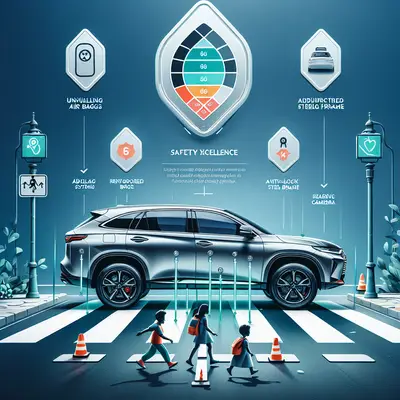
A 5-star rating or “Top Safety Pick+” badge is reassuring, but the real narrative unfolds in the sub-scores and test categories. Different crash tests stress an SUV in different ways: small overlap frontal tests simulate clipping a pole or oncoming car, side-impact tests reveal how well the cabin resists intrusion, and roof strength tests hint at rollover protection.
For families, the refined question is: Where is this SUV strongest, and how does that align with your daily driving reality? If your world is filled with narrow urban streets, complex intersections, and distracted traffic, small overlap and pedestrian protection scores become especially meaningful. If your lifestyle includes highway road trips with a full cabin, you might focus more on frontal crash protection and lane-keeping assistance.
When examining ratings, look at the breakdowns for driver and passenger, front and rear seating, and head restraints. An SUV that earns consistent “Good” marks across all positions is often quietly superior to one that shines in only one or two headline tests. This evenness of protection — a kind of structural composure — is what families with multiple child seats and older rear passengers should value most.
2. Front Seats vs. Back Seats: Why Rear Occupant Ratings Are the New Luxury
Historically, many tests focused mainly on front occupants. Today, the most forward-thinking safety programs are placing new emphasis on rear-seat safety, including updated moderate overlap frontal tests that evaluate how well the second row protects adults and older children.
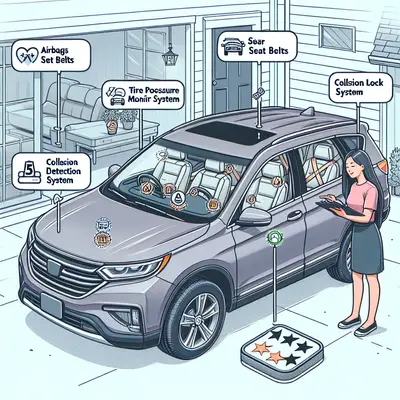
For a family SUV, this shift is not a technical footnote — it is the centerpiece. Your children, grandparents, and friends are in the second and third rows, not just the driver’s seat. Subtle cues in test results can reveal how well an SUV is engineered for these precious passengers. Look for models that specifically highlight improvements in rear seat belt design, load limiters, pretensioners, and optimized airbag deployment patterns.
A premium family choice should not treat rear-seat occupants as an afterthought. The most impressive designs manage to combine spacious, flexible seating with carefully tuned restraint systems and energy-absorbing structures. In practice, this often shows up as “Good” ratings in updated rear occupant tests, plus clear documentation about rear airbag strategies and recommended child seating positions. In a landscape where many SUVs still skew their best protection toward the driver, those that treat every row with equal seriousness stand out as quietly exceptional.
3. The Intelligence Layer: Advanced Driver Assistance That Works in Real Life
Safety ratings increasingly include evaluations of crash prevention and driver assistance technologies — the subtle intelligence that surrounds your family on every drive. Yet two SUVs can both claim “automatic emergency braking” or “lane-keeping assist” and perform very differently when a child dashes into the street or traffic suddenly stalls ahead.
When you look at ratings from organizations that test active safety, pay attention to how systems perform at different speeds, in both daytime and nighttime scenarios, and with pedestrian or cyclist detection. Premium family SUVs tend to distinguish themselves not only by offering these features, but by calibrating them with a certain finesse: smooth braking intervention instead of abrupt jolts, thoughtful steering nudges rather than harsh corrections, and clear, composed alerts that don’t overwhelm the driver.
Another refined detail to look for is how these features integrate with one another. Adaptive cruise control, lane-centering, and automatic emergency braking, when tuned as a cohesive suite, can reduce fatigue on long family trips and serve as a protective “second pair of eyes.” Ratings that highlight strong real-world performance — particularly in pedestrian and cyclist scenarios — signal that the technology has been engineered with the dynamic realities of family driving in mind, not just as a checkbox on a spec sheet.
4. Quiet Compatibility: Child Seats, LATCH Systems, and Elegant Usability
For families, one of the most practical — yet underappreciated — dimensions of safety is how gracefully an SUV accommodates child seats. Some safety rating programs now provide dedicated assessments of LATCH usability, examining anchor accessibility, labeling clarity, and potential for installation errors. These small details become enormous in real life, where rushed school mornings and late-night airport pickups are the norm.
The most family-centric SUVs often score well not only in crashworthiness but also in child seat installation ease. Look for documented ratings or notes about how clearly the lower anchors are exposed, how straightforward the top tether routing is for third-row positions, and whether multiple full-size seats can be positioned side by side. Sophisticated families notice the difference between a cabin that merely allows child seats and one that is subtly sculpted around them.
This is where safety and refinement converge: an SUV that allows you to secure a seat confidently in seconds, without contortions or guesswork, reduces the risk of incorrect installation — one of the most common real-world safety issues. It also means less daily friction, preserving the calm, curated experience you expect from a premium family vehicle.
5. Structural Composure and Long-Term Confidence: Beyond the Initial Rating
A safety rating is a snapshot in time, but discerning families often look for indications of sustained engineering integrity. Subtle signs of long-term safety excellence include how a brand responds to new testing standards, its recall history, and whether it proactively updates designs to meet more stringent criteria before they become mandatory.
When test organizations introduce new protocols — such as more demanding side-impact or small overlap tests — premium SUVs that continue to score well under these updated conditions demonstrate a deeper commitment to structural resilience. This composure under evolving scrutiny is a hallmark of brands that take safety as a core philosophy rather than a marketing slogan.
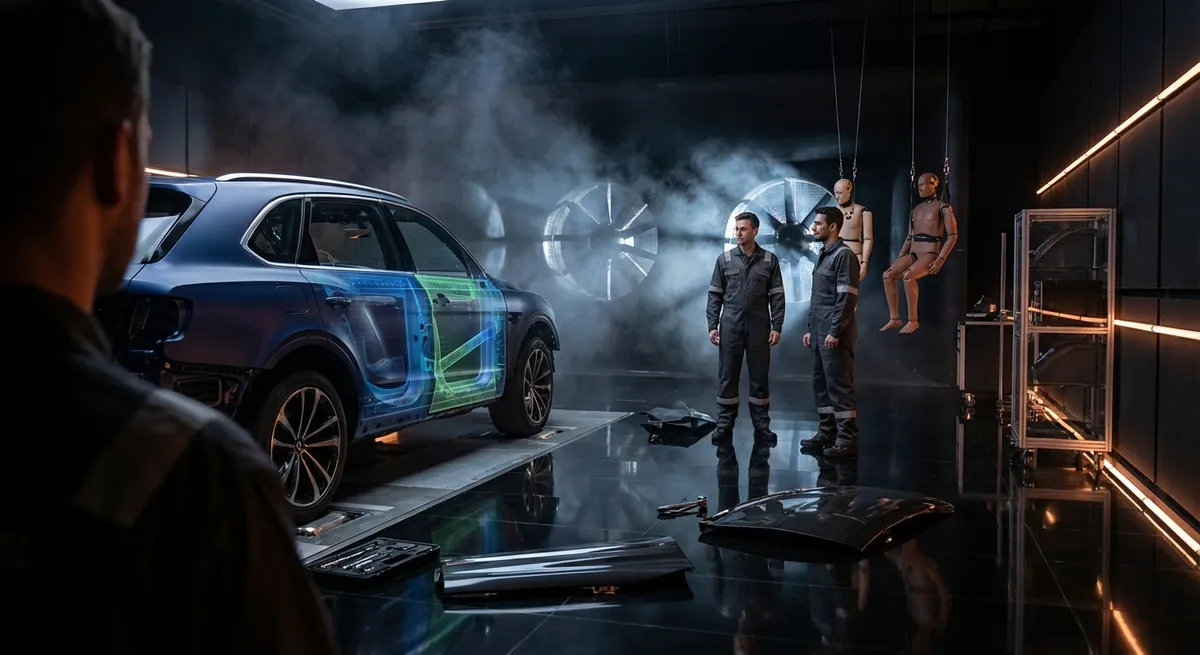
It’s also worth considering vehicle weight and structural design in context. Heavier SUVs can offer advantages in certain crash scenarios but may pose greater risks to others on the road. Models that combine smart use of high-strength steel, advanced crumple zones, and precise energy management can deliver robust protection for your family while also performing well in tests designed to reduce overall harm in multi-vehicle collisions. The result is a kind of ethical refinement: an SUV that is protective without being bluntly imposing.
Conclusion
For the modern family, safety is not a single score; it is an orchestra of well-tuned elements working in harmony. The most sophisticated SUVs distinguish themselves not only by excelling in laboratory tests, but by translating that engineering into everyday reassurance — from the ease of securing a child seat to the calm intervention of well-calibrated driver assistance systems.
When you learn to read safety ratings as a layered narrative rather than a single headline, the market looks different. Some SUVs that once seemed merely “good enough” begin to feel incomplete, while others emerge as quietly extraordinary: composed under impact, thoughtful toward every row, and intelligent in the spaces between potential accidents. For families who value a refined, confident driving experience, this deeper understanding turns safety from a checkbox into a carefully curated standard — one that truly honors the people you bring along for the ride.
Sources
- National Highway Traffic Safety Administration (NHTSA) 5-Star Safety Ratings - Explains how U.S. government crash tests and star ratings are conducted and what each category means.
- Insurance Institute for Highway Safety (IIHS) Vehicle Ratings - Provides detailed crash test results, including small overlap, side-impact, and updated rear occupant tests, plus evaluations of crash avoidance technology.
- IIHS: LATCH Ease-of-Use Ratings - Assesses child seat anchor usability in various vehicles, highlighting models that facilitate safe and correct child seat installation.
- U.S. Department of Transportation – Child Passenger Safety - Offers guidance on child seat installation, selection, and the importance of proper restraint use for rear-seat occupants.
- European New Car Assessment Programme (Euro NCAP) Ratings - Provides additional perspective on global safety testing, including pedestrian and cyclist protection and advanced driver assistance evaluations.
Key Takeaway
The most important thing to remember from this article is that this information can change how you think about Safety Ratings.