For families who value both refinement and reassurance, safety ratings are more than a row of stars on a spec sheet—they are a quiet promise about how an SUV will behave when it matters most. Yet the modern safety landscape has become complex, with acronyms, crash tests, and clever marketing often blurring what actually keeps your family protected. This guide steps beyond the obvious, revealing five deeper safety insights that discerning SUV buyers rarely hear at the showroom—but absolutely should.
Understanding the “Safety Philosophy” Behind the Stars
Two SUVs can share identical safety ratings yet feel dramatically different in how they anticipate, manage, and mitigate risk. That’s because safety ratings measure outcomes in controlled conditions, while each manufacturer applies its own safety philosophy in real-world design. Some brands prioritize structural integrity and passive safety—how the vehicle protects you after a collision. Others invest heavily in active safety systems that work to prevent collisions in the first place, such as advanced driver assistance systems (ADAS).
For a family-focused SUV, the most compelling choice is often a harmonized approach that blends robust crash engineering with intelligent, predictive technologies. Look beyond whether an SUV scored “Top Safety Pick” and examine how it achieved that status. Is the structure engineered for small overlap crashes, or does it merely pass the test? Are pedestrian detection and automatic emergency braking standard, or hidden in upper trims? A brand with a coherent safety philosophy will typically show consistency across its lineup, meaning your choice is less about chasing a single rating and more about aligning with a design ethos that treats safety as core engineering rather than optional equipment.
The Subtle Power of Structure: Where Safety Quietly Begins
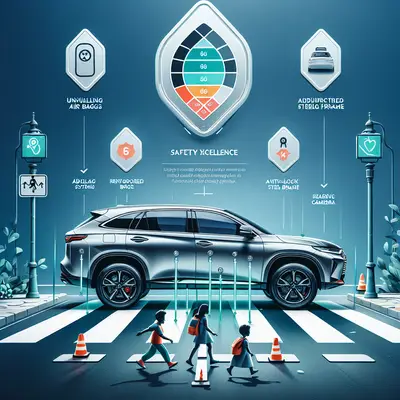
Behind every safety label is a story written in high-strength steel, crumple zones, and carefully designed load paths. Families often focus on features—airbags, cameras, sensors—while overlooking the structural architecture that determines how energy moves through the vehicle in a crash. Rigid passenger cells, strategic use of ultra-high-strength materials, and well-engineered front and side structures are what keep the cabin intact during severe impacts.
Sophisticated SUVs now use mixed-material construction that puts strength precisely where it is needed, such as reinforced door sills and A- and B-pillars, while allowing controlled deformation in other zones to absorb energy. This is especially crucial in small-overlap and side impacts, which can be unforgiving if the structure is not meticulously designed. When reviewing safety data, pay attention to individual crash test breakdowns rather than the headline score: frontal small overlap performance, side impact ratings, roof strength, and head restraint evaluations often reveal whether the SUV’s structure has been engineered with genuine rigor. For a family, that invisible engineering can be more meaningful than any visible gadget.
Advanced Driver Assistance: How Gracefully the Tech Intervenes
Modern SUVs increasingly arrive with a suite of driver assistance features—lane keeping, adaptive cruise control, blind-spot monitoring, and automatic emergency braking. But all systems are not created equal. What matters to a discerning family is not only that these features exist, but how gracefully they intervene. An SUV that brakes abruptly or steers aggressively can feel unsettling, especially with children in the back. One that anticipates with composure, applies gentle corrections, and communicates clearly through subtle haptics or visual cues feels far more confidence-inspiring.
When evaluating safety technologies, consider three aspects: coverage, refinement, and consistency. Coverage refers to what scenarios the systems are designed to handle (city speeds, highway, night, pedestrians, cyclists, cross-traffic). Refinement describes how smoothly they operate—does lane centering ping-pong within the lane, or trace a calm, steady line? Consistency examines whether behavior is predictable day to day and in different weather or lighting conditions. Test drives are invaluable here: deliberately experience adaptive cruise in traffic, evaluate the clarity of the head-up display or instrument cluster alerts, and note whether the technology feels like a quiet co-pilot or an intrusive overseer. For families, truly premium safety tech should fade into the background until the precise moment it is needed.
Family-Centric Safety: Details That Protect Beyond the Crash Test
Safety ratings rarely capture the nuanced details that shape daily life in a family SUV, yet these details profoundly influence real-world protection. Consider the design and placement of child-seat anchors (LATCH/ISOFIX): Are they easily accessible without digging between cushions? Can you fit multiple child seats side by side without compromising installation quality? Are there integrated rear sunshades to reduce glare and heat exposure for young children, minimizing fatigue on long drives?
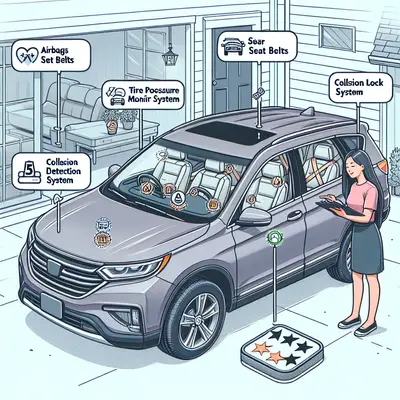
Equally important is how intelligently the vehicle manages cabin awareness. Rear occupant alert systems, seat belt reminders tailored to each seating position, and rear-seat airbag coverage (including side curtain coverage that extends to the third row) all matter when your SUV is filled with passengers of different ages and sizes. Even the tuning of the climate control and rear-zone ventilation plays a quiet role in safety, helping keep children comfortable and parents focused. A truly family-oriented SUV thinks about how your family actually lives—with school runs, late-night highway drives, and weekend road trips—and builds in layers of protection that extend well beyond standardized test protocols.
The Long View: Safety Over Years, Not Just On Delivery Day
An SUV’s safety story does not end when you drive it off the lot. How gracefully it ages—mechanically, electronically, and structurally—has a direct impact on the protection it offers your family over a decade or more. Structural corrosion protection, long-term reliability of sensors and cameras, and how frequently the manufacturer issues software updates for safety systems are all part of a refined safety calculus that many shoppers overlook.
Some brands now offer over-the-air updates for critical safety features, such as refining automatic emergency braking algorithms or improving lane-keeping performance based on real-world data. Others may require dealership visits or leave older systems largely untouched. Investigate recalls and service bulletins to see how proactively the brand addresses emerging issues. Also, note the cost and availability of genuine replacement parts like airbags, windshield sensors, and radar modules; an SUV that is prohibitively expensive to repair correctly is more likely to be driven with compromised systems after a minor collision. For a family expecting to keep a vehicle for many years, choosing a model with a strong record of durability, thoughtful after-sales support, and a clear upgrade path for safety technology is an investment not just in comfort, but in sustained peace of mind.
Conclusion
For families with elevated expectations, safety ratings are simply the starting point, not the destination. The most reassuring SUV is not merely the one with the highest score, but the one whose underlying structure, technology, everyday usability, and long-term durability are all aligned around a coherent vision of protection. By looking past the headline stars and into the subtleties—how the body is engineered, how calmly the tech behaves, how thoughtfully children are considered, and how the vehicle will safeguard your family over time—you move from buying a number on a chart to selecting a partner in your family’s daily life. In that space between the visible and the invisible, true safety quietly resides.
Sources
- IIHS – Vehicle Ratings – Detailed crash test results, structural evaluations, and safety feature assessments for SUVs and other vehicles
- NHTSA – 5-Star Safety Ratings – U.S. government safety ratings with breakdowns of frontal, side, and rollover tests, plus recalls and complaint data
- Euro NCAP – Car Safety Ratings – European crash test program with in-depth scoring for adult, child, and vulnerable road user protection and safety assistance systems
- CDC – Child Passenger Safety – Guidance on child seat use, installation, and the importance of proper restraint for family vehicles
- NHTSA – Advanced Driver Assistance Systems – Explanations of modern ADAS features, how they work, and what benefits they offer to everyday drivers
Key Takeaway
The most important thing to remember from this article is that this information can change how you think about Safety Ratings.