Selecting a family SUV is less about horsepower and more about peace of mind. Yet the safety rating landscape—stars, scores, acronyms—can feel clinical and detached from the reality of school runs, late-night highway drives, and weekend escapes. Beneath those numbers, however, lies a wealth of nuance that can quietly transform your family’s everyday experience. This is where a discerning eye makes all the difference: understanding not just whether an SUV is “safe,” but how it protects, when it intervenes, and for whom it was designed.
Below, you’ll find five exclusive insights that move beyond a quick glance at the scorecard. They’re crafted for families who value safety as a sophisticated ensemble of engineering, technology, and real-world usability—not just a badge on the window sticker.
The Difference Between “Passing” and “Graceful” Protection
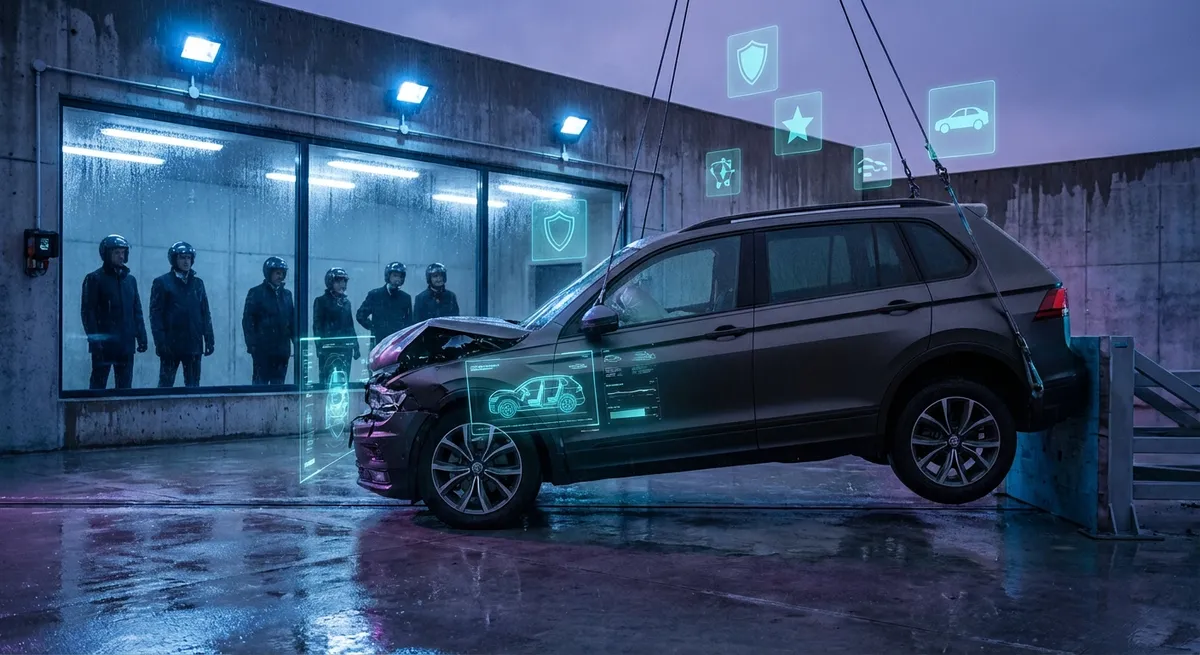
Two SUVs can share the same 5-star or “Top Safety Pick+” accolade and still behave very differently in a critical moment. Safety ratings typically condense complex crash-test performance into a single symbol or summary score. What they don’t always highlight is the manner in which that safety is delivered: how a structure manages impact energy, how consistently airbags deploy, and how well the cabin retains its shape across different scenarios.
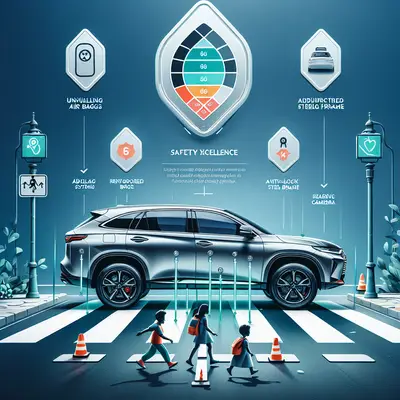
When comparing results from organizations like the National Highway Traffic Safety Administration (NHTSA) and the Insurance Institute for Highway Safety (IIHS), it pays to look past the headline rating. Examine sub-scores—front overlap performance, side-impact results, rollover resistance, and injury measures for different body regions. A truly refined family SUV doesn’t simply survive a test; it maintains a stable “safety cell” around occupants with minimal intrusion into the footwell and cabin. This kind of graceful protection often translates into reduced injury risk and less violent movement of occupants, particularly for children in forward-facing seats or boosters. Think of it as the difference between “safe enough” and “engineered for controlled calm in chaos.”
Why Your Children’s Seating Positions Quietly Rewrite the Safety Story
Most families focus on the overall rating for front-row adults, yet child seating decisions can subtly alter how safe an SUV is for your family specifically. Ratings often rely on average adult crash-test dummies, but children in real life are seated differently—on the second row, sometimes the third, in a mix of rear-facing seats, boosters, and seat belts. The way an SUV’s structure and restraint systems interact with those positions deserves particular scrutiny.
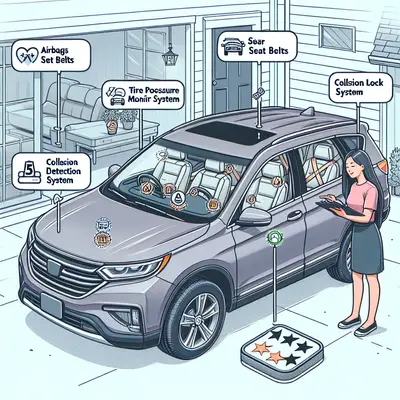
Look for vehicles that provide robust side-impact performance with strong ratings for rear seating, as well as head-curtain airbags that extend fully along the length of the cabin—even covering the third row if you need it. Pay attention to the design and number of LATCH anchors, their accessibility, and whether they align well with larger, extended-use child seats. Some SUVs also integrate load-limiting seat belts and pretensioners for second-row seating, which can reduce chest forces on older children and teens. In practice, this means your child’s position isn’t an afterthought; it’s intentionally woven into the vehicle’s safety philosophy.
Advanced Driver Assistance: Calmer Drive, Not Just Clever Tech
The modern family SUV is as much about the crashes you avoid as the ones it can help you survive. Advanced driver assistance systems (ADAS)—automatic emergency braking, lane-keeping assist, blind-spot monitoring, and adaptive cruise control—are often showcased as tech features, but their true value lies in how seamlessly they support your driving habits without feeling intrusive or fatiguing.
NHTSA and IIHS have begun evaluating certain crash-avoidance technologies, but their presence alone doesn’t guarantee a refined experience. When comparing SUVs, look for independent assessments that discuss real-world behavior: Does the automatic emergency braking system consistently detect pedestrians in low light? Does lane-keeping gently guide you back, or snap the wheel in a way that startles the driver? A well-calibrated system operates almost like a discreet co-driver—vigilant, measured, and unobtrusive—reducing cognitive load on long journeys and helping maintain the quiet, composed environment you want for the family. Safety here is not just technical capability; it is the artful tuning of that capability.
The Overlooked Role of Visibility and Cabin Layout in Everyday Safety
Many safety ratings focus on what happens during a crash. But the design decisions you notice every day—sightlines, mirror size, seating height, and even pillar thickness—can decisively influence whether an incident occurs in the first place. This aspect of safety is rarely summarized in a single score, yet it’s one of the most tangible elements of a family SUV’s character.
When you test-drive, consider visibility a safety feature, not a convenience. Evaluate how easily you can see around thick rear pillars when backing out of a crowded school parking lot, and how naturally your eyes find the rearview and side mirrors. Pair this with the quality of the backup camera and, ideally, a 360-degree camera system. A premium family SUV will harmonize these elements so that maneuvering in tight urban garages or busy driveways feels precise rather than stressful. Inside, thoughtful cabin layout—such as well-placed rear climate controls, easily reachable window switches for older kids, and uncluttered door sills—reduces the micro-distractions that can lead to inattention. Subtle design choices like these are quiet guardians of everyday safety.
Matching Safety Ratings to Your Family’s Real-World Driving Pattern
A safety rating on paper is static; your life is not. A family with frequent highway commutes, mountain trips, or urban stop-and-go traffic will benefit from different strengths in a safety portfolio. Rather than treating ratings as a universal verdict, align them with your genuine driving patterns for a more tailored sense of security.
If your world includes long highway stretches, prioritize superior performance in moderate and small-overlap frontal tests, strong roof strength ratings, and refined lane-centering and adaptive cruise systems that remain composed in crosswinds or heavy traffic. Urban families may place higher value on low-speed automatic emergency braking, pedestrian and cyclist detection, and cameras or sensors that excel in tight spaces and dim lighting. For those regularly traveling with a full cabin and cargo, pay attention to how crash-test organizations evaluate vehicles at higher weights and whether safety systems remain effective when the SUV is heavily loaded. In making these distinctions, you move from simply “owning a safe SUV” to curating a safety profile that reflects the way your family truly lives and travels.
Conclusion
Safety ratings are often treated as the final word on family SUVs, when in reality they are a well-crafted starting point. The true sophistication lies in reading between the lines: understanding how a structure manages impact, how protection extends to every seat, how driver assistance gently supports you, and how design shapes your day-to-day sense of control. For families who value both refinement and reassurance, safety is not a single number but a thoughtfully assembled tapestry of details.
Approach those ratings with the same discernment you would bring to choosing a home or a school. When you do, the right SUV will reveal itself—not just as a mode of transport, but as a quietly capable guardian of your family’s most ordinary, and therefore most precious, moments.
Sources
- NHTSA 5-Star Safety Ratings Overview – Explains how U.S. government crash tests are conducted and how overall star ratings and sub-scores are determined
- IIHS Vehicle Ratings and Testing Methods – Details crash-test protocols, injury measures, and evaluations of crash-avoidance technologies
- Euro NCAP Safety Assist and Child Occupant Protection – Provides insight into European testing of child protection, ADAS performance, and real-world safety emphasis
- CDC Child Passenger Safety Guidelines – Offers evidence-based recommendations on child seating positions and restraint use
- SaferCar: Child Safety from NHTSA – U.S. government information on child seats, LATCH systems, and age-appropriate restraint use
Key Takeaway
The most important thing to remember from this article is that this information can change how you think about Safety Ratings.