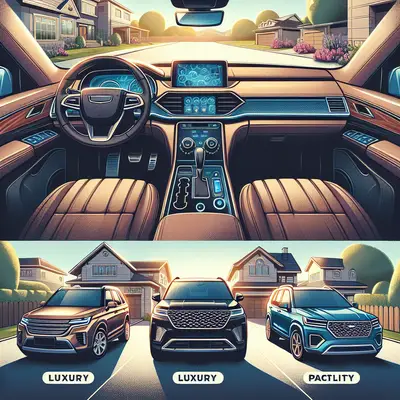
In the right SUV, family life doesn’t feel hectic—it feels beautifully choreographed. The school run, the weekend escape, the late‑night airport pickup: each becomes smoother, quieter, and more considered when a vehicle is designed around how discerning families actually live. Beyond spec sheets and showroom gloss, the most satisfying family SUVs are those that weave practicality and polish into every detail.
This is an exploration of refined family features—five exclusive insights that elevate an SUV from merely capable to genuinely life-enhancing.
The Art of Quiet: How Sound Management Shapes Family Calm
For families, noise is more than a nuisance; it’s an atmosphere. The difference between a merely “nice” SUV and a truly premium family environment is often found in what you don’t hear: wind buffeting at highway speeds, tire roar on coarse pavement, the constant murmur of the outside world intruding on conversation.
Sophisticated SUVs increasingly employ laminated acoustic glass, multi‑layer door seals, and sound‑absorbing insulation not as marketing bullet points, but as tools to shape family life. A well‑insulated cabin allows a sleeping infant to remain undisturbed, a teenager to listen to their playlist without competing with road noise, and adults to speak in normal tones on a long drive.
Active noise cancellation—akin to high‑end headphones—can subtly counter low‑frequency sounds from the engine and road. The result isn’t silence; it’s a curated soundscape where voices are clearer, audio is richer at lower volumes, and fatigue is reduced after several hours behind the wheel. Discerning shoppers should not hesitate to test the vehicle on varied road surfaces with the radio off, simply listening for refinement.
When evaluating SUVs, families can ask specifically about laminated front and side glass, acoustic windshields, and noise measurements in professional road tests. These understated features are seldom visible, yet they profoundly influence how relaxed everyone feels at the end of the journey.
The Flow of Movement: Thoughtful Cabin Layout for Real Family Routines
The most premium family feature is often not a gadget but a flow—how gracefully everyone can enter, settle, buckle, and exit without friction. A refined cabin layout anticipates the choreography of family life rather than merely offering “three rows” on a spec sheet.
Wide‑opening rear doors make child seat access dignified instead of awkward. Second‑row seats that both slide and recline allow you to fine‑tune the balance between legroom, cargo space, and third‑row usability. An elegant solution is a second row that can tilt and slide forward even with a child seat installed, enabling occasional access to the third row without completely reconfiguring the cabin.
Flat floor designs in the second row allow the middle-seat occupant—often a child or teen—to ride comfortably, without straddling a transmission tunnel. Meanwhile, thoughtfully placed grab handles and sturdy seatbacks assist grandparents and younger children alike in entering and exiting with confidence.
Families should step into every seating position during a test drive, including the third row, with bags, car seats, and strollers in hand. Can a parent buckle a child in the third row without contortion? Can a taller teenager sit comfortably for more than a brief ride? The true measure of a sophisticated family SUV is not how it looks from the curb, but how effortlessly your family can move through it on an ordinary Tuesday morning.
Lighting as Comfort: Beyond Headlights to a Cohesive Family Ambience
Lighting in a family SUV used to be purely functional. In modern premium designs, it’s atmospheric—and, for families, surprisingly practical. Beyond the brightness of the headlights, it’s the interior lighting strategy that quietly defines how usable and inviting a vehicle feels at dusk, after dark, or before dawn school runs.
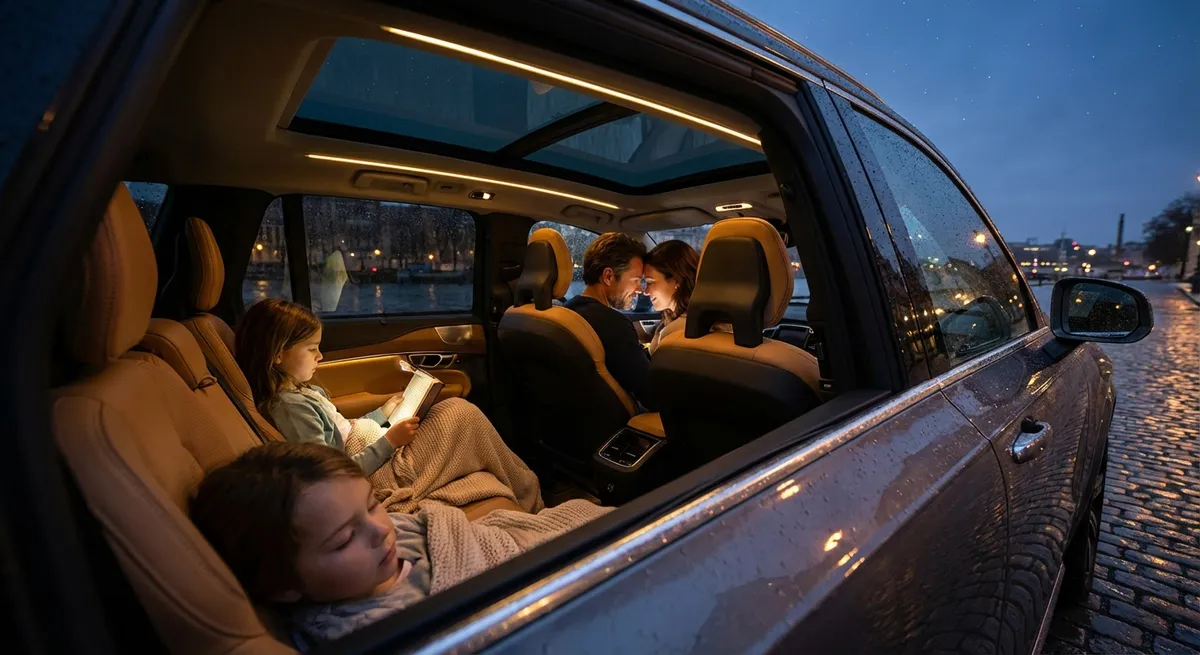
Look for softly diffused overhead lighting that illuminates the cabin without glare, allowing children to find a dropped toy or zip a backpack without harsh beams. Subtle ambient lighting along the doors, footwells, and console can help children orient themselves during night drives, reducing the “black box” feeling and potential unease.
Reading lights that can be individually directed while the driver maintains a darker front cabin are a small but marked luxury. They permit one child to read, another to nap, and the driver to stay focused. High‑quality automatic high‑beam systems and adaptive headlights also contribute to family comfort, making nighttime routes and rural roads feel far more manageable.
Discerning families should evaluate lighting with intention: visit the dealership at dusk, switch off the showroom’s harsh lights, and sit inside the SUV for several minutes. Observe how easily your eyes adjust, how intuitive the switches are, and whether the lighting feels calming rather than clinical. The most refined solutions are those you barely notice—because they simply feel right.
Digital Serenity: Infotainment That Enhances, Not Distracts
In family SUVs, screens are inevitable. The question is whether the technology feels like a calm assistant or an overbearing presence. Premium family‑oriented systems integrate seamlessly into daily life, emphasizing clarity, restraint, and safety over sheer spectacle.
A sophisticated interface offers clean, intuitive menus, large icons, and minimal submenus for routine tasks like climate control, seat heating, and audio adjustments. Wireless Apple CarPlay and Android Auto reduce cable clutter and help keep the center console from devolving into a tangle of cords. Multiple USB‑C ports—ideally in all three rows—allow devices to remain charged without creating conflict over a single outlet.
Rear‑zone climate controls that are easy for older children to use independently can diminish the constant “Can you turn it up?” requests. For families who choose rear entertainment systems, look for screens that can operate independently, with individual headphones, to maintain cabin quiet. Built‑in Wi‑Fi can be a powerful ally on long highway drives, provided parents can manage access and boundaries.
Most importantly, advanced driver assistance systems—adaptive cruise control, lane‑centering, blind‑spot monitoring, rear cross‑traffic alerts—should be tuned for subtlety. The best implementations support the driver without clamor, gently guiding rather than startling with incessant beeps. During the test drive, it’s worth exploring these features on a longer route to understand how they behave in real traffic and whether they contribute to a sense of digital serenity rather than digital fatigue.
The Subtle Luxury of Everyday Practicality
True family luxury is not fragile; it’s resilient and beautifully prepared for the realities of everyday use. The most satisfying SUVs blend exquisite materials with intelligent durability, acknowledging that life involves muddy cleats, spilled drinks, and impromptu grocery hauls.
Look for surfaces that are both premium and forgiving: high‑quality leather or leatherette that resists staining, soft‑touch plastics where hands regularly fall, and seat fabrics engineered for easy cleaning after inevitable mishaps. Removable or all‑weather floor liners, particularly in the cargo area and third row, elevate practicality without compromising aesthetics.
Hidden storage compartments—beneath the cargo floor, in the center console, even within the side walls of the trunk—allow valuables, snacks, and emergency kits to be neatly stowed out of sight. Power‑folding rear seats, when well executed, transform the cabin from a seven‑passenger configuration to a flat cargo space in seconds, preserving a sense of order when logistics become complex.
Equally, refined families should pay attention to how the tailgate opens and closes. Hands‑free power tailgates, low cargo lips, and well‑designed cargo covers ensure that grocery runs, luggage loading, or stroller storage feel composed rather than chaotic. The test is simple: imagine the most demanding day—sports gear, shopping bags, a tired child in your arms—and ask whether the vehicle supports you or complicates the moment.
Conclusion
For discerning families, choosing an SUV is not about chasing the largest screen or the flashiest design. It is about selecting a vehicle that quietly understands how you live—and gently elevates it. Sound management that cultivates calm, a cabin that respects movement and personal space, lighting that soothes, technology that supports rather than dominates, and practicality that feels almost invisible in its cleverness: these are the features that transform daily drives into composed rituals.
The most rewarding family SUV will not shout about its virtues. It will reveal them over time: on a late‑night drive home from a recital, a winter road trip, a rushed airport run. For those who look closely, these refined details are not indulgences—they are the foundation of a life well‑lived on the move.
Sources
- [National Highway Traffic Safety Administration (NHTSA) – Vehicle Safety Features](https://www.nhtsa.gov/equipment) - Overview of advanced safety and driver assistance technologies relevant to family SUVs
- [Insurance Institute for Highway Safety (IIHS) – Ratings & Research](https://www.iihs.org/ratings) - Independent crash-test results and evaluations of vehicle headlights and safety systems
- [Environmental Protection Agency (EPA) – Fuel Economy Guide](https://www.fueleconomy.gov/feg/findacar.shtml) - Official fuel economy data and comparisons for SUVs and family vehicles
- [Consumer Reports – Guide to Car Interior Materials](https://www.consumerreports.org/cars/buying-guide/guide-to-car-interior-materials-a6999023988/) - Expert insights on durability, comfort, and maintenance of common cabin materials
- [BMW Group – Acoustic Comfort in Modern Vehicles](https://www.bmwgroup.com/en/news/general/2021/acoustic-comfort.html) - Manufacturer perspective on sound insulation, noise control, and cabin refinement
Key Takeaway
The most important thing to remember from this article is that this information can change how you think about Family Features.