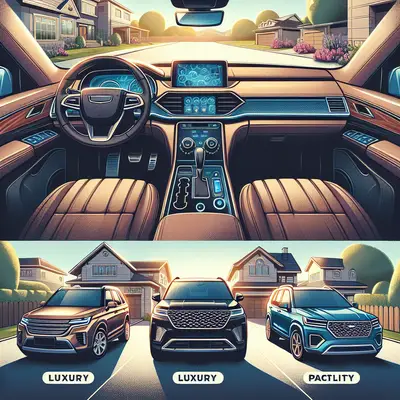
For families who expect more than mere practicality from their SUV, the real story lies in the details. It’s not simply about fitting car seats and sports bags; it’s about how seamlessly a vehicle supports the cadence of your days—school runs, late flights, wet soccer cleats, and quiet drives home when the children finally sleep. This is where subtle, family-focused design separates an acceptable SUV from an exceptional one. Below, we explore refined family features through five exclusive insights that go beyond the usual talking points, helping you recognize the difference between “good enough” and genuinely well-considered.
Insight 1: Cabin Architecture That Anticipates Real Family Movement
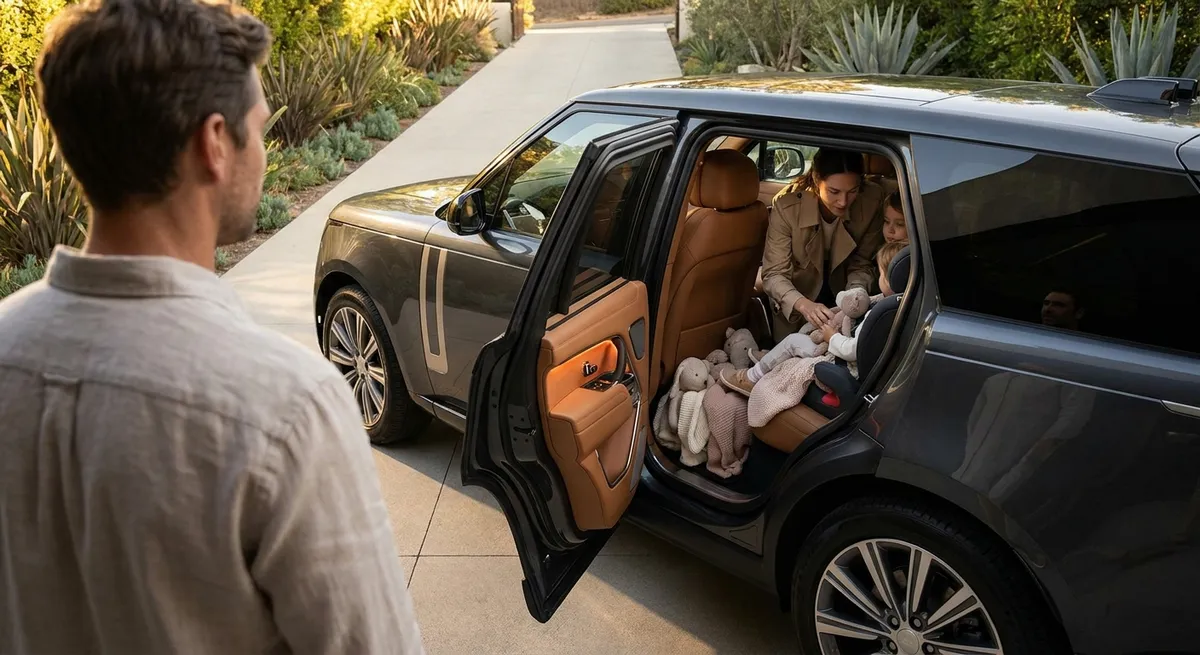
Most spec sheets will tell you about legroom and seat count. Far fewer capture how the cabin actually behaves when your family is in motion. For a truly family-first SUV, pay close attention to how the interior architecture anticipates movement—children climbing in, adults securing car seats, grandparents accessing the third row.
Look for wide door apertures that allow you to install a rear-facing seat without contortions, and doors that open to near 90 degrees for graceful entry. Second-row seats that slide and tilt forward even with a child seat installed (using the lower anchors) can spare you the awkward shuffle when someone needs the third row. Flat or minimally sloped floor designs significantly enhance comfort for the middle-seat passenger, especially on longer journeys.
Equally important is the “reach distance” to everyday touchpoints: climate controls where children can adjust their own temperature without stretching, grab handles placed where a grandparent intuitively reaches, and thoughtfully positioned USB ports that avoid cable clutter across walkways. Taken together, these attributes turn a simple cabin into a beautifully orchestrated space where each family member moves naturally and comfortably.
Insight 2: Acoustic Serenity as a Family Wellness Feature
Silence—or something close to it—has become a quiet luxury for discerning families. Yet acoustic refinement is rarely discussed with the same seriousness as horsepower or infotainment. For parents, however, cabin quietness is not merely about luxury; it’s about reducing fatigue, easing conversation, and making long journeys more restorative.
Seek SUVs that do more than tout “sound insulation” in vague terms. Ask about laminated front and side glass, additional sound-deadening materials in the floor and firewall, and acoustic tuning of mirrors and roof rails to minimize wind noise at highway speeds. An SUV that maintains a composed, hushed cabin even on coarse pavement creates space for soft-voiced conversations, audiobooks, or a sleeping infant in the back.
Advanced active noise cancellation systems can go further, subtly countering unwanted frequencies from the engine or road. Pair this with refined powertrain calibration—especially in hybrids, where seamless transitions between electric and gasoline power make a tangible difference—and you have a driving environment that genuinely feels like a moving sanctuary. For a family that spends meaningful time on the road, this level of acoustic serenity becomes an everyday wellness feature, not a mere indulgence.
Insight 3: Lighting That Supports Calm, Visibility, and Routine
Lighting is often treated as a styling flourish, but for families, it functions as a quiet choreography tool—shaping mood, visibility, and even bedtime rhythms. A well-designed lighting suite doesn’t shout for attention; it simply makes every interaction more intuitive and soothing.
Pay attention to the quality and adjustability of interior ambient lighting. Soft, indirect illumination around door handles, footwells, and storage nooks helps children find dropped items without flooding the cabin with harsh light. Dimmable overhead lights that can be individually controlled for each row prevent the familiar conflict between a child reading and another trying to sleep.
On the exterior, adaptive LED headlights and automatic high beams are especially meaningful for parents driving at dawn or late into the evening after activities. A wide, even beam pattern reduces eye strain and increases confidence on unlit roads, while well-calibrated automatic high beams minimize the distraction of constant manual switching. Subtle welcome and farewell lighting sequences—illuminating the ground around the doors and the cargo area—also make nighttime loading safer and more elegant, particularly when managing young children and bags simultaneously.
Insight 4: Storage That Respects Both Order and Aesthetics
Most SUVs advertise “generous cargo space,” but refined family life demands more than sheer volume. The question is not just how much you can carry, but how elegantly you can carry it—without your luggage, strollers, snacks, and school projects taking over the cabin.
Look for a cargo area that offers intelligent depth and height, where a stroller can stand upright without collapsing every time, and a week’s worth of groceries can be organized without blocking visibility. Split-level floors or hidden underfloor compartments are invaluable for stowing less attractive essentials—emergency kits, reusable bags, or muddy shoes—keeping the visible space calm and orderly.
Inside the cabin, observe the quality and placement of small-item storage. Felt- or rubber-lined bins that prevent rattling, a dedicated space that truly accommodates modern smartphones (with wireless charging that doesn’t overheat devices), and modular cupholders that can adapt to water bottles, baby bottles, or coffee tumblers all matter more than they appear. A family-focused SUV that treats storage as part of the design language—not an afterthought—helps maintain a sense of visual peace, even on the busiest days.
Insight 5: Technology That Enhances Parenting, Not Just Screen Time
Screens have become synonymous with modern vehicles, but the most thoughtful family SUVs go beyond bigger displays and more streaming options. For parents, technology should feel like a capable assistant—simplifying coordination, supervising discreetly, and minimizing friction—rather than another source of distraction.
Look for navigation systems that integrate calendar events or saved school and activity locations, making everyday routes as effortless as possible. User profiles that remember seating, climate, and media preferences for each driver can smooth handovers between parents or caregivers. A high-quality rearview camera with a clear, wide angle is essential, but a digital rearview mirror that maintains visibility even with a fully loaded cargo area can be transformative on busy weekends.
For families with younger children, consider features like an interior camera that gives front-seat occupants a discreet, clear view of rear passengers, allowing you to check on a sleeping child without turning around. Cabin intercom systems—where the driver’s voice is gently amplified to the third row—reduce the instinct to speak loudly, preserving a calm tone. And while rear-seat entertainment can be useful, prioritize systems that support individual content or quiet mode, encouraging peaceful coexistence rather than competing volumes.
Conclusion
The most satisfying family SUV does more than meet a checklist of safety ratings and seating positions. It quietly elevates the texture of daily life—smoothing the logistics, softening the noise, illuminating the right spaces, and organizing the small chaos of modern family routines. When you step into your next showroom, look beyond the obvious specifications and instead observe how the vehicle acknowledges your family’s real patterns: how you move, speak, store, and unwind.
For families with refined expectations, these subtler features are not extras; they are the difference between driving something capable and living with something genuinely considered. Choose the SUV that seems to understand your family before you explain it—and every journey, from the mundane to the memorable, will feel distinctly more composed.
Sources
- Insurance Institute for Highway Safety (IIHS) – Vehicle Ratings - Provides authoritative crash test results and safety evaluations that help assess family-oriented SUVs
- National Highway Traffic Safety Administration (NHTSA) – 5-Star Safety Ratings - Official U.S. government safety ratings, including details on crashworthiness and crash avoidance technologies
- Environmental Protection Agency (EPA) – Fuel Economy Guide - Offers fuel economy data and driving range insights for comparing SUV efficiency for family use
- Edmunds – Car Interior Noise and Comfort Insights - Discusses cabin noise, comfort, and refinement, relevant to evaluating acoustic serenity in SUVs
- Consumer Reports – Car Seat & Child Safety in Vehicles - Explores real-world considerations for fitting child seats and using family-friendly seating configurations
Key Takeaway
The most important thing to remember from this article is that this information can change how you think about Family Features.