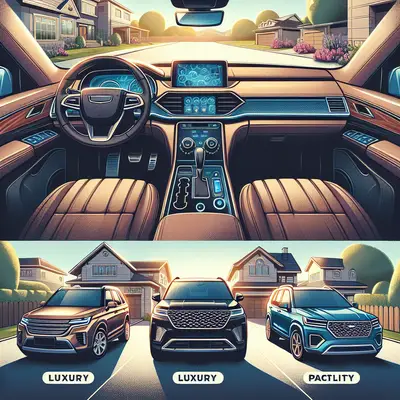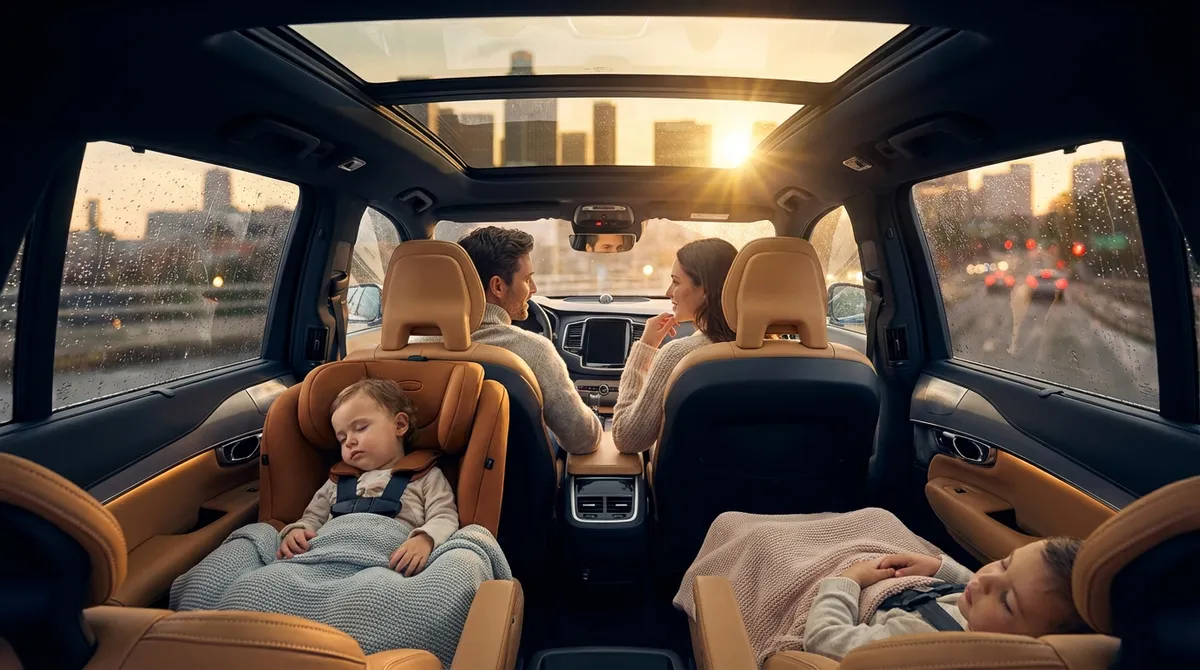
Not every family SUV moment is a road trip or a weekend escape. Most are beautifully ordinary: the 7:45 a.m. school run, the late-night airport pickup, the quiet commute home after a long day. Yet it is precisely in these “unremarkable” moments that the right SUV can feel quietly exceptional.
Beyond horsepower figures and cargo volume charts, there exists a more nuanced layer of design—features that anticipate family life rather than merely accommodate it. Below, we explore five refined, often underappreciated SUV characteristics that discerning families are beginning to prioritize, not for spectacle, but for the way they gently elevate every journey.
1. The Thoughtfully Orchestrated Cabin: Layout That Respects Daily Life
A true family-centric SUV is not defined by how many seats it offers, but by how intelligently those seats—and the space around them—are configured. The most successful layouts are less about brute capacity and more about choreography: how gracefully people and belongings move through the vehicle throughout the day.
Look for second-row designs that allow access to the third row without dismantling child seats; premium models now offer sliding and tilting mechanisms that enable children to enter the third row while a forward-facing car seat remains latched in place. Flat floors in the second row may seem trivial, yet they translate into easier movement for children climbing across, less tripping, and simpler installation of multiple car seats.
Pay attention, too, to the relationship between seat height and door opening. A subtly higher “hip point” allows children to step in rather than climb, and makes it significantly easier for adults to lean in and buckle younger passengers without straining. Similarly, third-row seats that fold directly into the floor without needing to be removed create an elegant transition between people-hauler and cargo carrier.
Ultimately, families benefit from a layout that doesn’t require constant compromise—no elaborate seat gymnastics, no shuffling of bags to make room for strollers or sports gear. The most refined cabins feel less like a puzzle and more like a space quietly designed around the rhythm of family life.
2. Serene Soundscapes: Acoustics as a Family Luxury
Silence in a family SUV is never absolute—but it can be remarkably well-managed. When automakers invest in acoustic refinement, the payoff is surprisingly tangible: calmer children, less driver fatigue, and more pleasant conversations at normal volume, even at highway speeds.
Seek out vehicles that discuss sound, not just power. Laminated glass, additional door seals, insulated wheel wells, and acoustic windshields create a quieter, more composed environment. In some premium SUVs, engineers tune the cabin not merely for low noise, but for pleasing sound quality—muting unpleasant frequencies from the road while allowing spoken voices to remain crisp and clear.
Active noise cancellation systems can subtly counteract low-frequency engine and road noise, creating a more relaxed atmosphere on long drives. For families, this means audiobooks that can be heard without constant volume adjustments, babies who sleep more soundly in their seats, and teenagers in the third row who can participate in a conversation without shouting.
Even the audio system itself contributes to this acoustic experience. A well-calibrated sound system that biases certain speakers toward rear passengers can make movie nights in the back or language-learning playlists on the school run feel unexpectedly refined. It is not simply about loudness, but about clarity—and how serenely the cabin can hold a quiet moment.
3. Subtle Safety Intelligence: Protection That Fades Into the Background
For modern families, safety technology is a given—but the way it is integrated can feel either intrusive or effortlessly reassuring. The most sophisticated SUVs blend their advanced systems into the drive so seamlessly that they become a calm, invisible partner rather than a constant, beeping presence.
Look beyond the headline acronyms and consider how these features behave in everyday scenarios. Adaptive cruise control that modulates speed smoothly, without abrupt braking, prevents passengers from being jostled and reduces driver tension. Lane-keeping assistance that nudges discretely, rather than tugs, respects the driver’s intent instead of fighting it.
Rear-seat reminder systems and occupancy sensors provide quiet peace of mind during hectic school mornings, while rear cross-traffic alert proves disproportionately valuable in crowded parking lots and school zones. For families navigating urban environments, 360-degree cameras and transparent “surround view” systems can reduce the stress of tight parking or busy pickup lanes, letting the driver maintain full awareness without constant neck-craning.
Truly considered safety technology is less about drama and more about prevention. It steps in early, with subtle corrections, making potentially tense moments—merging, reversing, sudden stops—feel less like emergencies and more like gently resolved tasks. This is safety not as spectacle, but as an understated form of daily grace.
4. Quietly Intelligent Storage: The Art of Invisible Organization
Cargo volume numbers tell only half the story. For families, the genius lies in how that space is divided, accessed, and concealed. A sophisticated family SUV treats storage less like a bin and more like a tailored wardrobe: everything has its place, and those places are beautifully intuitive.
Underfloor compartments in the cargo area, for example, can keep everyday essentials—first-aid kits, reusable shopping bags, picnic blankets—neatly hidden yet instantly accessible. Adjustable cargo floors and removable load covers allow for a smooth, flat surface when transporting larger items, then transform back into a secure, organized space for daily errands.
Inside the cabin, note the reach and size of door pockets, especially in the rear. Can they hold water bottles upright without rattling? Are there dedicated zones for tablets, headphones, and small toys that tend to scatter across the floor? Some newer SUVs offer thoughtful features like rubberized trays for devices, modular console organizers, or even hidden drawers beneath front seats.
Even the design of the tailgate matters. Hands-free opening is undeniably convenient when juggling a stroller and groceries, but the true luxury lies in how predictable and smooth the motion feels, how the liftgate height can be customized to avoid garage ceilings, and whether there is sufficient lighting around the cargo area for late-night arrivals. The most artful storage solutions dissolve visual clutter, so that the SUV feels composed—even when family life is not.
5. Family-Centric Comfort Rituals: Climate, Lighting, and the Little Details
Comfort in a family SUV extends far beyond “heated seats.” It is an ecosystem of small, well-considered details that make daily rituals more pleasurable, from the first turn of the ignition to the last door closing at night.
Tri-zone or quad-zone climate control, for instance, enables rear passengers to fine-tune their environment without constant requests to the front. Ventilated seats for the driver and front passenger can make summer school runs far more tolerable, while heated rear seats transform winter commutes into something closer to a cozy retreat. Rear sunshades—either built-in or power-operated—shield younger passengers from glare, allowing naps without draping jackets over windows.
Ambient lighting, when delicately executed, contributes more than mere aesthetics. Soft, configurable interior lighting helps children find dropped toys or books without harsh overhead glare, while helping the driver maintain visibility and focus. At night, thoughtfully positioned light strips along door panels and footwells give the cabin a calm, lounge-like ambiance that feels surprisingly restorative after a busy day.
Consider, too, the micro-touches: softly damped grab handles for children climbing in and out, high-quality materials that resist staining yet feel luxurious to the touch, USB-C ports (not just older USB-A) placed where teenagers will actually use them, and wireless charging pads that hold phones securely, not precariously. These are not headline features—but they define how refined the SUV feels in daily use, turning routine into ritual.
Conclusion
For families, a truly excellent SUV is rarely about a single “wow” feature. It is about an accumulation of quiet, intelligent decisions: a cabin that respects the choreography of busy mornings, acoustics that soften long days, safety technology that supports without shouting, storage that tames the inevitable clutter, and comfort details that make every journey feel subtly elevated.
When evaluating your next SUV, step beyond the spec sheet and immerse yourself in how the vehicle feels in the specific context of your family’s life. Imagine the school drop-off lane, the late-night drive from the airport, the muddy soccer weekend, the peaceful solo commute. The models that serve those moments with understated excellence are the ones that will continue to feel like a considered choice—long after the new-car sheen has faded.
Sources
- National Highway Traffic Safety Administration (NHTSA) - Authoritative information on vehicle safety technologies, ratings, and family-focused safety considerations
- Insurance Institute for Highway Safety (IIHS) – Vehicle Ratings - Detailed crash-test and safety ratings, including data on SUVs popular with families
- Edmunds – SUV Buying Guide - Practical evaluations of SUV interiors, comfort, and family-oriented features
- Consumer Reports – Guide to Car Safety Features - Independent overview and explanations of advanced driver assistance and safety technologies
- Kelley Blue Book – Family Car Features - Insights into features that matter most to families shopping for SUVs and crossovers
Key Takeaway
The most important thing to remember from this article is that this information can change how you think about Family Features.