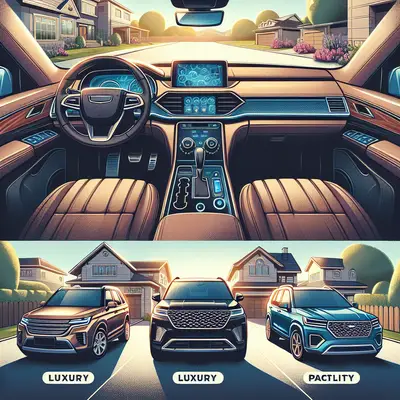
Choosing a family SUV today is less about horsepower and chrome, and more about how effortlessly it supports the cadence of real life. The most satisfying models do not shout for attention; they anticipate needs, smooth over friction points, and turn the routine school run into something subtly more civilised. Below, we explore the refined family features that separate a merely capable SUV from one that truly understands how discerning families live—and offer five exclusive insights that often go unnoticed on a typical test drive.
Designing Around Real Life, Not Just Passenger Count
On paper, three rows and generous cargo space sound sufficient. In practice, the true test is how gracefully those spaces adapt between school days, weekend escapes, and holiday travel.
Look for cabins designed with layered usage in mind: second-row seats that slide far enough to prioritise either legroom or cargo, and third rows that fold flat without requiring a wrestling match. Pay attention to the shape of the cargo area—squared-off corners, low liftover heights, and wide tailgates make strollers, sports gear, and grocery hauls far easier to load. Subtler touches matter just as much: flush-mounted seatback levers that allow children to climb in without snagging clothing, storage bins that hide clutter out of sight, and sidewalls robust enough to resist scuffs from backpacks and hockey sticks.
A thoughtfully designed family SUV feels composed even when it is full and busy. Doors open wide enough for grandparents to step in confidently, the roofline allows comfortable entry without ducking dramatically, and the seat bolsters are supportive but not restrictive. Instead of bragging about capacity in litres or cubic feet, focus on how comfortable and graceful it feels to reconfigure the interior three or four times in a single day.
Insight 1: The “Silent Co-Parent” — Cabin Acoustics and Conversation Comfort
Exclusive insight: Families underestimate how profoundly cabin acoustics shape daily satisfaction. An SUV that preserves calm conversation at motorway speeds becomes a silent co-parent—lowering stress, reducing fatigue, and making every journey feel more composed.
Beyond obvious sound insulation, examine how the vehicle manages different types of noise. High-quality family SUVs now deploy acoustic laminated glass, strategically placed insulation, and active noise cancellation to mute wind and tyre roar. This matters when you are trying to soothe a restless toddler, discuss homework from the front seats, or enjoy a podcast while the rear rows are dozing.
During your test drive, deliberately hold a soft conversation between the first and third rows at 60–70 mph. Are you raising your voice? Does music sound crisp without needing high volume? Are there intrusive vibrations from the suspension over rougher pavement? Vehicles that master this acoustic balance do more than feel luxurious—they reduce end-of-day exhaustion for the driver and create a more harmonious environment for everyone on board.
Insight 2: Temperature as a Comfort System, Not Just Climate Control
Exclusive insight: Sophisticated families increasingly treat cabin climate as a personalised wellness experience, not simply “air conditioning.” The best SUVs enable each occupant to feel individually considered.
Seek out vehicles offering true multi-zone climate control, where second- and (in some models) third-row passengers can adjust temperature and airflow without leaning into the front console. Rear vents positioned at both the face and feet levels provide genuinely even cooling and heating, particularly for children strapped into child seats where airflow is easily blocked.
Heated and ventilated second-row seats are more than a luxury flourish; they keep children comfortable during long drives in extreme temperatures, reducing complaints and fidgeting. A heated steering wheel and quick-warming front seats make early-morning school runs markedly more pleasant, while remote start with pre-conditioning can transform an icy cabin into a welcoming space before anyone even opens the door.
Discreet solar-reflective glass and quality sunshades for rear windows contribute to comfort as well, helping protect sensitive skin from UV exposure and preventing the “hot seat” effect after parking outdoors. In a family context, this holistic approach to temperature management feels indulgent yet deeply practical.
Insight 3: Thoughtful Tech Hierarchies That Reduce Friction, Not Add It
Exclusive insight: The most family-friendly SUVs organise technology in hierarchies—essential functions are always effortless, while advanced features are quietly available but never intrusive. This reduces daily friction and encourages safe, focused driving.
Start with the basics. Do physical knobs exist for core controls such as volume and cabin temperature, so that adjustments can be made by feel rather than by hunting through screens? Is the primary touchscreen intuitive enough that you can locate navigation or media settings within seconds, not minutes? Look for interfaces that allow you to save multiple driver profiles, including seat and mirror positions, favourite routes, and even climate settings—an elegant convenience for households where more than one person drives regularly.
Wireless smartphone integration (Apple CarPlay, Android Auto) and a wireless charging pad positioned where a phone naturally rests prevent tangled cords and distracted fumbling. Rear USB-C ports within arm’s reach limit arguments over charging priorities, while integrated rear entertainment systems, when thoughtfully executed, allow curated content without handing over control of your personal phone.
Most importantly, pay attention to how driver-assist features behave. Smooth, predictable lane-keeping assistance and adaptive cruise control that brake gently rather than abruptly are signs of mature engineering. A refined family SUV feels like a competent human co-driver, supporting your attention rather than nagging or startling you.
Insight 4: Luxury in the Details — Materials That Age Gracefully With Children
Exclusive insight: True family luxury is not white leather that looks immaculate on day one; it is a cabin that maintains its composure after years of snack crumbs, art projects, and muddy shoes.
Premium family SUVs now prioritise materials engineered for both tactility and resilience. Look for leather or high-grade synthetic upholstery with a subtle grain that resists scuffs and cleans easily with a damp cloth. Microfibre and woven textiles can feel refined while providing impressive durability, but examine them closely—tighter weaves often resist staining and pilling more successfully.
Pay attention to touchpoints: door pulls, armrests, steering wheel, and seat edges. These are the first areas to show wear. Softer padding, double-stitching, and reinforced corners indicate careful construction. Matte-finish trim (brushed metal, open-pore wood, or high-quality soft-touch plastics) will conceal fingerprints and minor scratches far better than gloss black surfaces, which quickly betray family life.
Flooring matters as well. Deep, easily removable mats with raised edges catch debris from playground visits and hiking trips. Some premium models even offer washable cargo liners and reversible cargo floors—carpet on one side for elegance, durable plastic on the other for wet umbrellas and sports equipment. Over years of use, these quiet material choices preserve that sense of stepping into a well-kept, considered space.
Insight 5: The Art of Seamless Transitions — From Solo Errands to Full Family Adventures
Exclusive insight: Families benefit most from SUVs that transition effortlessly between “driver-focused” and “family mode” without feeling compromised in either role.
Assess how quickly you can adapt the interior for different scenarios. Can you fold or raise the third row with one hand while holding a child’s bag in the other? Do second-row seats tilt and slide enough to allow easy access to the rear, even when a child seat is installed? Smartly designed vehicles often include simple release handles accessible from the boot, letting you reconfigure seating while loading luggage.
Look for subtle exterior and functional elements that support these transitions. Hands-free tailgates are especially valuable when your arms are full; keyless entry on all doors, not just the front pair, makes school pickup far smoother. Roof rails with integrated crossbar solutions turn the vehicle into a refined weekend gear hauler without the noise and awkward looks of aftermarket attachments.
The most satisfying SUVs feel almost modular. On a solo commute, supportive front seats, a polished ride, and a focused driving position create an executive ambience. On a family road trip, generous cubbies, rear cupholders that actually hold bottles securely, and accessible power outlets for devices transform the same space into a comfortable shared lounge. When an SUV executes both personalities gracefully, it naturally earns its place as the family’s central travel companion.
Conclusion
A genuinely refined family SUV is not defined solely by badge prestige or spec-sheet statistics. It is revealed in the ease of buckling a sleeping toddler without contortions, the calm of a hushed cabin at motorway speeds, and the clever storage that keeps everyone’s essentials within reach yet out of sight. For discerning families, the most meaningful features are often those that recede into the background, working quietly to make each journey smoother, more comfortable, and more composed.
As you explore your options, look beyond the obvious categories of safety, performance, and price. Instead, pay close attention to acoustics, climate personalisation, tech hierarchies, material longevity, and how fluidly the vehicle transitions between all the roles your family requires. These refined details are where a family SUV stops being just transportation—and becomes an integral, trusted part of everyday life.
Sources
- National Highway Traffic Safety Administration (NHTSA) – Car Seat & LATCH Basics – Guidance on child seat installation, anchoring, and safety considerations relevant to family SUV seating layouts
- IIHS – Booster and Child Seat Fit and Rear Seat Safety – Independent evaluations of how well vehicles accommodate child restraints in the rear rows
- Consumer Reports – Guide to Car Interior Materials – Overview of upholstery types, durability, and maintenance considerations in modern vehicles
- Edmunds – Car Noise Levels and Cabin Quietness Explained – Insight into automotive noise, vibration, and harshness (NVH) and how they affect everyday driving comfort
- EPA – Fuel Economy Guide for SUVs and Crossovers – Official fuel economy data to consider alongside comfort and family-oriented features
Key Takeaway
The most important thing to remember from this article is that this information can change how you think about Family Features.