Family SUVs no longer have to feel purely utilitarian. For discerning families, the most satisfying vehicles are those that slip seamlessly into daily life—adding comfort, calm, and control without demanding attention. Beneath the marketing gloss and spec sheets, there are features that genuinely transform the school run, the weekend escape, and everything in between.
This is a closer look at five underappreciated, quietly transformative family-focused features, and how to evaluate them with the same care you bring to decisions at home.
The Architecture of Calm: Cabin Layout That Actually Works
Beyond leather, stitching, and screen size, the real luxury is a cabin that feels composed when your day does not.
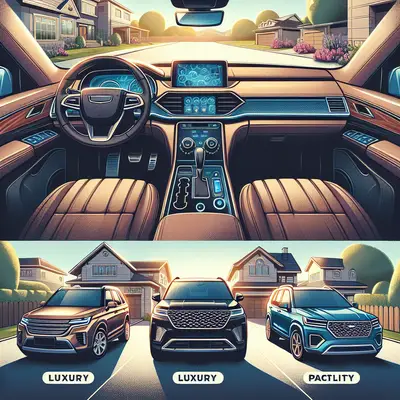
A well-designed family SUV begins with its layout: how easily a child can climb into the second row, how naturally a grandparent can step out, and how intuitively a driver can reach for climate controls without diving into a touchscreen maze. Look for a low, wide door opening and a floor height that allows children to step in without needing a boost—and adults to slide in without ducking or twisting.
Thoughtful details signal serious family intent: second-row doors that open close to 90 degrees; grab handles that are large but discreet; door sills that don’t soil clothes when loading a car seat. Equally important is sightlines—can the driver see the rear corners clearly, and can children see out without craning their necks? A truly family-friendly cabin feels like a well-planned home entryway: uncluttered, intuitive, and calm, even when life is not.
Subtle Sanctuary: Climate, Acoustics, and Lighting in Harmony
For families, quiet is not the absence of sound but the softening of chaos. A sophisticated SUV uses engineering and design to create an atmosphere that steadies everyone on board.
Tri-zone or four-zone climate control is more than a luxury line item; it allows the baby in the second row to stay warm while older children in the third row cool down after soccer practice. Rear climate controls placed low and within reach (or lockable from the front for younger children) can prevent arguments and constant adjustment requests. Look, too, for ventilated seats that make summer trips kinder, and heated rear outboard seats that keep older children comfortable without turning the cabin into a sauna.
Acoustic glazing, laminated glass, and targeted sound insulation work together to reduce wind and road noise, allowing quiet conversations and calmer infants. Pair this with adjustable ambient lighting that is soft, indirect, and configurable. The ability to dim rear lighting for sleeping children while keeping front illumination subtle yet functional can make late-night drives feel reassuring rather than draining.
Thoughtful Cargo Intelligence: Beyond a Big Trunk
Families often default to “bigger is better” for cargo, but volume alone can conceal a frustrating reality. The refinement lies in how a space is shaped, accessed, and divided.
Prioritize a flat, low load floor with minimal lip—this protects backs when loading strollers, large suitcases, or pet crates. When the third row is raised, examine the vertical space behind it: is it tall and squared-off enough for upright grocery bags and backpacks, or does it taper rapidly and force awkward stacking? Split-folding rear rows that can be lowered individually from the tailgate—via buttons or easily reached straps—allow one adult to reconfigure the cabin while holding a child’s hand.
Hidden underfloor storage is particularly valuable for families who prefer a visually calm environment. Stashing emergency kits, extra diapers, blankets, or reusable shopping bags out of sight keeps the luggage area refined even on busy days. Integrated cargo rails, subtle hooks, and adjustable dividers may appear minor, but they prevent groceries, sports gear, and school projects from becoming an untidy jumble with every turn.
Quiet Tech That Serves, Not Distracts
Modern SUVs are saturated with screens and software, yet the most elegant experiences are those where technology recedes into the background, quietly simplifying family logistics.
Look for intuitive, physical controls for frequently used functions: volume, temperature, defrost, drive modes. This reduces distraction and allows drivers to keep their eyes on the road, especially when children demand attention from the back. Wireless smartphone integration (Apple CarPlay, Android Auto) can be valuable, but judge how quickly it connects from a cold start and whether it remains stable on longer journeys.
Rear-seat USB-C ports placed high enough to avoid cable tangles, integrated device storage that prevents tablets from sliding onto the floor, and thoughtfully positioned power outlets for coolers or breast pumps can turn the car into a truly functional family space. Advanced driver-assistance features such as adaptive cruise control, lane-keeping assistance, and traffic-jam assist are most meaningful when they operate predictably and smoothly, reducing tension during long drives rather than constantly surprising the driver with abrupt corrections.
Finally, over-the-air software updates are increasingly important. Families tend to keep vehicles longer, and a car that can receive improvements and fixes remotely is more likely to maintain its polish over the years—without repeated trips to the service center.
Seating as Strategy: Comfort, Access, and Future-Proofing
Family seating is not just about how many people you can fit today, but how gracefully your SUV can adapt as your children grow and routines evolve.
Begin with the fundamentals: second-row legroom, seat cushion length, and backrest angle adjustment. Children in booster seats benefit from firmer, flatter cushions, while teens and adults appreciate proper thigh support and recline for longer journeys. If you regularly use child seats, verify that the lower anchors (LATCH/ISOFIX) are well marked and easily reached without digging through deep seat creases; this can turn what is often a wrestling match into a brief, predictable task.
For three-row SUVs, pay close attention to how the third row is accessed when a child seat is installed in the second row. Some models allow the second row to tilt and slide forward while a child seat is latched, which can be invaluable when loading additional passengers. Third-row headroom, foot space beneath the second row, and window size all affect whether this space feels like an occasional perch or a genuinely usable seat for grandparents and older children.
Reserve a moment to imagine the future: teenagers with longer legs, friends joining school runs, or the need to transport elderly relatives. A truly refined family SUV is one that remains comfortable and dignified for every passenger, through every chapter, rather than being outgrown in just a few years.
Conclusion
When viewed through a more intentional lens, the most valuable family SUV features are not always the ones highlighted on brochures. They are the quiet enablers of everyday ease: a cabin that calms rather than overwhelms, cargo space that behaves intelligently, technology that supports without intruding, and seating that respects every passenger.
For families who appreciate refinement, the true measure of a vehicle is how gracefully it disappears into the rhythm of life—turning commutes into moments of calm, errands into effortless routines, and long journeys into occasions that feel composed rather than chaotic. In that sense, the right SUV is not just transportation, but a thoughtfully designed extension of home.
Sources
- [National Highway Traffic Safety Administration (NHTSA) – Vehicle Safety Features](https://www.nhtsa.gov/features) – Overview of modern safety and driver-assistance technologies relevant to family vehicles
- [Insurance Institute for Highway Safety (IIHS) – Ratings & Testing](https://www.iihs.org/ratings) – Detailed crash-test and safety evaluations for SUVs and family cars
- [Edmunds – SUV Buying Guide](https://www.edmunds.com/suv/) – Practical insights on SUV configurations, cargo space, seating, and family-oriented features
- [Consumer Reports – How to Choose the Best SUV for Your Needs](https://www.consumerreports.org/cars/buying-guide/how-to-choose-the-best-suv-for-your-needs-a4860784894/) – Guidance on assessing comfort, usability, and technology for everyday family use
- [U.S. Department of Energy – Fuel Economy Guide](https://www.fueleconomy.gov/feg/findacar.shtml) – Official efficiency data to help families balance performance, running costs, and environmental impact
Key Takeaway
The most important thing to remember from this article is that this information can change how you think about Family Features.