Family life rarely pauses. School runs blur into late meetings, weekend matches become evening errands, and somehow, the SUV is expected to be calm command center and comforting retreat all at once. For families who value refinement as much as practicality, the right SUV does more than move people—it orchestrates your day with quiet precision.
Amid the endless lists of cupholders and cargo volume, there are a handful of features that genuinely elevate daily life. These are the understated details that don’t shout for attention, yet quietly change how your family travels. Below are five exclusive insights that matter deeply once you live with your SUV beyond the test drive.
1. Cabin Architecture That Calms, Not Clutters
Many SUVs claim to be “spacious,” but discerning families quickly discover there is a difference between simply having room and having a cabin that genuinely feels composed and usable.
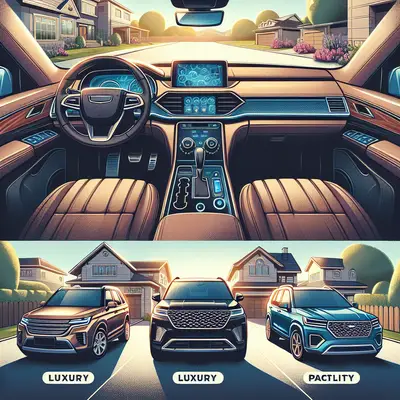
Thoughtful cabin architecture begins with sightlines: a low cowl, slim pillars where possible, and intelligently placed mirrors reduce the visual stress of navigating tight school parking lots or crowded city streets. A slightly elevated driving position can offer commanding visibility without the “perched” feel that leads to fatigue on longer drives.
Equally important is the layout of physical controls. A well-designed SUV allows the driver to adjust climate, audio, and key functions by feel, without hunting through touchscreens. Knurled knobs, intuitive button placement, and clear haptic feedback all minimize distraction—especially when you are answering questions from the back row or mediating sibling debates mid-commute.
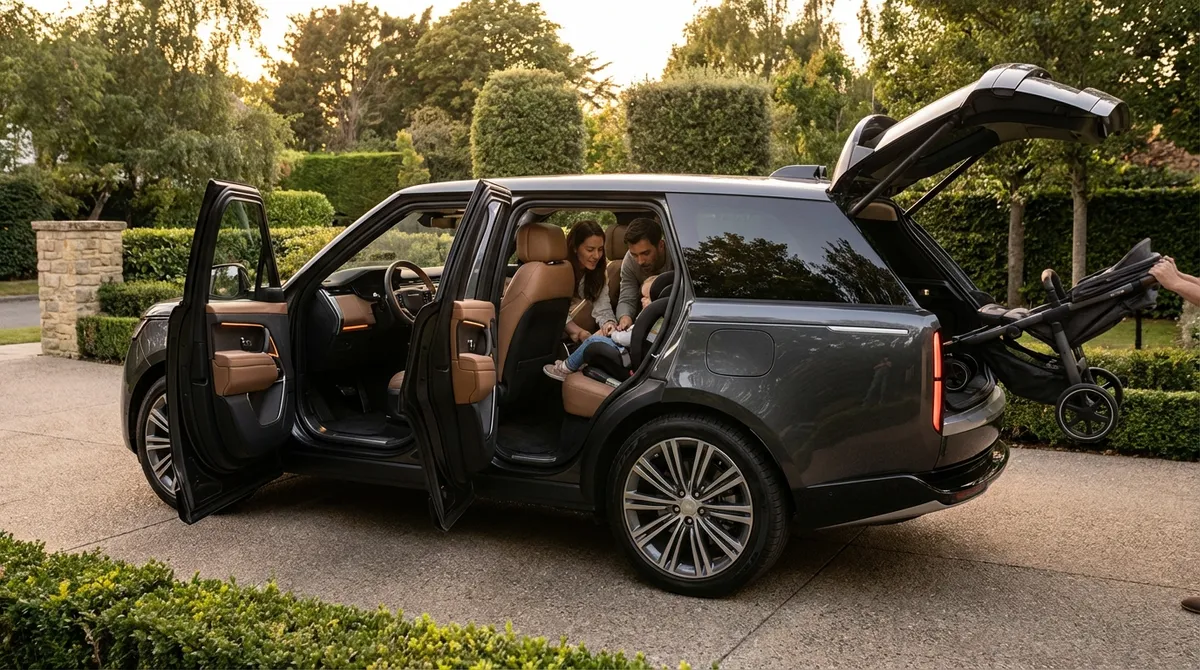
Families should also pay close attention to the second row. Flat, park-bench style seating quickly becomes tiresome. Gently contoured cushions, adequate thigh support, and adjustable backrest recline can make the difference between restless passengers and quiet, content children. Look for second-row headrests that don’t obstruct rear visibility when not in use, as well as doors that open wide enough to gracefully manage car seats, backpacks, and small, sleepy passengers at once.
2. Subtle Seating Innovations That Matter After Year One
Many buyers focus on leather vs. cloth, but the more meaningful seating questions reveal themselves long after the showroom visit. For families, the true luxury is seating that adapts to changing seasons of life with minimal compromise.
Start with access. If you anticipate regular use of a third row, pay attention to how it’s reached. A single-touch tilt-and-slide second row that works even with a child seat installed (using LATCH or ISOFIX) is far more valuable than a marginal increase in raw legroom. Test it yourself: simulate your real life—bags in hand, a child on your hip—and see if access feels graceful or awkward.
Next, consider the material beyond simple “leather” labels. Higher-end synthetic leathers and treated natural hides can be easier to wipe clean, more resistant to dye transfer from dark denim, and less prone to cracking under the assault of crumbs, juice boxes, and sports gear. Perforated seat surfaces with smartly tuned ventilation (not just “on/off”) can discretely handle post-practice dampness or humid climates, preventing that lingering “car smell” that never quite leaves in lesser cabins.
Finally, think about long-term ergonomics. Adjustable lumbar support for the driver—and ideally the front passenger—helps with back fatigue on road trips. If the SUV offers multi-position memory seating, program profiles not just for driver height, but for different uses: a “workday commute” setting, a “road trip” posture, even a “chauffeur mode” where rear legroom is maximized for an adult passenger or a rear-facing child seat.
3. Quiet Technology: Digital Tools That Disappear Into the Background
Families are increasingly surrounded by screens, and the most sophisticated SUVs manage technology with restraint, not excess. The aim is not to impress your passengers with a dashboard light show, but to make every interaction feel purposeful and understated.
Begin with the user interface. A clean, logical home screen that surfaces the functions you genuinely use—navigation, phone, audio profiles, climate shortcuts—matters far more than animated graphics. Look for systems that support both Apple CarPlay and Android Auto, ideally wireless, and test how quickly your phone connects upon entry. A graceful, near-instant handoff from your home Wi-Fi to your vehicle’s connection sets the tone for each journey.
In the rear, built-in entertainment screens are less important than power and connectivity that withstand real-world demands. Strategically placed USB-C ports in all rows, a robust 12V outlet in the cargo area, and even an available 110V/120V household-style outlet can quietly prevent countless frustrations. Consider how devices will actually be used: can a child in the third row charge a tablet without trailing a cable through the aisle? Are ports positioned high enough to avoid being kicked or tugged loose?
Equally important is the sophistication of driver-assist technology. Adaptive cruise control, lane-centering, and traffic-jam assist are no longer novelties; they are the silent partners that reduce cognitive load in stop-and-go school traffic or weekend congestion. The most refined systems operate smoothly and predictably—no abrupt braking, no ping-ponging between lane markers. During your test drive, use these features in real conditions and ask yourself: do they make me feel more relaxed, or more on edge?
4. Cargo Versatility That Respects Both Gear and Grace
Cargo space is often presented as a single number, but daily life reveals that shape, access, and configuration are what truly distinguish a family-ready SUV. The goal is not simply fitting everything, but doing so without turning the rear of your vehicle into a jumble of bags, balls, and forgotten water bottles.
Examine the load floor carefully. A low, flat surface with minimal lip makes loading strollers, luggage, or a week’s worth of groceries far more elegant. Split-folding rear seats should create an even extension of that floor rather than uneven tiers that require improvisation with bags and boxes. If there is an underfloor storage compartment, consider whether it realistically accommodates your essentials: emergency kit, reusable shopping bags, compact umbrella, and perhaps a small blanket for impromptu park stops or sideline seating.
Pay attention to how the third row stows. Power-folding seats are convenient, but equally important is speed and reliability—test how long the process takes and whether you can operate it from both the rear hatch and the second row. A well-designed system allows one parent to reconfigure the cabin with a single hand while the other manages children and gear.
Finally, take note of subtle touches: hooks capable of holding shopping bags without spilling the contents, side pockets that safely store delicate items like laptops or art projects, and a cargo cover that retracts smoothly and can be stored onboard when not in use. These are small details, but they prevent the creeping clutter that can make even a large SUV feel perpetually disorganized.
5. Acoustic Refinement: The Most Underrated Family Luxury
Silence, or something close to it, is perhaps the most luxurious feature in a family SUV—and the one most often underestimated. Not absolute quiet, but a controlled, gentle soundscape that reduces fatigue and tension for everyone on board.
Acoustic refinement starts with structure: a rigid chassis and carefully tuned suspension minimize the low-frequency “shudder” over potholes and rough surfaces. Layered glass for the front windows, comprehensive door sealing, and acoustic insulation around the wheel wells all work together to keep road roar at bay—particularly on coarse highway surfaces that can quickly wear on sensitive ears.
The engine’s character also matters. Whether gasoline, hybrid, or fully electric, you want a powertrain that feels composed rather than strained when merging onto highways or climbing hills with a full complement of passengers and luggage. In a hybrid, listen for how seamlessly the vehicle transitions between electric and combustion power; abrupt changes in sound or vibration will be magnified with sleeping children in the back.
Lastly, consider the audio system not just as entertainment, but as a tool for managing the cabin environment. A well-tuned system with balanced sound at low volumes can gently mask external noise without overwhelming conversation. Some premium SUVs offer active noise cancellation, subtly countering specific frequencies of road and engine noise. This is not a gimmick; when executed properly, it reduces end-of-day fatigue and makes long trips feel shorter, calmer, and more civilized.
Conclusion
A family SUV is more than a collection of specifications; it is the backdrop to countless quiet moments—morning conversations, sleepy evening drives, and the in-between times that stitch a family’s days together. When you look beyond the usual talking points and focus on cabin architecture, seating nuance, unobtrusive technology, elegant cargo solutions, and true acoustic refinement, you begin to see which vehicles are genuinely designed to elevate everyday life.
The most rewarding choice is often the one that feels almost effortless in use, the SUV that adapts gracefully as your family’s needs evolve. Seek out the models that treat these details not as options, but as part of a considered whole—and your next family vehicle will feel less like a purchase, and more like a quiet, enduring upgrade to the way you live.
Sources
- National Highway Traffic Safety Administration (NHTSA) – Vehicle Safety and Driver Assistance - Authoritative overview of modern driver-assistance technologies and safety considerations
- Insurance Institute for Highway Safety (IIHS) – Ratings & Research - Independent crash-test results and evaluations that inform overall family safety and structural refinement
- U.S. Department of Energy – Fuel Economy Guide - Official data on fuel economy and powertrain options, including hybrids and EVs used in family SUVs
- Edmunds – Car Interior and Cargo Space Guide - Practical insights on evaluating interiors, seating comfort, and cargo flexibility during test drives
- J.D. Power – Automotive Quality and Satisfaction Studies - Research-based information on long-term owner satisfaction, noise levels, and overall vehicle refinement
Key Takeaway
The most important thing to remember from this article is that this information can change how you think about Family Features.