Family life rarely pauses for grand gestures; it unfolds in school runs, grocery hauls, late-night airport pickups, and quiet conversations between appointments. The right SUV doesn’t simply “fit it all in”—it elevates these everyday moments with design choices that feel tailored, intentional, and quietly luxurious.
For families who value refinement as much as practicality, the difference between a merely capable SUV and a truly exceptional one often lies in the subtleties. Beyond horsepower and headline safety ratings, there are thoughtful family features that transform a vehicle from a tool into a trusted companion.
Below are five exclusive, under-appreciated insights that discerning families will want to look for—details that signal a brand understands both the elegance and the complexity of modern family life.
1. Cabin Architecture That Respects Every Passenger, Not Just the Driver
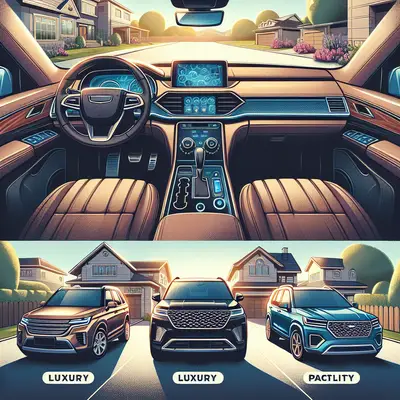
Many SUVs are engineered around the driver’s experience; the sophisticated family SUV respects everyone’s experience equally. This is where cabin architecture quietly reveals whether a vehicle was genuinely designed for families, rather than adapted for them.
Look for a second row with a flat or nearly flat floor, which allows three passengers to sit comfortably without footwell compromises. A slight bench sculpting is fine, but deep bucket-style contours can make buckling children’s car seats more difficult and reduce flexibility as kids grow. Similarly, the “hip point” height—the vertical distance from the ground to the seat cushion—should allow adults and children to slide in without climbing or dropping down. The best family SUVs make ingress graceful, not acrobatic.
Pay attention to the view from each seat. Generous glass areas, a slightly raised second row, and carefully angled headrests can help children see out without craning their necks. This improved outward visibility is not just about comfort; it can reduce travel fatigue and back-seat restlessness, making longer drives more serene.
Refined cabin architecture goes further with subtly angled door openings that ease child-seat loading, rear doors that swing open widely without feeling cumbersome, and B- and C-pillar placement that minimizes head bumps. When test-driving, don’t just sit in the driver’s seat—move through every row and ask yourself: does each position feel intentionally designed or merely accommodated?
2. Climate, Light, and Quiet: The “Invisible Luxuries” Families Feel First
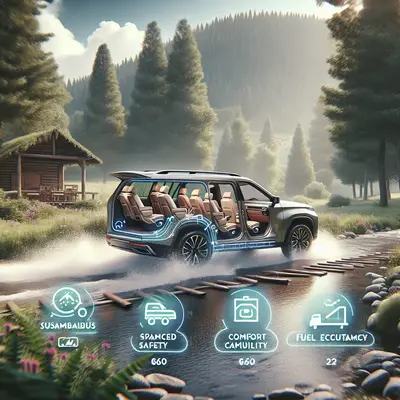
The true test of a family SUV often arises in extreme weather and late-night drives. Climate control, acoustic insulation, and lighting are the “invisible luxuries” that define whether the cabin feels like a sanctuary or simply a space.
Seek tri-zone or at least dual-zone climate control that allows rear passengers to manage temperature independently. More advanced systems use multiple sensors and air distribution points so that cooled or heated air reaches the third row without blasting the second. This is especially valuable if you have infants or toddlers in the rear, where temperature fluctuations can be more pronounced.
Acoustic refinement is equally important. Look for laminated front side glass (not just a laminated windshield) and carefully sealed door frames; they dramatically reduce wind and road noise. Some premium family SUVs use active noise cancellation, but even without it, a well-insulated body and a well-tuned suspension can make conversation between the first and third rows effortless at highway speeds.
Lighting is often overlooked yet profoundly influential. Full-LED exterior lighting enhances visibility during night drives, but the interior story matters just as much. Soft, indirect ambient lighting that doesn’t shine directly into children’s eyes; subtle illumination around door handles and footwells; and gentle fade-in/fade-out dome lights reduce the jarring feeling of a suddenly bright cabin when a door opens in the dark.
In combination, these elements create a calm, cocooned environment. For a family that spends hours in the car each week, that sense of quiet, tempered comfort is an underestimated form of luxury.
3. Thoughtful Cargo Solutions That Anticipate Real Life, Not Photo Shoots
Manufacturers love to tout maximum cargo volume figures, yet those numbers rarely capture how livable the cargo area feels in everyday use. For families, intelligent cargo design beats sheer cubic feet.
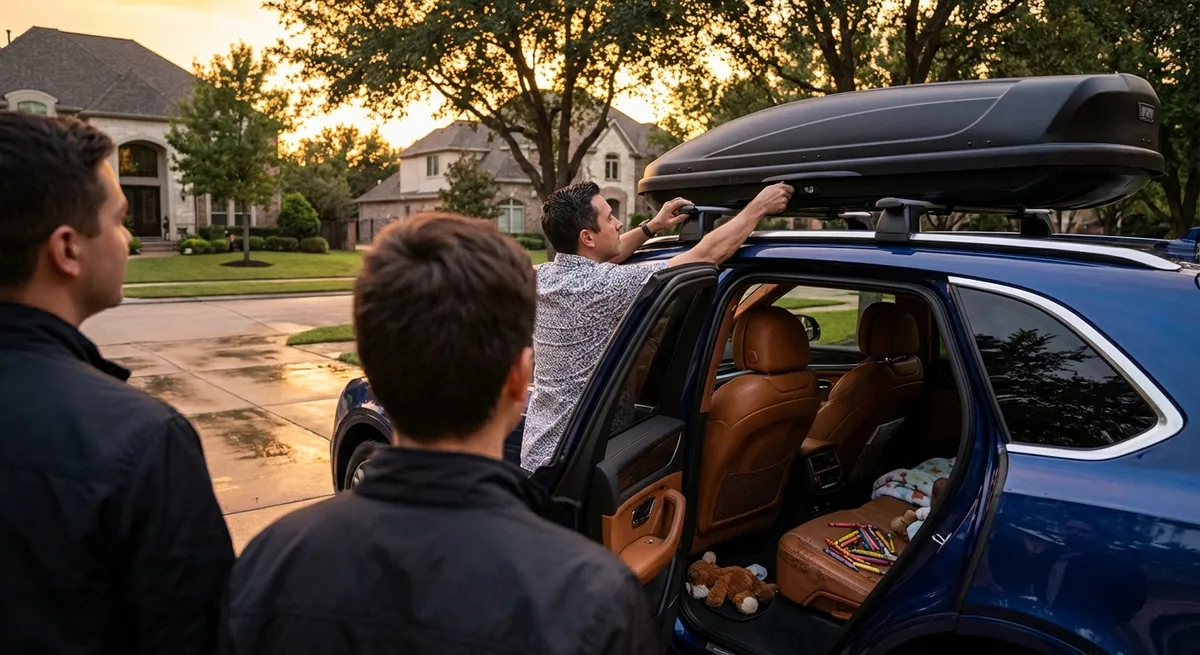
Begin by examining how easy it is to reach the third-row releases and seat-fold controls. The most family-conscious SUVs allow you to fold the second and third rows from the tailgate area and sometimes from the side doors as well, with minimal need to lean in or contort. Hands-free liftgates that respond to a foot motion can be particularly valuable when juggling children, bags, and strollers.
Floor height and shape matter more than many spec sheets reveal. A lower, nearly flat load floor with minimal lip makes it easier for children to place their own bags in the trunk, fostering independence—and reducing repeated heavy lifting for adults. Split-folding rear seats (e.g., 40/20/40 or 60/40) let you carry long items like skis or a stroller while still accommodating multiple passengers in comfort.
Seek out hidden storage: underfloor compartments for valuables or messy gear, side cubbies that hold grocery bags upright, and hooks or rails that keep items from sliding. These subtle solutions preserve order, even when life isn’t orderly.
Finally, pay attention to how the cargo area integrates with the rest of the cabin. Are there power outlets for a cooler on road trips? Is there sufficient lighting when you’re loading in the dark? Do the materials feel robust but refined, resisting scuffs from sports equipment while still presenting a premium finish? These discreet decisions are the hallmark of an SUV designed for families who live fully, not just pose for brochures.
4. Child-Seat and Third-Row Access That Ages Gracefully with Your Family
For families with young children, how an SUV handles child seats is more than a detail—it is a daily ritual that can either be seamless or endlessly frustrating. The most sophisticated solutions are those that work beautifully today and still feel adequate when your children no longer need a booster.
First, examine the LATCH/ISOFIX anchor layout. Ideally, anchors should be placed in multiple positions across the second row and, in some models, in the third row. Generous anchor spacing and easily accessible tether points—preferably on the seatback rather than on the floor behind—simplify installation. Anchors that are exposed or behind small flaps tend to be more user-friendly than those buried under heavy upholstery.
Then, look at how the second row moves. Certain SUVs feature “tip-and-slide” mechanisms that allow third-row access even with a forward-facing child seat installed (when properly latched), which can be transformative for growing families. Others offer second-row captain’s chairs that create a central aisle; elegant for older children, but sometimes less efficient for maximizing car-seat positions. Consider not only your current configuration but how you might evolve—from infant seats to rear-facing, then forward-facing, then boosters, and finally, teenagers.
Third-row comfort is crucial if you intend to use it regularly, not just on occasional holidays. Prioritize models where adults can genuinely sit in the third row without knees pressed awkwardly into the seatback. An adjustable second row that slides fore and aft often allows you to “share” legroom between rows so both second- and third-row occupants remain comfortable.
Thoughtful design in this area ensures that your SUV remains a fit not only for your family’s current stage, but also for the one you can’t quite imagine yet—where teenagers, friends, and relatives may be frequent companions.
5. Digital Calm: Technology That Serves, Rather Than Distracts, the Family
Modern SUVs are saturated with screens and connectivity options, but sophistication lies in restraint and clarity rather than sheer complexity. Technology should support family life, not compete with it.
Begin with the driver’s interface. A clean, logically organized infotainment system with both physical controls for key functions (volume, climate, defrost) and responsive touch or voice commands combines elegance with safety. Wireless smartphone integration (Apple CarPlay, Android Auto) reduces cable clutter and allows seamless transitions between drivers, while multiple USB-C and USB-A ports across rows prevent the perennial “who gets the charger” debate.
Rear-seat entertainment solutions can be valuable, but the most refined SUVs balance screen-based options with thoughtful device support. That might mean integrated tablet mounts, seatback pockets that safely house personal devices, or Wi‑Fi connectivity robust enough for online learning during road trips. The focus should be on enabling your family’s preferred content—whether streaming, audiobooks, or educational apps—rather than locking you into proprietary systems that age quickly.
Driver-assistance features are another dimension of digital calm. Systems like adaptive cruise control, lane-centering assistance, and blind-spot monitoring should feel like a quietly competent co-pilot, not a nervous passenger. Consider how intuitively these systems can be adjusted and whether alerts are gentle and clear rather than startling. A premium family SUV will offer thoughtful customization of these aids, allowing you to dial in exactly the level of support you find comfortable.
Over-the-air software updates and robust app integration can help your SUV stay current throughout your ownership. Still, the ultimate mark of sophistication is this: when your family steps inside, the technology fades into the background, leaving you with a sense of order, ease, and connection—both to each other and to the journey ahead.
Conclusion
For discerning families, the most rewarding SUVs are not always the ones with the biggest touchscreens or the boldest styling. They are the vehicles in which every interaction—buckling a child into a car seat, loading a stroller, adjusting the climate, settling into the third row—feels considered and graceful.
By focusing on cabin architecture for all passengers, invisible luxuries of comfort and quiet, cargo solutions tuned to real life, child-seat and third-row access that adapts as your family evolves, and technology designed to calm rather than overwhelm, you can identify the SUVs that rise above the crowd.
In a market crowded with options, these subtle but meaningful family-focused details are where genuine sophistication lives—and where everyday journeys begin to feel just a little more like an occasion.
Sources
- [NHTSA: Car Seat Recommendations for Children](https://www.nhtsa.gov/equipment/car-seats-and-booster-seats) - U.S. government guidance on child-seat use, installation, and safety considerations relevant to family SUV seating and LATCH systems.
- [IIHS: Child Seat Anchors and Ease-of-Use Ratings](https://www.iihs.org/ratings/child-seat-anchors) - Independent evaluations of LATCH accessibility and usability in various vehicles, informing how families should assess anchor design.
- [Edmunds: Car Interior Noise and Comfort Explained](https://www.edmunds.com/car-technology/car-interior-noise-levels-and-sound-deadening-explained.html) - Detailed discussion of sound insulation, glass, and cabin quietness—key to understanding “invisible luxury” in family SUVs.
- [Consumer Reports: 3-Row SUV Buying Guide](https://www.consumerreports.org/cars/suvs/3-row-suv-buying-guide-a8627635885/) - Comprehensive overview of three-row SUV considerations, including seating, cargo, and everyday usability for families.
- [SaferCar (NHTSA): Driver Assistance Technologies](https://www.nhtsa.gov/equipment/driver-assistance-technologies) - Authoritative breakdown of advanced driver-assistance systems that contribute to a calmer, safer driving experience for families.
Key Takeaway
The most important thing to remember from this article is that this information can change how you think about Family Features.