Family life is rarely cinematic; it is lived in school runs, late‑night drives home from activities, and quiet conversations between appointments. Yet the SUV you choose can subtly transform these ordinary moments into something calmer, more considered, and distinctly more comfortable. For families who value refinement as much as practicality, the real magic lies not in spec sheets, but in the details that shape how every journey feels.
Below are five exclusive, often overlooked insights that help distinguish a merely capable family SUV from one that genuinely elevates daily life.
1. Cabin Architecture That Respects Every Seat, Not Just the Front Row
Many SUVs are designed from the driver’s seat outward. For a family vehicle, the more telling question is: how does it feel in the second and third rows—after an hour?
A truly family‑first cabin treats every row as “prime real estate.” Look for second‑row seats that slide and recline independently, rather than a single bench with limited adjustment. This small detail allows you to fine‑tune legroom between rows and give older children or grandparents genuinely comfortable long‑distance seating, not just “good enough for short trips.”
Similarly, pay attention to the third‑row access mechanism. A single fluid motion to tilt and slide the second row—without having to remove a child seat—reflects thoughtful engineering that respects real‑world parenting. Flat floor designs (with minimal center humps) allow easier movement across the cabin, so a parent can reach a child without awkward contortions.
Ventilation is another quiet differentiator: dedicated air vents and climate controls for rear passengers help prevent the familiar “too hot / too cold” chorus that can derail a peaceful drive. Combined with wide‑opening rear doors and a low step‑in height, these architectural details create a cabin that welcomes every generation with equal consideration.
2. Lighting and Acoustics: The Invisible Comfort Systems
Families often fixate on horsepower and cargo volume, yet the ambience of a family SUV is defined just as much by what you see and hear—or don’t.
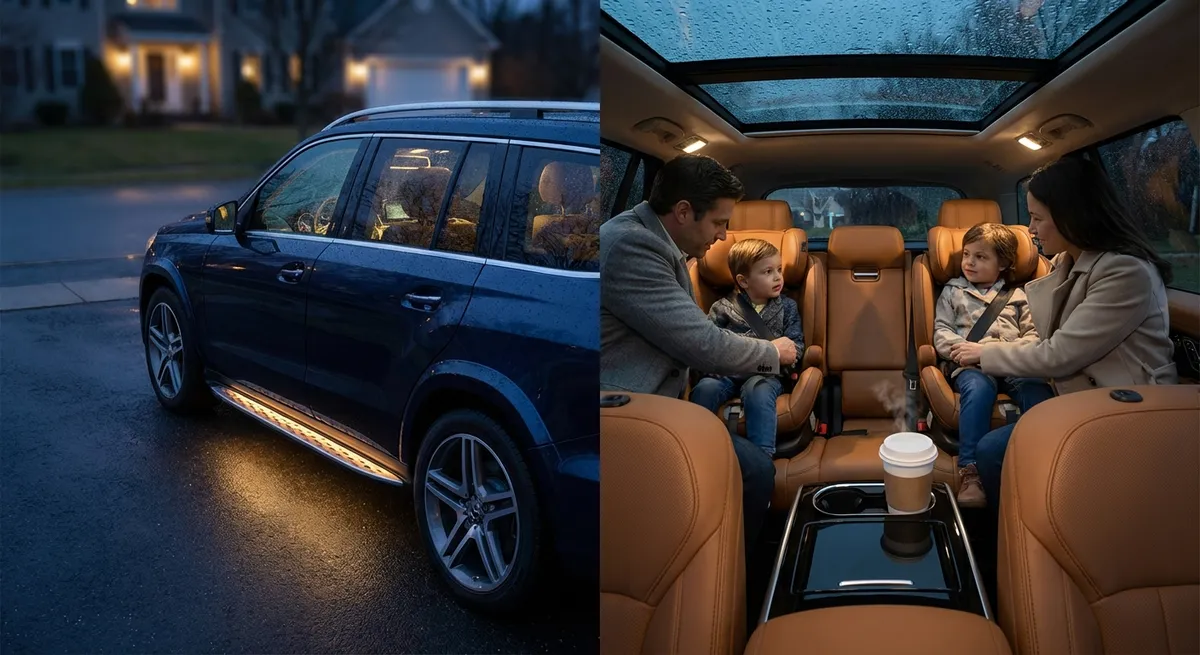
Start with lighting. Panoramic roofs and large side windows can make an SUV feel more like a lounge than a box on wheels, particularly for children in rear seats who are otherwise looking at seatbacks. At night, look for subtle ambient lighting that outlines key areas (door handles, console edges, footwells) without becoming a distraction. Warm, non‑glare lighting can make late‑evening drives or long highway stretches feel markedly less fatiguing.
Acoustic refinement is equally important. Laminated glass, targeted sound deadening around the wheel wells, and active noise cancellation can dramatically reduce the “busy” background noise that often comes with family driving—groceries shifting, children talking over road roar, and the constant hum of tires on coarse pavement. The result is not silence, but a composed quiet that makes it easier to converse at normal volume, listen to an audiobook together, or let a baby nap undisturbed.
Ask to test‑drive at highway speeds, on less‑than‑perfect pavement, and with the full family aboard. The degree of calm inside the cabin is one of the clearest hallmarks of a genuinely premium family SUV.
3. The Subtle Art of Storage: Designing for Real Life, Not Brochures
Cargo capacity is usually presented as a single number, but busy families live in the details: where the stroller goes, where the sports gear fits, where the laptop bag can be tucked away without being crushed.
Look for trunk spaces with a low, flat load floor that remains level when you fold down the rear seats. Multiple configurations—such as 40/20/40‑split second rows or individually folding third‑row seats—offer far more real‑world flexibility than a simple 60/40 split. This allows you to carry skis, a cello, or long boxes while still comfortably seating family members.
Inside the cabin, premium family‑oriented SUVs offer storage that feels purpose‑designed rather than incidental: a deep, covered center console for valuables; rubberized, easy‑clean trays where children naturally drop small toys; integrated bag hooks so grocery sacks don’t tumble; even hidden under‑floor storage in the cargo area for muddy shoes or emergency kits.
Pay attention to how accessible these spaces are when the vehicle is full. Can you access the third‑row cupholders when the trunk is loaded? Is there a dedicated, secure place for tablets or laptops during road trips? When storage is thoughtfully mapped to real life, the entire vehicle operates more like a well‑appointed family residence than a simple mode of transport.
4. Technology That Simplifies, Rather Than Complicates, Family Routines
Modern SUVs can quickly become a maze of menus, screens, and alerts. For families, the most sophisticated technology is often the technology that disappears into the background and simply makes life easier.
Start with the basics: a clear, responsive central touchscreen paired with physical knobs or buttons for core functions like temperature and volume. During a hectic morning, the ability to adjust climate or defrost the windshield by feel—without hunting through submenus—matters far more than screen size alone.
Wireless smartphone integration (Apple CarPlay, Android Auto) is now almost essential, but how seamlessly it connects can vary widely. Multiple USB‑C ports across all rows, integrated device storage slots, and optional rear entertainment systems with independent audio can prevent the familiar battle over one shared screen or outlet.
Some higher‑end family SUVs now offer driver profiles linked to individual keys or smartphones: seat position, climate preferences, and even favorite navigation destinations are adjusted automatically when a specific driver enters. For dual‑driver households with different seating and mirror preferences, this is a small but significant luxury.
Finally, evaluate driver‑assistance systems through a family lens. Adaptive cruise control with gentle acceleration and braking, lane‑keeping systems that feel natural rather than intrusive, and 360‑degree camera views that truly eliminate guesswork in crowded school parking lots all contribute to a calmer, more composed daily experience.
5. A Refined Approach to Family Wellness and Long‑Term Living
Beyond comfort and convenience, the best family SUVs quietly support health, well‑being, and longevity—the things that matter over years of ownership.
Advanced air‑filtration systems and cabin air quality monitors are increasingly common in premium models. For families with allergies or who spend time in urban traffic, filters that reduce fine particulates and certain pollutants can make a tangible difference to everyday comfort. Seek models that highlight their filtration technology and provide data or indicators, not just marketing language.
Seat design is another under‑appreciated area. Multi‑way adjustable front seats with proper lumbar support, extendable thigh cushions, and high‑quality foam or cushioning can dramatically reduce fatigue on road trips. In the second row, properly contoured seats that support a child’s posture—rather than flat bench seats—make for happier travelers and easier naps.
Consider also the materials and finishes throughout the cabin. Stain‑resistant, easy‑clean fabrics or leather alternatives, high‑quality genuine leather with durable finishes, and thoughtfully chosen trim pieces that resist scratching and fingerprints will all age more gracefully under family use. Some brands also focus on low‑emission interior materials, reducing off‑gassing—an appealing detail for families who value a healthier cabin environment.
Finally, look at the ownership ecosystem: manufacturer support for over‑the‑air software updates, extended warranty coverage, and well‑regarded service networks. A refined family SUV is not simply a purchase—it is a multi‑year partnership. The ability to keep safety systems, navigation, and connectivity updated over time can extend the “new car” feeling far beyond the first few years.
Conclusion
For families with discerning tastes, the true measure of a family SUV is not how impressive it appears on paper, but how gracefully it integrates into the rhythms of daily life. Cabin architecture that respects every passenger, carefully tuned lighting and acoustics, intelligently designed storage, genuinely helpful technology, and wellness‑focused details all contribute to a driving experience that feels quietly elevated.
When you next step into a showroom, look beyond the headline features and ask: how does this SUV support the small, repeating rituals of our family’s life? The models that answer that question well are the ones that will feel exceptional not just on day one, but every day thereafter.
Sources
- [NHTSA – Car Seat and LATCH System Information](https://www.nhtsa.gov/equipment/car-seats-and-booster-seats) - Details on child seat installation, LATCH anchor placement, and considerations for family seating layouts
- [IIHS – Vehicle Ratings and Safety Features](https://www.iihs.org/ratings) - Provides crash test ratings, information on advanced driver‑assistance systems, and insights into safety technologies relevant to family vehicles
- [EPA – Green Vehicle Guide](https://www.epa.gov/greenvehicles) - Explains emissions, fuel economy, and environmental factors that impact long‑term family health and operating costs
- [Volvo Cars – Advanced Air Cleaner and Interior Air Quality](https://www.volvocars.com/us/v/car-safety/safety-heritage/air-quality) - Example of how premium manufacturers approach cabin air filtration and in‑car wellness
- [Consumer Reports – Guide to Car Seat Comfort and Interior Design](https://www.consumerreports.org/cars/buying-a-car/how-to-choose-the-most-comfortable-car-a4535565208/) - Discusses seat ergonomics, ride comfort, and interior features that affect everyday driving and passenger well‑being
Key Takeaway
The most important thing to remember from this article is that this information can change how you think about Family Features.