In a market crowded with marketing slogans and decorative trim packages, the most meaningful family SUV features are often the ones that rarely make the brochure cover. They are the small engineering decisions, the thoughtful touches, and the quiet layers of safety and comfort that shape every mile with your family. For discerning buyers, understanding these deeper qualities transforms the shopping process from a checklist exercise into a careful curation of how your family will live, travel, and grow together inside a vehicle.
Below are five exclusive, often-overlooked insights that reward families who look beyond the obvious options list.
1. The Architecture of Access: How Your Family Actually Enters and Exits
The elegance of a family SUV begins with the first interaction: opening the door and settling in. Yet many buyers underestimate how dramatically door design, step-in height, and seat geometry affect daily life.
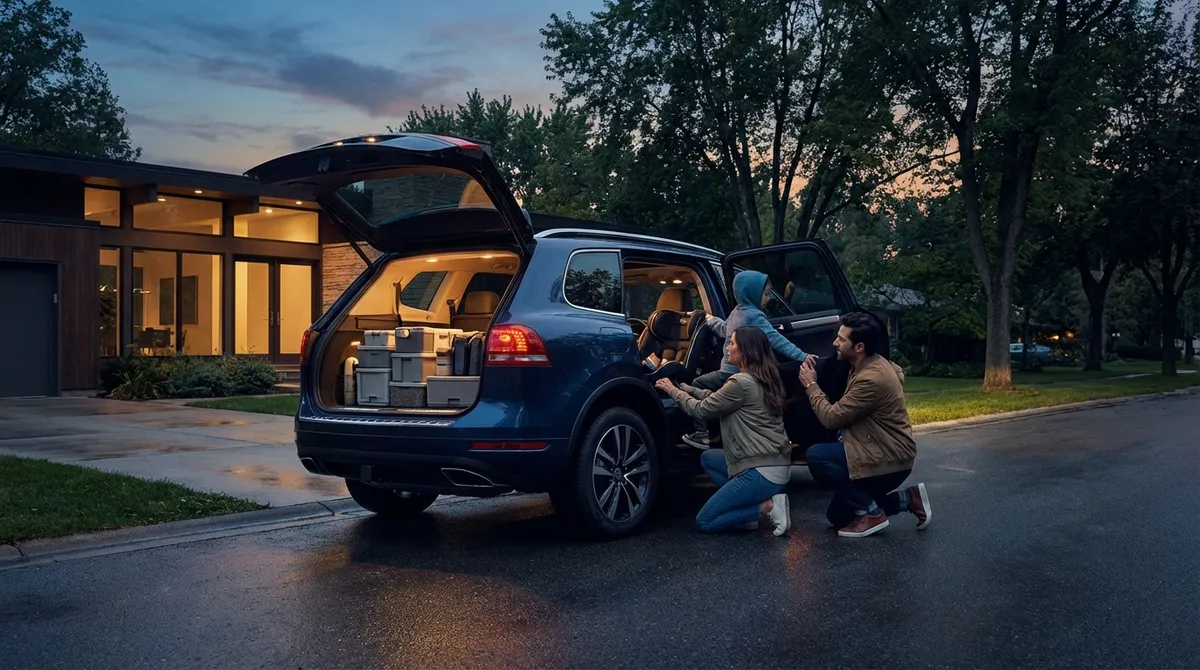
A well-resolved family SUV keeps the step-in height low enough for children and grandparents to enter without climbing, but high enough to maintain commanding visibility. The angle and weight of the rear doors determine whether you can comfortably manage a child seat with one arm and a diaper bag in the other. Pay close attention to how wide the rear doors open, especially in tight parking bays; designs that open to nearly 90 degrees make it vastly easier to load bulky child seats or help a sleeping toddler out without contortions.
Inside, the distance between the rear bench and the door sill matters more than it appears. Generous legroom is only truly useful if children can plant their feet on the floor without dangling, and adults can slide across the rear bench without bumping knees. Thoughtful vehicles combine these parameters—door aperture, step-in height, floor height, and seat cushion length—into what feels like a graceful, fluid motion from pavement to seat. During a test drive, simulate your real life: bring the stroller, the child seat, even a grandparent, and assess how the SUV accommodates the choreography of your family’s routine.
2. The Subtle Science of Child-Seat Compatibility
Every modern SUV claims to be “family-friendly,” yet not every interior is genuinely prepared for the realities of child seats, boosters, and teenagers in transition. The sophistication lies not in the sheer number of LATCH anchors, but in how intuitively and flexibly they can be used over time.
Look for lower anchors that are clearly exposed rather than buried between cushions, allowing you to attach and release a seat without bruised knuckles. Metal guide rings or integrated plastic channels are subtle but invaluable details. Behind the seatbacks, top tether anchor locations are just as crucial: anchored low on the seatback or shelf and clearly labeled, they support safer forward-facing installs and reduce the temptation to route straps incorrectly.
If you have more than one child, treat the second row as a strategic layout rather than a simple bench. Can you place two child seats without blocking access to the third row—if there is one? Some of the most accommodating SUVs allow the second-row seat to slide or tilt forward even with a child seat installed (in certain positions), preserving easy access to the rear. This is the sort of “future-proof” detail that matters when your family expands or when friends’ children join for school runs.
Finally, consider the transition years: vehicles with adjustable second-row seat bottoms, reclining backrests, and abundant headroom make it easier for older children and teens to sit comfortably with appropriate booster seats, instead of forcing cramped postures that discourage proper belt positioning. A truly refined family SUV makes every stage—from rear-facing infant to college-bound teenager—feel considered rather than improvised.
3. Quiet Confidence: Cabin Acoustics as a Family Wellness Feature
Cabin quietness is often framed as a luxury perk, but for a family, it is just as much a wellness feature. A calm, acoustically balanced environment reduces fatigue, makes conversations easier, and keeps long drives from feeling like endurance tests.
Sophisticated family SUVs use more than just thicker windows. Look for laminated front glass, strategic insulation in the floor and wheel wells, and door seals that close with a solid, precise feel. On the road, pay attention to the character of sound, not just the volume: high-quality engineering will reduce the sharp, tiring frequencies from wind and coarse pavement, leaving a softer ambient hush. This matters when you are mediating back-seat disagreements, soothing a baby to sleep, or taking an important call via Bluetooth.
For families, acoustic tuning supports safety as well. A quieter cabin allows driver-assistance alerts, navigation prompts, and rear-seat reminders to be heard clearly without being excessively loud or startling. The ability to converse comfortably at highway speed—without raised voices—transforms long journeys from noisy endurance tests into an extension of home: a moving living room where stories, questions, and quiet moments can unfold naturally.
When you test drive, turn off the audio system. Drive over varied road surfaces, at suburban and highway speeds, and notice how quickly you feel mentally fatigued. The more serene the environment, the more patient everyone will feel in the final 20 minutes of a long trip—often the most stressful stretch for any family.
4. Lighting, Visibility, and the Subtleties of Feeling Safe After Dark
For a family SUV, lighting is not just aesthetics—it is reassurance. Premium models distinguish themselves in how they handle visibility in complex, real-world conditions rather than just on paper spec sheets.
Outside, high-quality LED or matrix-style headlamps provide a more natural, consistent spread of light that reveals road edges, pedestrians, and signage without harsh hot spots. On a test drive, if possible, view the headlamps in low-light conditions and look for even coverage, good reach on low beam, and a smooth transition when switching to high beam. Some vehicles offer adaptive headlights that swivel with steering input, gently illuminating curves—subtle in operation, but profoundly reassuring on unlit roads.
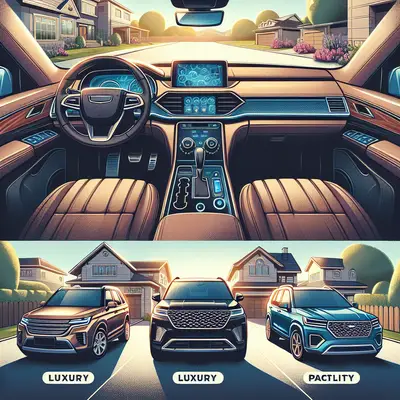
Inside, the best family SUVs use interior lighting as both a functional and emotional tool. Soft ambient lighting around door handles, console edges, and footwells helps children find dropped items or buckles without resorting to bright overhead lamps that destroy night vision. Dome and reading lights that can be independently controlled in each row allow one child to read while another sleeps. Even the way the instrument cluster and infotainment dim at night affects driver comfort and fatigue.
Visibility is equally crucial in daylight. Narrow roof pillars, large glass areas, and intelligently positioned mirrors reduce blind spots at intersections and when changing lanes with a car full of passengers. If your SUV offers a surround-view or 360° camera system, pay attention to the resolution and the clarity of the guidelines—crisp imaging and intuitive overlays make navigating tight school parking lots and crowded driveways noticeably less stressful.
5. Interior Durability with a Tailored, Residential Sensibility
The most elevated family SUVs manage a rare balance: they feel refined and welcoming like a well-appointed living space, yet they are quietly prepared for spills, scuffs, and the patina of real family life.
Refinement begins with materials you touch every day: steering wheel leather that retains its feel after years of use, seat fabrics or leathers that resist staining without feeling plasticky, and trims that avoid overly glossy finishes prone to scratches and fingerprints. Look for textiles treated for stain resistance and surfaces that can be wiped quickly without special products. Subtle, matte finishes on dash and door panels age gracefully and avoid reflecting harsh sunlight into children’s eyes.
True family durability also shows in small details: seatback protectors that are integrated rather than add-on accessories, hard-wearing plastic panels in key kick zones, and cargo floors that resist gouging from strollers and sports gear. Smart underfloor storage allows messy or irregular items—beach toys, muddy shoes, emergency kits—to be tucked away, preserving a sense of order in daily use.
The most thoughtful vehicles add a residential sensibility: rear climate zones that allow fine temperature tuning, integrated sunshades in rear doors, and USB-C ports strategically placed so that charging cables don’t tangle into a web. These details don’t shout for attention in dealership showrooms, but over years of ownership, they create a sense that the SUV has been quietly tailored to the way your family actually lives.
Conclusion
Choosing a family SUV is not about chasing the largest screen, the biggest grille, or the most dramatic marketing tagline. It is about recognizing the deeper, more nuanced qualities that shape your family’s experience day after day: how gracefully everyone enters and settles, how securely child seats integrate, how calmly the cabin sounds, how clearly you see and are seen at night, and how beautifully the interior ages alongside your family.
When you approach your search with this level of discernment, the right SUV reveals itself not as a collection of features, but as a thoughtfully engineered environment—one that supports your family’s rhythm with quiet competence and long-lasting comfort. In a landscape of loud choices, it is this understated, carefully curated capability that ultimately feels the most premium.
Sources
- [National Highway Traffic Safety Administration (NHTSA) – Car Seats and Booster Seats](https://www.nhtsa.gov/equipment/car-seats-and-booster-seats) - Authoritative guidance on proper child-seat use, LATCH systems, and installation considerations
- [Insurance Institute for Highway Safety (IIHS) – Evaluations of LATCH Ease of Use](https://www.iihs.org/ratings/latch) - Research-based ratings on how accessible and user-friendly child-seat anchors are in different vehicles
- [Consumer Reports – How We Test Car Seat Fit in Cars](https://www.consumerreports.org/cars/car-seats-boosters/how-we-test-car-seat-fit-in-cars-a7091031467/) - Detailed explanation of real-world child-seat compatibility and factors that affect daily usability
- [Edmunds – Car Interior Materials: What to Look For](https://www.edmunds.com/car-buying/car-interior-materials-what-to-look-for.html) - Overview of upholstery and trim materials, durability considerations, and what ages well in family use
- [AAA – Headlights and Night Driving](https://newsroom.aaa.com/2018/10/aaa-finds-most-headlights-too-weak/) - Research on headlight performance and its impact on nighttime visibility and safety
Key Takeaway
The most important thing to remember from this article is that this information can change how you think about Family Features.