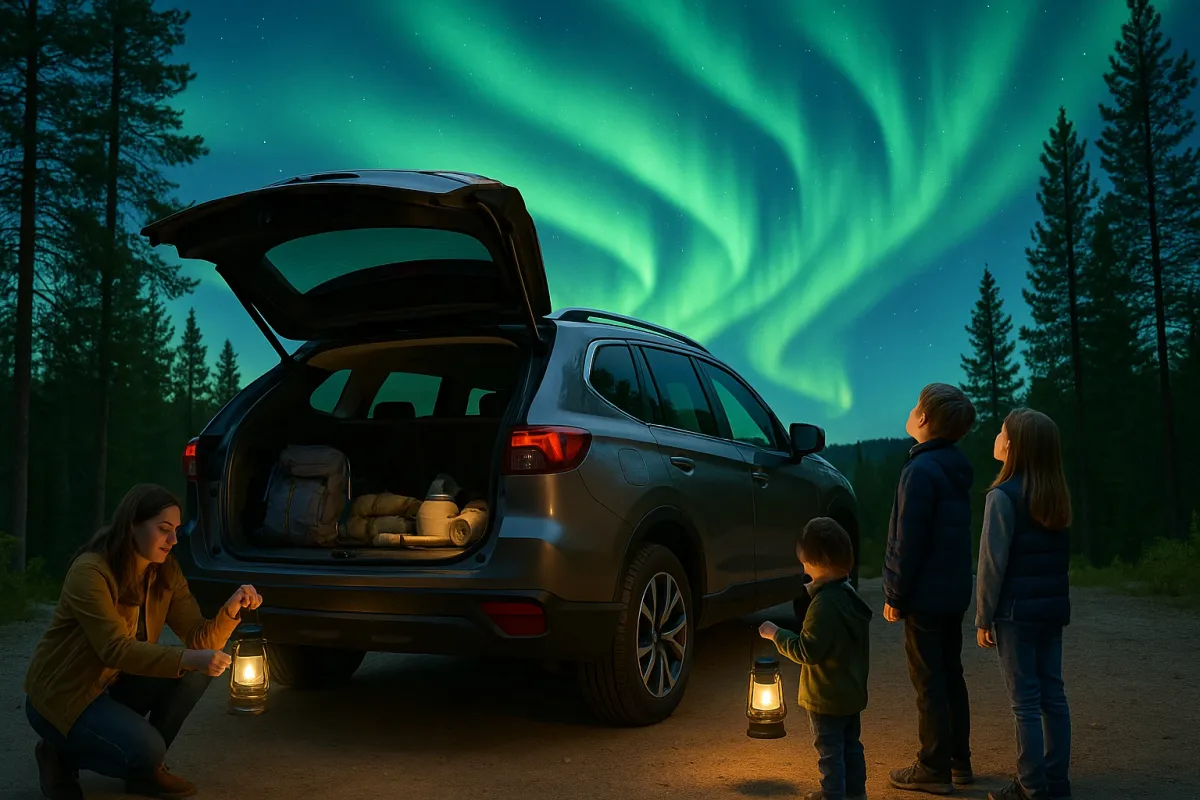
Families are looking up again—literally. With travel creators and photographers sharing real‑time aurora forecasts and ethereal shots from the 2025 Nature inFocus Photography Awards and viral “best places to see the Northern Lights” guides, a new kind of aspiration trip is quietly taking over social feeds: loading the kids into the SUV and chasing the sky.
That shift—from crowded theme parks to remote, dark‑sky destinations in Norway, Iceland, Canada, and rural U.S. states—demands more from a family vehicle than a third row and a tablet mount. If your Instagram is filled with auroras, alpine lakes, and stargazing cabins, your next SUV needs to be less “urban errand runner” and more “mobile family observatory,” without sacrificing day‑to‑day elegance.
Below are five refined, often overlooked insights to help families choose an SUV that feels equally at home under the Northern Lights and under the school drop‑off canopy.
Insight 1: Panoramic Roofs Are The New Premium “Screen Time”
As Northern Lights travel content proliferates, many families are rethinking how their children experience the night sky. The right panoramic roof transforms an SUV into a private viewing lounge, whether you’re parked on a frozen lakeshore in Tromsø or simply watching meteor showers from a quiet cul‑de‑sac.
The crucial detail isn’t just “does it have a pano roof,” but what kind of glass and controls it offers. Look for dual‑pane acoustic glass that keeps cabin noise low enough for whispered constellations and bedtime stories, and a power sunshade with high‑quality blackout material so you control glare on daylight drives. Some luxury SUVs now add electrochromic (“magic sky”) glazing, allowing you to dial in tint at the touch of a button—brilliant for protecting young eyes by day and then opening the heavens at night.
Families should also test how far back the glass extends. In many three‑row models, the panoramic section ends above the second row, leaving third‑row occupants staring at headliner. If you’re envisioning siblings lined up with blankets and hot chocolate, ensure roof coverage and headroom truly support that scene. It’s a small distinction on the spec sheet that makes an outsized difference in real‑world family memories.
Insight 2: True Climate Mastery Matters More Than Horsepower On Remote Trips
As travel writers describe the reality behind those dreamy aurora images—long waits in sub‑zero temperatures, sudden snow squalls, damp boots—families are realizing that robust climate control is a safety and comfort feature, not a luxury extra. An elegant family SUV in 2025 must be a climate sanctuary, whether it’s waiting for nature’s light show in Lapland or navigating an unseasonably hot evening in Arizona.
Look beyond “dual‑zone” on the brochure. For families, tri‑ or quad‑zone automatic climate control with independent rear controls is worth prioritizing, especially if you routinely carry a mix of infants, older children, and grandparents. Ventilated front seats and heated second‑row seats are not mere indulgences: they help prevent the “I’m freezing/I’m roasting” fatigue that turns long drives into emotional landmines.
Also pay attention to heat‑pump or efficient electric climate systems in hybrids and EVs, a growing segment as eco‑conscious families seek to align road trips with climate values. In colder markets, look for factory‑installed heated windscreen elements, heated steering wheels, and rapid‑acting remote pre‑conditioning via smartphone apps. When you can warm or cool the cabin before buckling a sleeping toddler into a seat, you’re not just adding comfort—you’re preserving the calm that makes ambitious family journeys feasible.
Insight 3: Quiet Cabins Are The Unsung Heroes Of Family Bonding
The Nature inFocus winners and viral aurora threads share something subtle: silence. The embodied experience of standing under a shimmering sky is hushed, contemplative, almost sacred. A family SUV that can preserve a sense of acoustic calm on the way to those moments makes the transition from “everyday chaos” to “shared wonder” far smoother.
Cabin quietness is rarely at the top of family shopping lists, yet it underpins every interaction inside the vehicle—storytelling, playlists, podcasts, even the sound of a baby breathing. Premium family‑oriented SUVs distinguish themselves with laminated side glass, extensive sound‑deadening in the floor and firewall, and active noise‑cancellation systems that counter low‑frequency road hum.
When test‑driving, turn the audio system off for a portion of the drive. Listen for tire roar over rough pavement, wind rush around the mirrors at highway speeds, and how the vehicle copes with expansion joints and gravel. Imagine those same conditions with an overtired child or a partner navigating in the dark. A quiet, well‑insulated cabin isn’t just a luxury flourish; it’s a foundation for civility—allowing conversations about the constellations, not complaints about the commute, to become the soundtrack of your trips.
Insight 4: Flexible Seating Should Be Designed For Nighttime Routines, Not Just Cargo Volume
Trending Northern Lights articles emphasize patience: sometimes you’re waiting in the dark for hours, sometimes you’re napping between solar bursts. That reality exposes how rudimentary many SUV seating layouts still are when it comes to genuine, family‑first flexibility. The most sophisticated family cabins are now designed as adaptable “living rooms on wheels,” not simply rows of seats.
Prioritize second‑row seats that slide fore and aft with generous travel, recline independently, and—crucially—can be adjusted without dismantling carefully installed child seats. Some of the most family‑centric premium SUVs now offer captain’s chairs with built‑in ottomans, adjustable armrests, and ergonomically contoured backrests that actually support a sleeping child or adult, rather than forcing them into a slumped posture.
Ambient lighting, too, is undergoing a quiet revolution inspired by wellness trends. Look for configurable LED interior lighting with low‑blue “night modes” that are gentle on circadian rhythms and less likely to spoil night vision when you’re stargazing. Thoughtfully placed dimmable reading lights, rather than harsh dome lamps, allow one child to read while another sleeps. When manufacturers talk about “lounge‑like ambience,” this is where it becomes functionally meaningful for families, not just an aesthetic flourish.
Insight 5: Digital Ecosystems Must Support Discovery, Not Distraction
As travel influencers and photographers share coordinates, live aurora apps, and hyper‑local forecasts, digital integration inside the SUV has become mission‑critical. A truly premium family SUV in this era doesn’t just mirror a smartphone screen; it orchestrates information in a way that feels calm, intuitive, and safe.
Seek out vehicles whose native navigation systems are regularly updated over the air and integrate real‑time weather overlays and altitude data—subtle but useful when heading toward mountain passes or remote regions. Wireless Apple CarPlay and Android Auto should be seamless, but also easy to disable in favor of a dedicated “night drive” or “quiet mode” profile where notifications are silenced and only essential prompts are displayed.
Rear‑seat entertainment is evolving as well. The most forward‑thinking systems now offer calm content options—star maps, guided audio stories, nature documentaries—rather than pure cartoons‑on‑loop. Multiple USB‑C ports, integrated device storage, and robust 12V/120V outlets ensure that cameras, power banks, and heated blankets stay charged without a tangle of adapters. In the best executions, the SUV’s digital environment supports shared discovery—“Which constellation is that?” “What’s the aurora index tonight?”—instead of isolating each family member behind a separate screen.
Conclusion
As the world collectively looks beyond city skylines toward dark‑sky reserves, Arctic horizons, and quiet rural roads, the definition of a “family SUV” is being subtly but profoundly rewritten. It is no longer enough for a vehicle to promise space and safety; it must curate an experience—acoustic, visual, tactile—that elevates both the every day and the once‑in‑a‑lifetime.
If your social feeds are filled with Northern Lights itineraries, award‑winning nature photography, and aspirational night‑sky adventures, let that inspiration shape how you evaluate your next SUV. Look past the headline specs and into the details: the texture of the night, the feel of the seats at 2 a.m., the behavior of the climate system when the world outside the glass drops below freezing. The right family SUV will not only carry you to extraordinary places—it will make the journey itself feel quietly extraordinary.
Key Takeaway
The most important thing to remember from this article is that this information can change how you think about Family Features.