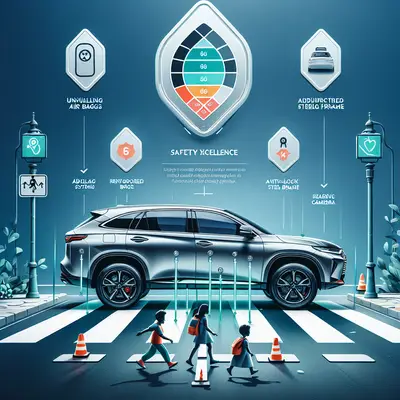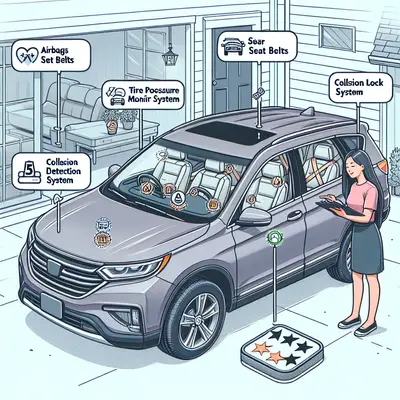
When a vehicle will carry the people you cherish most, safety becomes less of a feature and more of a philosophy. Yet for many families shopping in the SUV segment, the conversation stops at star ratings and crash test scores. Those numbers are vital, but they’re only the overture. The real story lies in the quiet details—design choices and engineering decisions that rarely make headlines, yet can meaningfully shape how well an SUV protects your family in everyday life. This is where a discerning eye finds its advantage.
Below are five exclusive, often-overlooked safety insights that reward families who look beyond the brochure and into the nuances of how an SUV behaves when life is less than predictable.
1. The Geometry of Protection: How Cabin Shape and Glass Design Matter
We often think of safety in terms of what’s added—airbags, sensors, cameras. But the underlying proportions of an SUV can significantly influence how those systems perform. The angle of the windshield, the slope of the hood, and the height of the beltline all subtly change what the driver can see, how the vehicle absorbs energy in a collision, and how occupants are protected.
A more upright windshield and thinner roof pillars often equate to better forward and side visibility, giving parents a clearer view of pedestrians, cyclists, and small children at low speeds—especially in crowded school zones and driveways. Conversely, aggressively styled SUVs with thick rear pillars and high window lines may look dramatic but can create deep blind spots, even with modern camera systems.
Glass area is another clue. Generous side windows in the second and third rows improve outward visibility for children, reducing motion discomfort and helping them anticipate braking or cornering. This can translate into calmer, more predictable behavior inside the cabin—a subtle but real safety benefit for the driver. When test-driving, pay attention not just to screen clarity but to what you can see with a simple turn of the head. True safety is as much about avoiding surprises as it is about surviving them.
2. Quiet Confidence in Motion: The Feel of Stability, Not Just the Numbers
Many spec sheets tout power, torque, and towing, yet remain silent on what truly matters in a crisis: composure. An SUV that feels planted, predictable, and calm at moderate speeds is more likely to inspire trust when evasive maneuvers are required.
There are a few refined signals to look for. First, note how the SUV behaves on an uneven or cambered road: does it gently settle after a bump, or does it continue to float and wallow? Excess body roll in corners or a “bobblehead” sensation over dips can make it harder to place the vehicle precisely during sudden lane changes. Second, observe steering feel. Light steering is pleasant in a parking lot but should still offer enough resistance and feedback at highway speeds to give you a confident sense of direction.
Finally, listen for how quietly the stability systems do their work. In a well-engineered SUV, traction and stability control step in discreetly rather than with jolting interventions. That subtlety often reflects extensive tuning—an indication that the brand has invested in how the vehicle behaves when drivers are stressed, not just when journalists are impressed. A composed chassis is a safety feature you sense, not one you’ll find spelled out in a brochure.
3. Thoughtful Restraint Design: Seatbelts, Headrests, and the Realities of Family Life
Seatbelts and head restraints might seem like the most basic safety equipment, but their execution varies more than most buyers realize. For families, the details matter enormously—especially when different ages, heights, and seating positions are involved.
In the second and third rows, check that each seating position has a three-point belt anchored at an appropriate height. Height-adjustable shoulder belts in rear outboard seats allow you to secure both taller teenagers and smaller adults comfortably, reducing the risk of the belt cutting across the neck or slipping off the shoulder. Look for headrests that can be raised high enough to cradle the head of a taller adolescent or adult; inadequately tall restraints can compromise whiplash protection.
Families using child seats should also look for clearly marked, easily accessible LATCH or ISOFIX anchors that allow for secure installations without contorting your body between cushions. Some premium SUVs now offer third-row LATCH anchors or carefully engineered belt paths that support safe booster and seat placement further aft, giving families more flexibility as children grow. These are the quietly intelligent touches that transform a theoretical five-star rating into real-world, everyday protection.
4. The Nuance of Smart Safety Tech: Calibrated, Not Just Connected
Advanced driver-assistance systems (ADAS) have become table stakes in the family SUV segment, yet their real value lies not in the number of features but in how gracefully they work together. Lane centering, adaptive cruise, and automatic emergency braking should enhance your awareness—not replace it, and certainly not irritate you into switching them off.
During a test drive, pay attention to how often the SUV beeps, vibrates, or nudges the steering. Does it feel like a discreet guardian, stepping in only when clearly necessary, or an overzealous chaperone reacting to every painted line and passing truck? Overly sensitive systems can cause fatigue on longer drives and may tempt drivers to ignore or disable them, undermining their purpose.
Look, too, at the sophistication of the forward-collision and pedestrian detection systems. Some SUVs can recognize cyclists at night, cross-traffic backing out of driveways, or vehicles two cars ahead, not just the one directly in front. Others have refined auto-brake tuning that slows decisively without abrupt, unsettling stops. For a family sharing driving duties between partners, an intuitive, well-calibrated safety suite is not just a convenience—it’s a quiet form of insurance against inattention on life’s busiest days.
5. Real-World Usability: How Safety Features Work with Children, Cargo, and Routine
An SUV can be exceptionally safe in a laboratory yet frustrating or compromised in daily use if its safety features don’t harmonize with how families actually live. The most telling clues emerge when you mimic your real routines.
Load the cargo area as you would for a weekend away and notice whether the rearview camera, parking sensors, and blind-spot systems remain effective. Some SUVs offer high-mounted, wide-angle camera lenses that preserve visibility even when luggage is stacked to the roofline. Inside, assess how easily you can access the third row with child seats installed in the second; a design that allows tilt-and-slide even with a secure seat in place can be invaluable for school runs and group outings.
Finally, evaluate how intuitive it is to activate or modify the safety settings. Can you temporarily silence certain alerts (for instance, when driving through a narrow construction zone) without disabling core protections? Are key safety functions buried in submenus, or presented cleanly with clear, plain-language descriptions? A truly family-focused SUV makes its safety sophistication feel seamless, never fussy—a quiet ecosystem working in the background so that you can focus on the road, the moment, and the conversation.
Conclusion
Numbers, stars, and badges will always be part of the family SUV safety conversation—and rightly so. Yet families who look a layer deeper often discover a meaningful difference between vehicles that simply pass tests and those that are thoughtfully engineered for real lives, lived at real speeds, with real distractions. The subtle geometry of the cabin, the composure of the chassis, the intelligence of restraint design, the calibration of driver aids, and the everyday usability of all these systems together form a calm circle of protection around the people you love most.
Choosing an SUV through this more refined lens is not about chasing perfection; it is about aligning your vehicle with your values—quiet assurance over spectacle, consistency over cleverness, and genuine, lived-in safety over mere specification.
Sources
- NHTSA – 5-Star Safety Ratings - Official U.S. government crash test ratings and explanations of key safety assessments
- IIHS – Vehicle Ratings - Independent crash tests, crash-avoidance evaluations, and detailed safety criteria for SUVs and other vehicles
- CDC – Child Passenger Safety - Evidence-based guidance on proper restraint use for infants, children, and adolescents
- SaferCar (NHTSA) – Car Seats and Seat Belts - Federal recommendations and best practices for car seat installation and belt fit
- Euro NCAP – Safety Assist and ADAS Explanations - In-depth overview of advanced driver-assistance technologies and how they are evaluated
Key Takeaway
The most important thing to remember from this article is that this information can change how you think about Safety Ratings.