In an era of polished spec sheets and star-studded brochures, discerning families are asking a subtler question: what does “safe” actually feel like on a Tuesday school run? Safety ratings promise clarity, yet the deeper story often lies behind the headline score. This is where quiet confidence is built—not in marketing copy, but in the engineering, testing, and details that shape how an SUV protects the people you love most.
Below are five exclusive, under-discussed insights that help transform safety ratings from abstract numbers into something more meaningful: a calm, predictable driving experience for your family.
Beyond the Overall Score: How Front, Side, and Rear Protection Shape Real Life
The overall rating is a starting point, not a destination. Families rarely experience “average” collisions; they experience specific ones—offset frontal impacts on a rainy morning, side intrusions at an intersection, low-speed rear shunts in school traffic. Each of these is reflected in different sub-scores that deserve individual attention.
Front crash ratings tell you more about how the vehicle manages energy away from the front occupants, particularly the driver and front passenger. For families, this matters when one parent is typically the driver and the other rides shotgun with a child directly behind them. Side-impact tests are especially relevant for school runs and urban errands where intersections, driveways, and parking lots increase lateral collision risks. Look carefully at ratings for both the driver’s side and the passenger or “far-side” impact tests, where a child in a second-row seat could be more vulnerable.
Rear-impact and head restraint performance may not sound dramatic, but they influence whiplash risk—a concern for both adults and older children in booster seats. When you read safety ratings, prioritize models that demonstrate consistently strong performance across front, side, and rear tests, rather than those that shine in only one area. A genuinely family-focused SUV weaves its safety net in all directions.
The Hidden Art of Restraints: Airbags, Pretensioners, and Smart Seatbelts
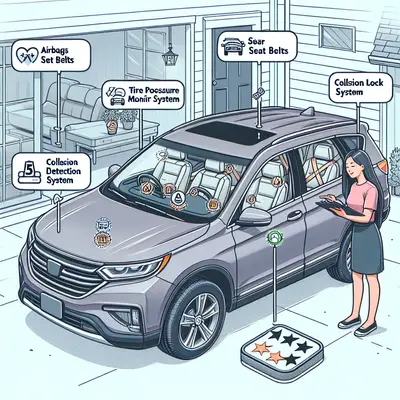
Modern safety ratings increasingly reward not only how a vehicle’s structure behaves in a crash, but also how its restraint systems work in concert. For families, the sophistication of this “quiet choreography” matters enormously, especially when seating configurations change daily.
Look for ratings and test notes that mention advanced airbag systems, such as side-curtain airbags that extend to the third row, and front-center airbags designed to prevent occupants from colliding with each other in a crash. Pay attention to whether those systems protect smaller occupants—many testing agencies note how well side airbags protect shorter adults, a good proxy for older children and teenagers.
Seatbelt pretensioners and load limiters, often buried deep in the specifications, are subtle but vital. Pretensioners tighten the belt in milliseconds during a crash, positioning occupants correctly for maximum airbag benefit. Load limiters then allow a slight “give” in the belt to avoid excessive chest forces. SUVs that earn top safety marks often balance these features with multiple sensors and algorithms that account for occupant weight, seating position, and crash severity. For a family that juggles car seats, boosters, and adult passengers, this intelligent restraint strategy is far more important than an extra cupholder or a larger touchscreen.
Child-Seat Reality Check: When LATCH Scores Matter More Than Horsepower
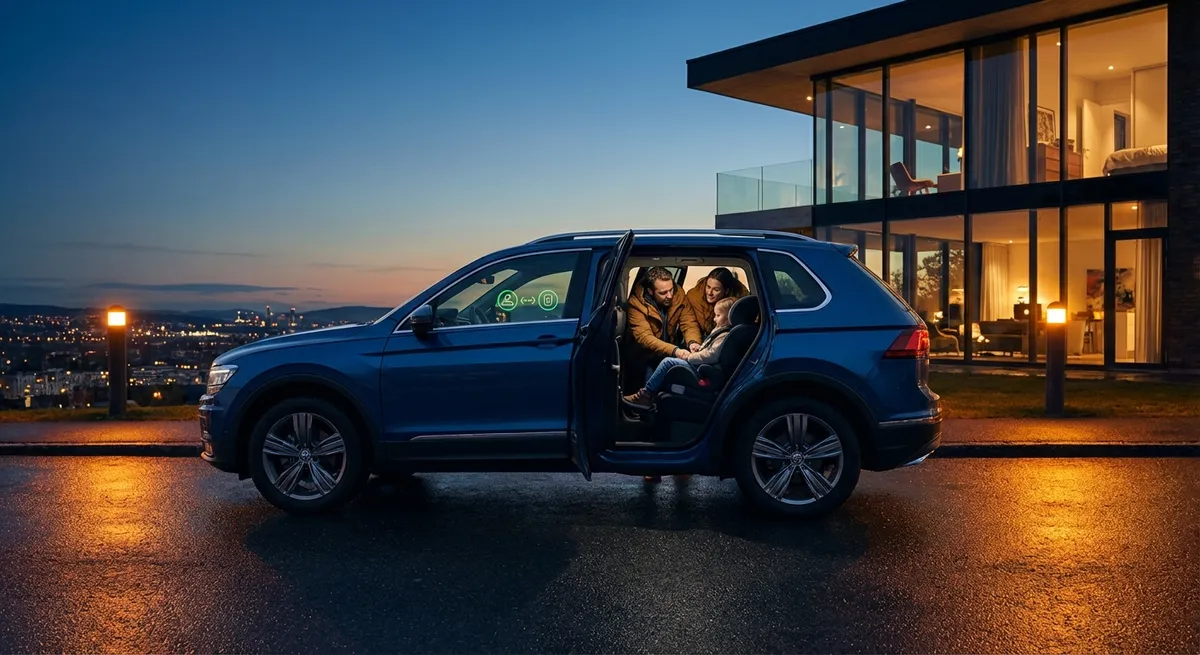
Families with young children should treat child-seat compatibility not as an afterthought, but as a central safety pillar. While crash tests simulate average adult occupants, agencies like IIHS and consumer organizations increasingly evaluate how easily and securely child safety seats can be installed using LATCH (Lower Anchors and Tethers for Children) systems.
When reviewing ratings, seek out evaluations that score LATCH usability, including anchor accessibility, depth within the seat bight, and whether they’re easily confused with other hardware. Anchors hidden behind upholstery or buried deep in the seat can lead to rushed, imperfect installations—precisely when you are loading sleepy toddlers or managing multiple children at once.
Also consider the second-row seat contouring: highly sculpted or aggressively bolstered seats that look stylish in photos can complicate proper car-seat positioning. Some independent tests report whether three child seats fit across the second row or how well boosters position the belt on a child’s shoulder. For a family SUV, the ability to achieve repeatable, frustration-free, textbook-correct installations is a genuine safety feature—and one that separates thoughtfully engineered vehicles from merely fashionable ones.
Active Safety as a Daily Companion, Not a Last-Second Savior
Advanced driver-assistance systems (ADAS) have moved from luxury add-ons to central components of safety ratings. Organizations like IIHS and Euro NCAP now score vehicles on their crash-avoidance technologies, from automatic emergency braking (AEB) to lane-keeping assistance and pedestrian detection. For families, the most meaningful benefit is not cinematic last-second rescues, but a calmer, more predictable driving environment.
When reviewing safety ratings, focus on how well these systems detect vulnerable road users—pedestrians, cyclists, and in some tests, even children—which is crucial for neighborhood driving, school zones, and crowded parking lots. Check whether the system is evaluated for performance both during the day and at night, when visibility is compromised and driver fatigue often sets in.
Equally important is system refinement. Look for commentary on false alerts, abrupt interventions, or overly sensitive lane warnings. An SUV whose active-safety features are smooth, predictable, and unobtrusive will encourage you to leave them on, allowing them to quietly guard against distraction, fatigue, and the inevitable chaos that comes with family life. Ratings that consider both capability and behavior in real-world scenarios can help you identify vehicles that feel like steady co-pilots rather than anxious backseat drivers.
Structural Integrity and the Quiet Luxury of Predictability
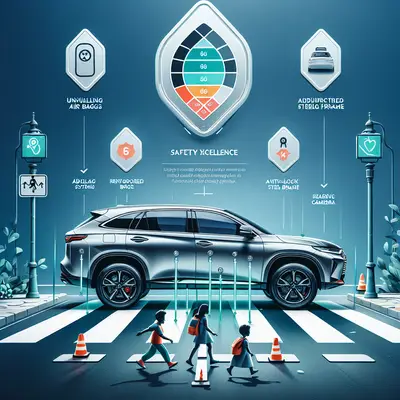
Beneath every safety rating is a story about structure: how an SUV’s body and frame manage forces, preserve cabin space, and protect the integrity of the “safety cage” around your family. The difference between an average and an excellent rating often comes down to how well engineers anticipate complex crash scenarios, such as small-overlap front impacts where only part of the front end hits an obstacle.
When exploring ratings, look closely at reports describing cabin intrusion, steering-column movement, and the deformation of the footwell and A-pillar. Minimal intrusion means pedals, dashboard, and steering components are less likely to encroach on occupant space, reducing the risk of serious lower-extremity or head injuries. For taller drivers or front passengers, this detail can be especially important.
Glass type and roof strength also warrant attention. Rollover resistance scores and roof-crush tests reveal how well the structure protects occupants if the vehicle tips or rolls—a relevant scenario for taller, heavier SUVs. A strong roof structure, reinforced pillars, and carefully engineered crumple zones contribute to a refined driving feel as well: the same rigidity that resists deformation in a crash often translates into fewer rattles, better noise isolation, and more precise handling. Safety, in this sense, becomes a quiet form of luxury you notice every time you close the door and the world outside softens.
Conclusion
Safety ratings are more than a grid of stars and acronyms; they are a window into how thoughtfully a family SUV has been engineered for imperfect, everyday life. By looking beyond the headline score—toward restraint sophistication, child-seat usability, refined active safety, and structural integrity—you move from simply “buying a safe SUV” to selecting a vehicle that offers a deep, reassuring sense of predictability.
For modern families, that confidence is the ultimate premium feature: the knowledge that, beneath the calm of every school run and weekend escape, a carefully constructed safety architecture is quietly working on your behalf.
Sources
- [National Highway Traffic Safety Administration (NHTSA) 5-Star Safety Ratings](https://www.nhtsa.gov/ratings) - Official U.S. government crash-test ratings and explanations of test procedures
- [IIHS Vehicle Ratings](https://www.iihs.org/ratings) - Detailed crashworthiness, crash-avoidance, and LATCH usability evaluations for SUVs and other vehicles
- [Euro NCAP Safety Ratings](https://www.euroncap.com/en/ratings-rewards/latest-safety-ratings/) - European crash-test results with extensive data on adult, child, and vulnerable road-user protection
- [Centers for Disease Control and Prevention – Child Passenger Safety](https://www.cdc.gov/transportationsafety/child_passenger_safety/index.html) - Evidence-based guidance on car-seat, booster, and seatbelt use for children
- [SaferCar – Car Seats and Booster Seats (NHTSA)](https://www.nhtsa.gov/equipment/car-seats-and-booster-seats) - Federal guidance on correct installation and selection of child restraints, including LATCH-focused information
Key Takeaway
The most important thing to remember from this article is that this information can change how you think about Safety Ratings.