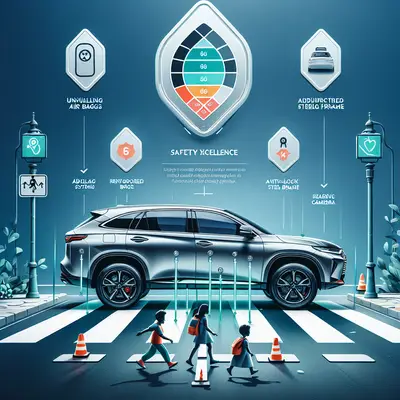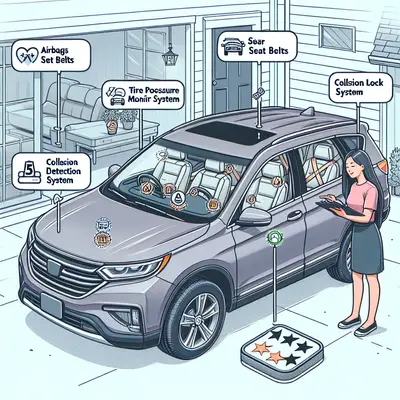
For families who expect more than mere adequacy from their vehicles, safety ratings are not just numbers on a page—they are a quiet contract between engineering, regulation, and the people you love most. Yet, the landscape of crash scores, stars, and acronyms can feel opaque, even for discerning buyers. This is not about chasing perfect scores; it is about understanding what those scores reveal—and just as importantly, what they omit—so you can choose an SUV that protects your family with silent, unshowy excellence.
Why Safety Ratings Don’t Tell the Whole Story
Safety ratings from agencies such as the National Highway Traffic Safety Administration (NHTSA) and the Insurance Institute for Highway Safety (IIHS) are invaluable, but they are also simplified snapshots of complex realities. They tend to represent performance in specific, controlled scenarios—frontal crashes at set speeds, side impacts at precise angles, rollover simulations under defined conditions. These tests are rigorous and standardized, yet no single test can capture the messy variability of real-world driving.
Moreover, ratings are often summarized in a way that obscures nuance. A five-star or “Top Safety Pick+” label can mask weaker performance in a particular test, or a notable difference between trims. Some SUVs, for instance, perform excellently in frontal impacts but reveal vulnerabilities in small overlap collisions or pedestrian impacts. The refined buyer’s task is to move beyond the headline rating and study the detailed test results, examining video footage, test notes, and differences across model years. This is where safety ceases to be a marketing claim and becomes a technical, discernible quality.
Exclusive Insight #1: The Small Overlap Test Reveals Structural Honesty
Among all crash tests, the small overlap front impact is the one that most clearly exposes how seriously a manufacturer treats occupant protection. Unlike traditional frontal tests that engage the full width of the vehicle, small overlap tests simulate what happens when only a portion of the front hits an object—such as a tree, pole, or oncoming vehicle’s corner. This is a brutal assessment of how well the vehicle’s structure channels and absorbs energy without collapsing the cabin.
For families, small overlap performance is a quiet indicator of engineering integrity. Strong results suggest that the manufacturer has invested in robust load paths, high-strength steel, and precise body structure design that doesn’t simply “pass the test,” but anticipates real-world chaos. Vehicles that ace other tests yet underperform here may have more cosmetic than structural safety. When comparing SUVs, note not just the rating itself, but whether small overlap results are consistently good on both driver and passenger sides, and whether any lower trims lack the structural or airbag configuration used in tested models.
Exclusive Insight #2: Head Restraints and Seating Are Your Invisible Guardians
Head restraints and seat design rarely feature in marketing brochures, yet they play a decisive role in one of the most common crash scenarios: rear-end collisions. Whiplash injuries can be subtle at first and debilitating over time, particularly for adults who spend long hours commuting or for growing teenagers with more delicate neck structures. A refined family SUV pays meticulous attention not only to how the seats look and feel, but to how they manage the unexpected.
Look for ratings and commentary on seat/head restraint performance in dynamic tests, where the seat is evaluated in a simulated rear impact. Well-engineered seats and properly positioned head restraints limit the sudden motion of the head relative to the torso, reducing the risk of neck injury. Adjustable, supportive head restraints for all rows—not just the front—are crucial for families who frequently carry older children or grandparents. The most sophisticated SUVs will pair this with thoughtful ergonomics: seats that make correct posture and head restraint positioning intuitive, rather than an afterthought.
Exclusive Insight #3: Advanced Driver Assistance Is Only as Good as Its Calibration
Advanced driver assistance systems (ADAS)—automatic emergency braking, lane-keeping assistance, adaptive cruise control—have transformed the safety conversation. However, ratings often treat these features as binary: present or absent. Reality is subtler. The quality of tuning, the smoothness of interventions, and the clarity of alerts can make the difference between a system that genuinely reduces risk and one that families quietly disable after a few frustrating drives.
For a family-focused SUV, investigate how ADAS behaves both in independent tests and in real-world reviews. Reliable assessments look at how well pedestrian and cyclist detection functions at night, how consistently the vehicle maintains lane centering without ping-ponging, and whether the SUV can recognize stopped traffic or vehicles cutting into your lane. Pay particular attention to child and pedestrian automatic emergency braking tests, which reveal how effectively the SUV protects the most vulnerable road users when human attention lapses. The most refined solutions feel almost invisible: subtle steering nudges, measured braking, and sound design that calmly alerts rather than startles.
Exclusive Insight #4: Back-Seat Safety Is Not a Given—Scrutinize It
Many safety conversations, and indeed many tests, are front-seat centric. For families, this is an incomplete picture. Children, grandparents, and other passengers may spend years in the second and third rows, sometimes in booster seats or child restraints, sometimes without the latest airbags. You should know, specifically, how your chosen SUV protects them.
Seek out evaluations of rear occupant protection, particularly in newer crash test protocols that include rear-seat injury metrics. Verify that rear row seating offers side curtain airbags that extend to the third row, that seat belt pretensioners and load limiters are available for rear seats, and that head restraints are substantial, not token. Additionally, investigate child seat compatibility: Are there robust, easily accessible LATCH anchors? Does the SUV allow proper installation of rear-facing seats without forcing front passengers into uncomfortable positions? An SUV that earns top marks for the driver but compromises on rear safety is misaligned with family priorities, no matter how polished its cabin.
Exclusive Insight #5: Lighting and Visibility Are the Quiet Foundations of Prevention
Most safety ratings emphasize what happens after things go wrong. Yet, the most sophisticated safety is preventive: the crash that never occurs thanks to clear visibility and precise lighting. Headlight performance, in particular, has a surprisingly profound impact on nighttime crash risk. High-quality LED or adaptive headlights that maintain consistent illumination through curves, avoid excessive glare for oncoming drivers, and provide wide, even coverage can materially reduce the likelihood of collisions.
When evaluating a family SUV, look beyond whether LED headlights are merely “included.” Examine independent headlight ratings and note that performance may differ dramatically between trims, depending on whether adaptive lighting, cornering functions, or automatic high beams are fitted. Windshield design, mirror shape, and pillar width also influence outward visibility, especially in urban environments with pedestrians and cyclists. Families who often drive at dusk, in rural areas, or on poorly lit roads should treat lighting not as a styling detail, but as a primary safety system on par with airbags and brakes.
How to Read Ratings Like a Discerning Insider
Approach safety evaluations the way you would assess a well-tailored suit: not by the label alone, but by the stitching, the fit, and the finishing details. Start with the overall ratings from NHTSA and IIHS, then deliberately dive into individual test categories: frontal, side, small overlap, rollover, pedestrian protection, and headlight performance. Cross-reference this with ADAS evaluations, ensuring that automatic emergency braking and lane support systems have been tested and rated, not simply advertised.
Then, complement lab-style testing with real-world data. Review recall histories, owner-reported issues, and long-term reliability reports focused on safety systems. Confirm that the exact trim and configuration you are considering—engine, drivetrain, headlights, and seating—matches or exceeds the specifications of the vehicles actually tested. Only then do the numbers on a safety sheet become meaningful, guiding you toward an SUV that protects your family discreetly, consistently, and with an elegance that never needs to announce itself.
Conclusion
For families with elevated expectations, safety is less about spectacle and more about substance. The most compelling SUVs do not merely chase five-star labels; they demonstrate depth: honest structural performance in demanding crash tests, thoughtful rear-seat protection, finely tuned driver assistance, and meticulously engineered lighting and visibility. By learning to read safety ratings with a critical, informed eye, you move beyond marketing gloss and toward an SUV that will quietly, faithfully safeguard your everyday life—school runs, late-night drives, weekend escapes—with the calm assurance your family deserves.
Sources
- NHTSA 5-Star Safety Ratings - Official U.S. government crash test results, rollover ratings, and explanations of test procedures
- IIHS Vehicle Ratings - Detailed crash test results, small overlap tests, head restraint evaluations, headlight ratings, and ADAS performance assessments
- U.S. Department of Transportation – Vehicle Safety - Federal safety initiatives, regulatory information, and consumer resources on vehicle safety technologies
- CDC – Motor Vehicle Safety - Data and research on motor vehicle crashes, including injury mechanisms relevant to seat and restraint design
- National Safety Council – Defensive Driving and Safety Technology - Explanations of advanced driver assistance systems and how they contribute to crash prevention
Key Takeaway
The most important thing to remember from this article is that this information can change how you think about Safety Ratings.