Families rarely shop for an SUV on a whim. The decision is usually the culmination of competing needs: space without excess, safety without compromise, comfort without ostentation, and technology that enhances rather than overwhelms. The right family SUV should feel like a calm, well-organized home that just happens to move—gracefully—through traffic, school runs, and weekend escapes.
This guide is crafted for families who value refinement over flash. Beyond the usual checklists and spec sheets, we’ll explore five exclusive, often-overlooked insights that meaningfully change day-to-day life in a family SUV.
The Art of Cabin Flow: How Families Really Move Through an SUV
A family SUV isn’t just a vehicle; it’s a moving ecosystem. The true test of a premium family SUV is how seamlessly people, bags, and daily “extras” move through it.
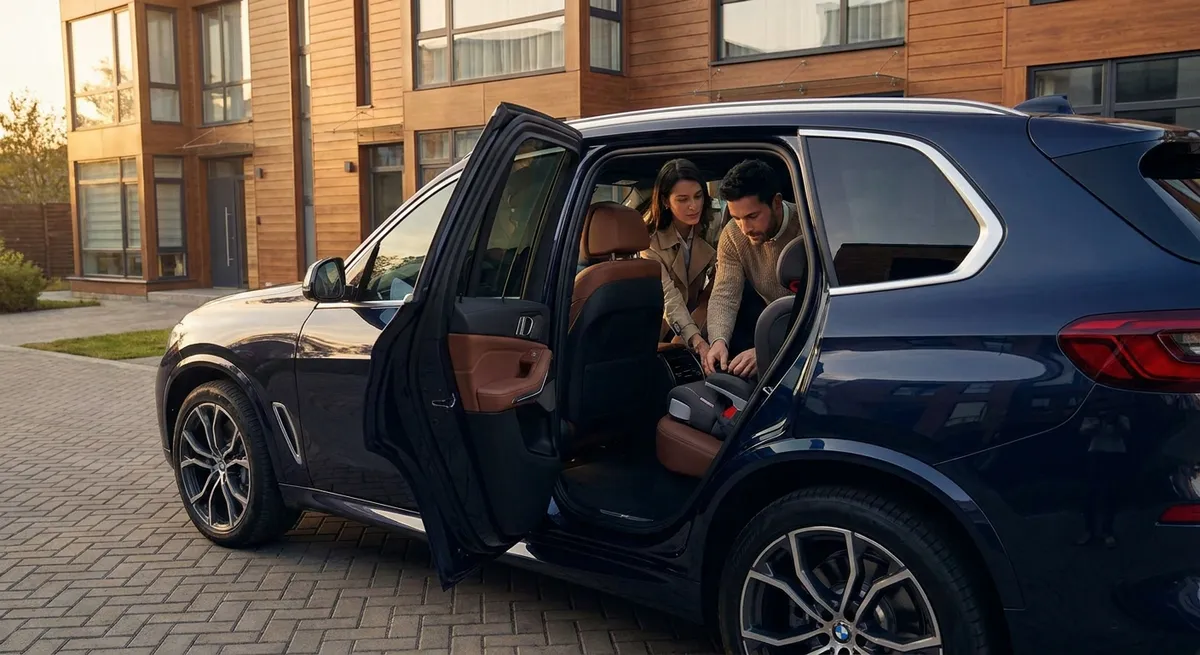
Start in the second row. Pay attention to how easily you can step in, sit down, and secure a child seat without twisting your spine. The door opening angle, floor height, and roofline all subtly influence whether entry feels graceful or clumsy. A gently sloping roof might look sleek, but it can be a daily frustration if you’re ducking under it with a toddler on your hip.
Next, examine the path to the third row, if equipped. Is the access mechanism intuitive with one hand? Does the second row slide far enough forward to allow an adult to enter without contortionism? Families often underestimate how frequently grandparents, teen friends, or carpool guests will occupy those seats. A beautifully engineered third-row entry can turn an “occasional use” row into genuinely usable seating.
Finally, consider how movement feels with doors closed. Can someone step in, buckle a child, and then move to the opposite side without awkward climbing? Narrow center tunnels, low-profile floor humps, and well-positioned seat tracks all contribute to what can only be described as “cabin flow”—a subtle yet profound marker of thoughtful family design.
Refined Quiet: Why Acoustic Calm Should Be a Top Priority
On paper, almost every modern SUV touts “quiet cabins” and “enhanced sound insulation.” In practice, the range in real acoustic refinement is vast—and families are uniquely sensitive to it. Noise is more than an annoyance; it directly influences fatigue, stress levels, and how relaxing a drive feels with children on board.
When you test-drive, deliberately listen at typical family speeds: 30–45 mph around town and 60–70 mph on the highway. Notice where the noise comes from—tires, wind, or engine. Vehicles with laminated glass (often front side windows as well as windshield) and targeted acoustic glass make a discernible difference in conversations with kids in the second and third rows.
A well-insulated cabin doesn’t have to feel “sealed off” or artificial. The most refined SUVs allow a gentle sense of the outside world while eliminating the relentless low-level hum that makes long drives draining. This is particularly critical if your children nap in the car, if you routinely take longer road trips, or if you value calm phone calls in transit.
Pay attention to how the cabin sounds when the audio system is off. If the interior still feels composed and hushed, you’re likely looking at a vehicle engineered for true acoustic comfort rather than relying on speakers to mask underlying noise.
Subtle Ergonomic Luxury: Touchpoints That Truly Matter Over Time
Luxury in a family SUV isn’t just about leather seats and a large screen. It is about the small details—the touchpoints you interact with dozens of times a day—that either fade quietly into the background or persistently irritate.
Focus first on the driver’s seat. Beyond simple adjustability, look for fine-tuning: thigh support, adjustable lumbar support that can move both up/down and in/out, and tilt adjustments that let you rest your shoulders and neck rather than hold them in place. A seat that feels “good enough” for a short test drive can become fatiguing after a year of daily use; a precisely adjustable seat feels better the longer you own the car.
Steering wheel thickness and material matter more than most buyers admit. A wheel that’s slightly too thick can cause subtle hand strain; one that’s too thin feels budget-constrained. The best family SUVs balance grip and elegance, often with soft leather that resists the wear and shine that comes from constant use with sunscreened or slightly sticky hands.
Consider secondary controls: climate buttons, window switches, and seat-fold mechanisms. Are they damped, precise, and satisfying to use, or do they feel clicky and hollow? Premium-feeling controls tend to age more gracefully, both aesthetically and mechanically, which is essential for a vehicle that will see countless school runs, climate adjustments, and seat reconfigurations.
Technology That Serves, Not Commands: Curating the Right Digital Experience
A modern family SUV is as much a technology hub as a mode of transport. The distinction between “impressive” tech and “intelligent” tech becomes clear once you live with the vehicle.
Look beyond screen size. Interfaces that bury essential functions—like climate, drive modes, or defrost—behind multiple menus will test your patience. The most family-friendly SUVs balance sleek digital design with dedicated physical controls for frequently used features. Consider how often you’ll adjust fan speed with a sleepy child in the back; a tactile knob or toggle you can adjust without glancing down is worth more than the most visually stunning touchscreen.
Wireless Apple CarPlay and Android Auto are now highly desirable, but ask yourself how seamlessly they integrate. Does connecting your phone disrupt the native climate display? Does it take over backup camera visuals when you shift into reverse? Take a moment in the dealership lot to pair your phone and simulate a typical drive: navigation plus music plus messages. Observe how quickly the system responds and how often you need to tap through menus.
Also evaluate the “tech tone” of the cabin. Overly animated graphics, constant alerts, and hyper-bright displays can feel fatiguing. Look for systems with night modes, minimalistic themes, and the ability to dial back visual clutter. True premium technology should quietly assist the driver and reduce friction, not shout for attention at every turn.
Five Exclusive Insights Discerning Families Rarely Hear at the Dealership
These are the kinds of nuances that seldom appear in brochures yet profoundly influence your day-to-day satisfaction:
- Test the “parent pivot” from every seat.
Sit in the driver’s seat, then physically turn to pass something to the second row. Repeat from the front passenger seat and the second row to the third. Seat bolsters, headrests, and belt anchor points can dramatically change how easy it is to comfort a child, retrieve a bottle, or adjust a blanket while parked.
- Check how the cargo space behaves when life is imperfect, not ideal.
Do this with the third row both up and down. Bring a stroller, a week’s worth of groceries, or a sports bag to the test drive. Note the shape of the load area, not just the litres or cubic feet on paper. Deep wells, side pockets, and flat-folding seats matter more than headline capacity numbers when you’re loading awkwardly shaped family gear.
- Observe how the cabin handles “real” air: food, pets, and wet gear.
Some SUVs now offer advanced cabin filtration and air purification systems, but even without those, vent placement and airflow patterns make a difference. Check if rear passengers get dedicated vents at both head and foot level. Consider how long it takes the cabin to clear fog or lingering food smells during your test drive.
- Pay attention to how child seat installation affects the rest of the cabin.
Install a child seat if possible, or at least simulate it. Do the front seats lose too much legroom when a rear-facing seat is properly installed? Are the ISOFIX/LATCH anchors recessed and easy to access, or hidden behind tight fabric flaps? A thoughtfully designed family SUV allows safe child seat installation without forcing front occupants into awkwardly cramped positions.
- Evaluate “end-of-day ergonomics,” not just first impressions.
Before you finalize your decision, schedule a second, longer test drive at the time of day you’re usually tired—after work, for example. This is when harsh seat cushioning, glare-prone screens, complex controls, or intrusive driver-assistance alerts become very apparent. A truly well-resolved family SUV feels unintrusive and supportive precisely when your own energy is lowest.
Conclusion
Choosing a family SUV is less about chasing the highest trim or the longest spec sheet and more about curating an environment that quietly supports your family’s rhythm. The most satisfying choices are often those that reveal their intelligence over time: graceful cabin flow, genuine acoustic calm, enduring ergonomic comfort, technology that respects your focus, and design choices tuned to real family life rather than marketing copy.
When you approach your search with these subtler criteria, you move beyond “Does it fit our family?” to a more discerning question: “Does it make our everyday life feel calmer, easier, and more considered?” The right family SUV will answer that question not with theatrics, but with quiet confidence—every time you close the door and drive away.
Sources
- National Highway Traffic Safety Administration (NHTSA) – 5-Star Safety Ratings – Official crash test ratings and safety information for comparing family SUVs
- Insurance Institute for Highway Safety (IIHS) – Ratings & Safety Research – Independent crash tests and evaluations of vehicle safety systems and structural performance
- Edmunds – SUV Buying Guide – Practical overviews of SUV segments, features, and real-world considerations for shoppers
- Consumer Reports – Guide to Car Safety Features – Detailed explanations and evaluations of modern driver-assistance and safety technologies
- EPA – Fuel Economy Guide – Official U.S. government data on fuel economy and energy use for cross-shopping SUVs by efficiency
Key Takeaway
The most important thing to remember from this article is that this information can change how you think about Buying Guide.