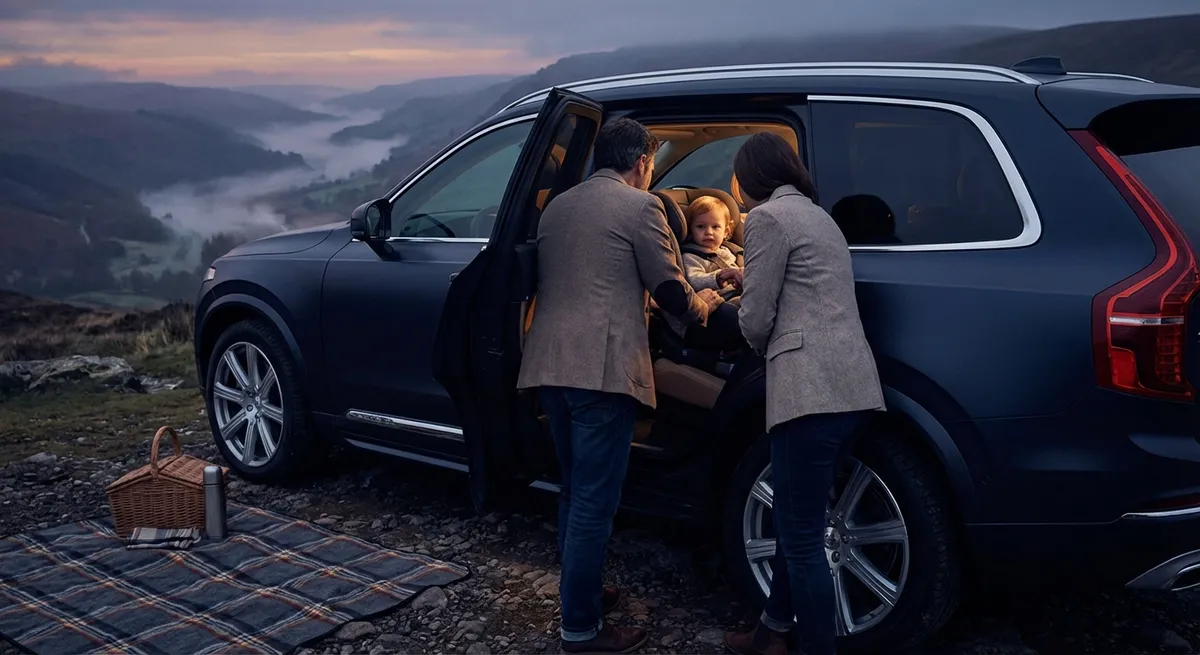
In an era saturated with star ratings, influencer hot takes, and glossy launch events, meaningful SUV reviews can feel strangely one‑dimensional. Families who value refinement, composure, and long-haul comfort are often left reading between the lines. At Family SUV Review, we believe a truly helpful review speaks to the subtleties that shape daily life: how a cabin sounds at 70 mph with a sleeping toddler, how gracefully the third row accepts a booster seat, and how serene the drive remains after a demanding day. This article distills five exclusive insights we lean on when evaluating family SUVs—nuances that rarely make the headline but quietly define long-term satisfaction.
How We Read Refinement: Beyond Power and Price
Most SUV reviews focus on acceleration times and tech features, but refined family motoring lives in the margins: seat sculpting, cabin hush, pedal feel, and how naturally the steering responds when you’re easing into a tight school drop-off. When we test an SUV, we’re as interested in low-speed grace as highway authority. The best family SUVs combine a supple ride with confident body control, so passengers feel neither jarred nor seasick—especially important when car seats and grandparents share the second row.
Refinement also shows up in the way controls are weighted. A premium family SUV should feel intuitive with gloved hands in winter, easy to adjust without taking eyes off the road, and consistent in its responses. We pay attention to exactly how a vehicle behaves over broken pavement at neighborhood speeds, where cheap damping and cost-cut suspensions reveal themselves. It’s in these small, unglamorous moments—parking ramps, traffic jams, rush-hour roundabouts—that the true character of an SUV comes into focus. Reviews that linger on this lived-in realism, rather than spec‑sheet theatrics, are the ones worth your time.
Insight 1: Cabin Acoustics as a Daily Luxury
Families often look at decibel ratings, but the true magic of a quiet SUV lies not just in how much sound is blocked, but in which sounds are allowed through and how they’re shaped. A well-engineered cabin doesn’t simply mute road noise; it filters the spectrum so conversation remains effortless and soothing. We listen for the quality of sound insulation during everyday scenarios: coarse-chip asphalt, concrete expansion joints, and windy bridge crossings. An SUV might feel calm on freshly paved test-track roads yet become fatiguing on real-world surfaces.
We also evaluate sound management during typical family tasks. Can you speak in a low voice to a child in the third row without raising your tone? Does the HVAC system roar at higher fan speeds, or is it thoughtfully damped? In reviews, look for remarks about wind noise around the A-pillars and mirrors, as these become particularly prominent on longer highway drives. Models designed with acoustic glass, thicker door seals, and carefully insulated wheel wells offer a more serene environment—transforming errands into something closer to a quiet lounge than a rolling megaphone.
Insight 2: The “Invisible Ergonomics” Families Feel but Rarely Name
Ergonomics is often reduced to seat comfort, yet family reality is more intricate. We look at what we call the “invisible ergonomics”—those small design decisions that prevent daily irritation. How naturally can a driver buckle a child in the second row without twisting uncomfortably? Is the seat height perfect for grandparents to slide in, rather than climb up or fall down into? The best SUVs make the act of entering, exiting, and adjusting the cabin feel almost instinctive.
We pay close attention to the geometry of the rear doors and the placement of latch anchors. Some SUVs technically “fit” three child seats, but practically require contortions to secure them. Reviews that simply list seating capacity miss the subtleties: the shape of the door opening, how wide doors swing in tight parking, and whether the roofline tapers where you need headroom most. We also evaluate the reach to touchscreen controls, climate dials, and wireless charging pads—especially while belted in. A premium family SUV should allow the driver to manage the environment with minimal movement, keeping focus on the road instead of wrestling with poorly positioned controls.
Insight 3: Third-Row Reality vs. Brochure Promises
On paper, third-row seating looks like a box to tick: “7- or 8-passenger capacity.” In practice, the experience ranges from genuinely adult-suitable to “only for emergencies and very patient teenagers.” We examine not only legroom figures, but the posture those figures imply. An elevated floor can leave knees high and unsupported, even when the spec sheet says the space is generous. We also factor in how usable the third row is when the second row is adjusted for tall adults—many SUVs require compromises that reviews rarely spell out.
Families should look for reviews that describe real-world access: Can a child reach the back row independently? Is there a one-touch tilt/slide mechanism that works with a car seat installed, or must you unbuckle every time? We also consider sightlines. Broad glass areas and thoughtfully placed quarter windows can make the third row feel airy rather than confined, reducing motion sickness and complaints. A truly family-ready third row doesn’t just exist; it integrates seamlessly with the rest of the cabin—allowing spontaneous carpools, visiting cousins, and last-minute dinner guests without fuss.
Insight 4: Subtle Tech That Stays Out of the Way
Modern SUVs are awash with screens and apps, yet for families, the most valuable technology often feels almost invisible. We place high value on interfaces that respect your attention: clear fonts, restrained color palettes, and straightforward menu structures that can be navigated by feel and memory. Overly animated graphics and buried settings may impress in a showroom, but they quickly become exhausting in daily use. The best systems respond swiftly, avoid lag, and provide redundant physical controls for commonly used functions.
We look closely at how driver assistance systems behave in imperfect conditions—rainy nights, faded lane markings, or patchy urban roads. Some reviews focus on whether a model offers lane keeping or adaptive cruise; we care more about how natural and predictable these systems feel. Do they gently support, or constantly nag and overcorrect? Are alerts crisp and informative instead of shrill and ambiguous? Family-focused reviews should note whether child-locks, rear climate controls, and media sources are easy for adults to manage without surrendering the cabin to a maze of screens. The hallmark of sophisticated in-car tech is that it quietly elevates the experience while staying respectfully in the background.
Insight 5: The Graceful Balance of Efficiency, Range, and Refueling
For families, range anxiety is less about road trips to distant national parks and more about the everyday logistics of life: back-to-back activities, late meetings, and unplanned detours. When we assess efficiency—whether gasoline, hybrid, or fully electric—we consider how the drivetrain supports unpredictable days. A plug-in hybrid that excels in short urban hops might be ideal for school and office commutes, while a long-range EV or a refined turbocharged gasoline model may better suit frequent weekend getaways.
In our reviews, we pay attention to how range estimates behave under family conditions: full cabin, climate control in extreme temperatures, highway speeds, and stop-and-go traffic. We also consider refueling and charging ergonomics—how easy it is to access the fuel door or charging port in crowded lots, how intuitively the charging schedule can be set, and whether cord management will become a nightly chore. The most sophisticated family SUVs blend realistic efficiency with refueling routines that fold naturally into your life, rather than demanding a new lifestyle to accommodate the vehicle.
Insight 6: Ride Quality Tuned for Real Family Cargo
Most ride impressions are written with a driver and perhaps one passenger on board, yet families routinely travel with strollers, backpacks, groceries, sports gear, and sometimes a fully loaded roof box. We test how an SUV’s suspension responds not just when it’s light, but when it’s genuinely weighted by family life. Some vehicles feel taut and controlled when empty, only to devolve into wallow and float when the third row is in use and the cargo area is full. Others reveal their best composure precisely when asked to work.
Look for reviews that discuss ride quality both unladen and fully packed, noting whether larger wheels and low-profile tires undermine comfort over urban potholes. We also assess how rear suspension tuning handles sleep-sensitive passengers: does the SUV glide over speed humps, or does it deliver a sharp thump that wakes children every time? An SUV tuned thoughtfully for real-world loads will feel consistent, poised, and secure regardless of whether you’re traveling solo or heading out with the entire household and weekend luggage.
Insight 7: Materials and Aging Gracefully with Family Life
First impressions in a showroom can be deceptive. High-gloss plastics and ornate trim may look dramatic under spotlights but quickly reveal smudges, scratches, and fingerprints under daily use. We favor SUVs that balance visual richness with resilience: soft-touch surfaces where hands naturally fall, textures that mask minor wear, and fabrics or leathers that can be cleaned easily without special rituals. Families benefit from interiors designed to look good and stay good—surfaces that don’t immediately betray every crayon mishap or snack spill.
When we review materials, we scrutinize high-contact points: door pulls, steering wheels, armrests, and the edges of seat cushions where jeans and backpacks brush repeatedly. We also consider how trim interacts with ambient lighting at night—subtle, warm illumination calms the cabin and feels genuinely premium, while harsh, bright elements can be fatiguing. The most thoughtfully finished SUVs don’t simply chase trends; they curate a timeless interior that will feel composed and cohesive even after years of commutes, road trips, and school runs.
Bringing It All Together: Reading SUV Reviews with a Refined Lens
A sophisticated family SUV is less about headline numbers and more about the harmony of details—how it sounds, feels, and behaves when life is unscripted. As you explore SUV reviews, look for commentary that goes beyond cargo volume and 0–60 times to examine cabin acoustics, access ergonomics, third-row practicality, user-friendly tech, real-world efficiency, loaded-ride composure, and how gracefully materials will age. These are the elements that transform a vehicle from a simple tool into a trusted space for your family’s everyday stories.
At Family SUV Review, our approach is to illuminate these subtleties with clarity and restraint, so you can sense not just how an SUV performs, but how it will live with you. The right choice is ultimately personal, but when reviews honor the quiet details that shape your daily drives, your decision becomes less about compromise and more about alignment—with your routines, your standards, and your vision of family comfort.
Sources
- National Highway Traffic Safety Administration (NHTSA) - Official U.S. government crash-test ratings and explanations of safety technologies
- Insurance Institute for Highway Safety (IIHS) - Independent crash tests, headlight evaluations, and safety feature assessments for SUVs
- U.S. Department of Energy – FuelEconomy.gov - Official fuel economy data and energy efficiency information for sport utility vehicles
- Consumer Reports – SUV Road Tests & Ratings - In-depth, independent evaluations of SUV ride quality, noise, comfort, and reliability
- Edmunds – Car Buying Research - Comprehensive SUV specifications, real-world owner reviews, and expert driving impressions
Key Takeaway
The most important thing to remember from this article is that this information can change how you think about SUV Reviews.