Choosing a family SUV today is less about chasing trends and more about curating a calm, capable space that supports your life without shouting for attention. At Family SUV Review, we look past the obvious spec-sheet battles and marketing slogans to uncover what genuinely enhances daily family driving. This article distills five exclusive, often-overlooked insights that can transform a routine test drive into a precise evaluation—and help you recognize an SUV that will still feel right five years from now.
1. The “After 8 p.m.” Test: How an SUV Feels When the Day Finally Slows
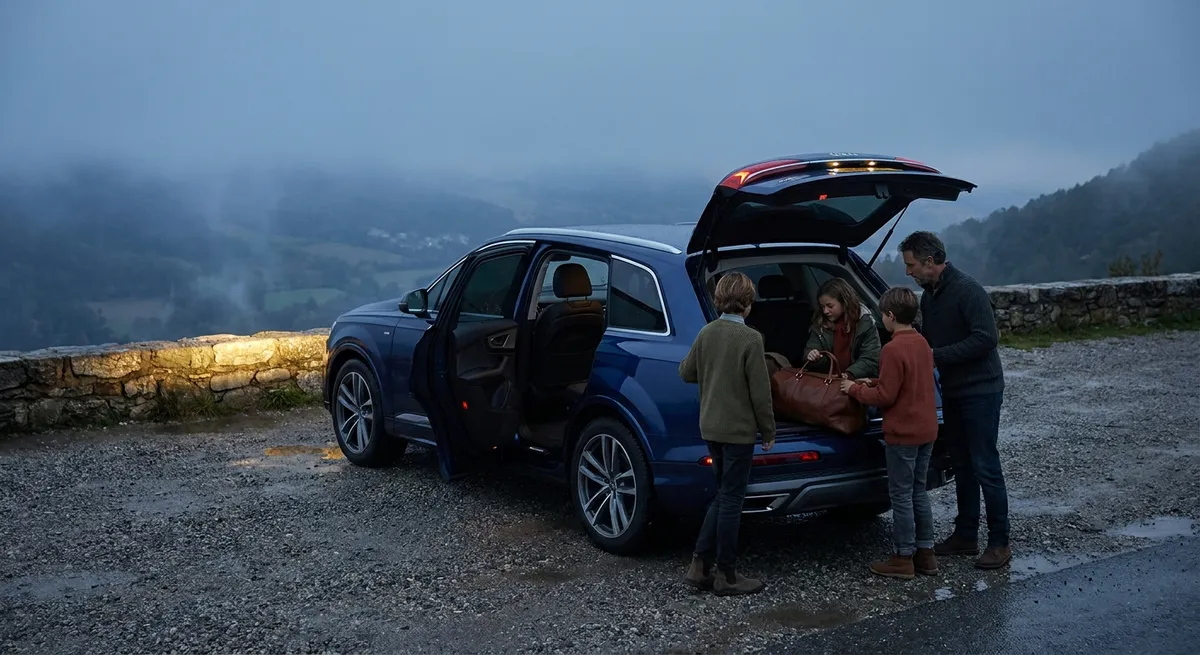
The true character of a family SUV emerges late in the day—when children are tired, bags are scattered, and everyone wants a quiet, effortless drive home. Yet most reviews focus on 0–60 times and towing figures, not how a cabin supports that final, decompressing stretch of the evening.
When reading or watching SUV reviews, look for commentary on low-speed refinement and end-of-day usability: door closing feel, how intrusive outside traffic sounds are in residential streets, whether the climate control gently stabilizes temperature or gusts aggressively. Cabin lighting matters more than most spec sheets imply—soft, configurable ambient lighting, illuminated seat belt buckles, and clearly visible but non-glaring controls quietly reduce friction when you’re managing sleepy passengers.
Evaluate how reviewers describe suspension composure over speed bumps and broken asphalt at 20–30 mph. A family-focused SUV should move with controlled suppleness rather than floaty softness; excess body motion feels fine on a short test loop but becomes subtly fatiguing on longer days. Thoughtful reviews will also reference how well the vehicle maintains stability and comfort even when the cargo area is full—an everyday reality for families, and a scenario some platforms handle far better than others.
2. Space That Works, Not Just Space That Measures Well
Every manufacturer touts interior volume, but sheer numbers rarely tell you whether the space has been shaped intelligently for real family life. Smart reviewing looks at geometry and usability, not just cubic feet.
Pay careful attention to how reviewers discuss access and movement inside the cabin. Are second-row seats on sliders with generous fore-aft travel, allowing you to fine-tune legroom versus cargo space? Can a child in a booster access their own seat belt without you leaning awkwardly across the cabin? Reviews that highlight hip point height—the ease with which children climb in and grandparents sit down—provide more meaningful insight than generic “spacious” descriptors.
Think of the third row as more than emergency seating. The best SUV reviews will differentiate between child-friendly and adult-tolerable third rows, noting thigh support, headroom, window size (to reduce motion discomfort), and how easily the seats fold flat. Look for details like how many moves it takes to convert from full passenger mode to full cargo mode; a well-designed system can be operated with one hand while you’re holding a school bag in the other. Cargo space with the third row up is also crucial—reviews that test real-world luggage or stroller fit are far more valuable than those citing liters alone.
3. Subtle Safety: Beyond Headline Ratings and into Real-World Support
Five-star ratings and top safety picks are essential, but they are now table stakes in the refined family SUV segment. What truly differentiates one vehicle from another is how gracefully the safety technology supports you in normal driving, rather than how dramatically it intervenes in emergencies.
The most insightful SUV reviews describe the manner in which driver-assistance features operate. Lane keeping that gently nudges and quietly alerts is vastly different from a system that tugs abruptly or issues constant beeps, leading many owners to disable it entirely. Look for commentary on how intuitive it feels to adjust or temporarily silence certain aids—for example, adaptive cruise that’s easy to tweak in 1 mph increments, or blind-spot alerts that offer clear visual indicators rather than startling sounds.
Particularly valuable is any mention of how these systems perform in dense urban conditions and tight parking environments, where many families spend more time than on open highways. Reviews that test cross-traffic alerts in busy supermarket lots, or examine how visible and accurate 360° camera views are in low light, offer a richer view of safety in the actual rhythms of family life. Also note how many child seat anchors are truly usable; some SUVs technically offer three across, but reviewers may reveal that bulky bases interfere with adjacent buckles or seat-folding mechanisms.
4. The Texture of Tech: When Screens Serve the Family, Not Themselves
Infotainment size and resolution are easy for marketing teams to promote, but what matters to a family is how naturally the technology disappears into the background of daily use. A sophisticated review goes beyond “big screen, sharp graphics” and interrogates the system’s logic, responsiveness, and restraint.
Seek out commentary on how many steps it takes to perform daily tasks: switching between navigation and media, adjusting climate zones, or engaging rear-seat entertainment if available. The most thoughtfully engineered systems keep core comfort functions anchored to physical controls or at least to persistent, one-touch on-screen shortcuts. Reviews that mention muscle memory—whether owners could likely adjust common settings without taking their eyes off the road—are especially telling.
Look for assessments of smartphone integration that recognize family nuances: does wireless CarPlay or Android Auto reconnect seamlessly on short errands, or is there lag and repetition in confirmation prompts? Do rear USB and USB-C ports charge at practical speeds, or are they token inclusions? Insightful reviewers will also comment on the system’s long-term prospects: over-the-air update capability, manufacturer track record on software support, and whether the interface feels clean and timeless or already stylistically dated. In a premium-feeling family SUV, tech should feel quietly confident, not aggressively futuristic.
5. The Understated Luxury of Low-Effort Ownership
Beyond test-drive impressions, the most valuable SUV reviews capture what it’s like to live with the vehicle over months and years. This is where subtle advantages reveal themselves—features that rarely command headlines but significantly improve everyday calm and control.
When evaluating reviews, give weight to any discussion of service experience and maintenance planning. Many modern SUVs offer scheduled maintenance bundles, extended warranties, or transparent service intervals that reduce uncertainty. Reviews referencing real-world fuel economy across mixed city and school-run driving patterns are more relevant than a single highway loop figure—especially for heavier or all-wheel-drive models.
Interior durability is another area where the right SUV becomes a long-term ally. Thoughtful reviewers look beyond showroom sheen to evaluate how materials resist scuffs from car seats, school bags, and muddy sports gear. Slightly matte surfaces, robust seat stitching, and well-chosen trim finishes age more gracefully than highly glossy plastics that highlight every fingerprint. Cabin filtration systems, rear-seat air vents in all three rows, and heated elements for both front and rear occupants may sound like indulgences, but they contribute to a consistently pleasant environment that de-escalates discomfort before it becomes distraction.
Finally, note any mention of resale stability and brand reputation for longevity. Families typically keep an SUV longer and put more varied mileage on it than a personal commuter car. Reviews that reference historical reliability data, manufacturer recall behavior, and long-term road test findings equip you to choose an SUV that maintains its poise—and its value—well past the initial honeymoon period.
Conclusion
In a marketplace crowded with bold grilles and louder promises, the most rewarding family SUVs are often the most quietly capable. By focusing on how a vehicle behaves at the end of a long day, how its space truly functions, how its safety systems support rather than intrude, how its technology respects your attention, and how effortlessly it fits into your long-term life, you move from simply buying an SUV to selecting a calm, reliable partner in your family’s routines.
The reviews that serve you best are those that study these refined, less-obvious qualities with patience and precision. That is the perspective we bring to every evaluation at Family SUV Review—so your next family SUV doesn’t just meet the moment, but gracefully elevates the years ahead.
Sources
- National Highway Traffic Safety Administration (NHTSA) – 5-Star Safety Ratings - Official U.S. government crash-test ratings and safety information
- Insurance Institute for Highway Safety (IIHS) – Vehicle Ratings - Independent crashworthiness and crash-avoidance ratings, including family-relevant safety details
- U.S. Department of Energy – Fuel Economy Guide - Official fuel economy data and real-world MPG considerations for SUVs
- Consumer Reports – Guide to Car Reliability - Long-term reliability insights and brand trends relevant to SUV ownership
- Edmunds – Car Seat Compatibility and Family Features - Practical evaluations of child seat fitment and interior family usability across SUV models
Key Takeaway
The most important thing to remember from this article is that this information can change how you think about SUV Reviews.