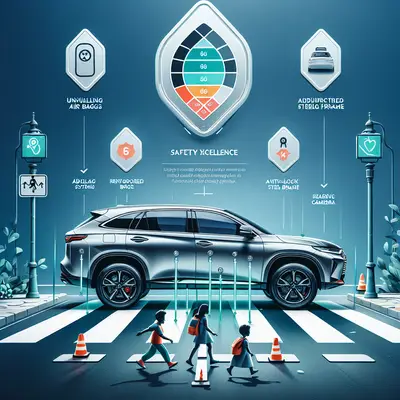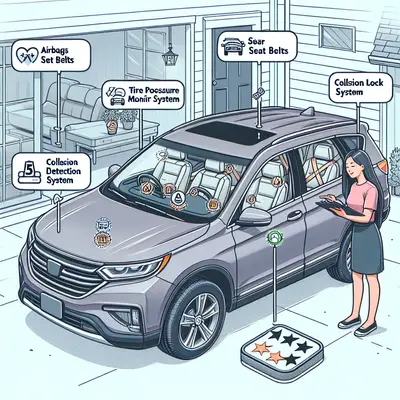
For families who value both composure and capability, safety is not a checkbox—it is the quiet foundation of every journey. Yet safety ratings can feel clinical, full of stars, scores, and acronyms that rarely address how a vehicle actually feels when your most important passengers are in the back. This guide takes a more considered view, revealing the nuances behind the numbers and offering five exclusive insights that will help you select an SUV whose safety credentials truly align with a refined family lifestyle.
Beyond the Badge: What Safety Ratings Really Capture
Most family SUV shoppers are familiar with the big names—NHTSA star ratings and IIHS crash-test results—but the subtleties within those reports are where the meaningful differences emerge. A 5-star overall rating from NHTSA or a “Top Safety Pick+” from IIHS signals a high level of protection, yet these labels are summaries of dozens of distinct tests and criteria. Frontal offset impacts, side collisions, roof strength, and head restraint performance all contribute to how a vehicle behaves in real-world situations, from urban commutes to high-speed highway travel.
Equally important is how a vehicle’s structure distributes crash forces. High-strength steel, thoughtfully engineered crumple zones, and robust passenger cells make the difference between a vehicle that sacrifices its outer shell to protect occupants and one that merely meets minimum thresholds. Families who appreciate finer details should look at how consistently a model performs across all crash tests, not just the headline score. A vehicle that posts strong, balanced results is more likely to protect every row of seating, not just the driver and front passenger, and that has direct implications for where your children sit and how secure they truly are.
Exclusive Insight 1: Rear-Seat Safety Is the Quiet Deal-Breaker
For families, the rear seats are not an afterthought—they are the primary living space. Yet many safety conversations focus almost exclusively on front-occupant protection. When examining ratings, it is wise to look closely at how a given SUV treats those in the second and (if equipped) third row. Some of the latest testing protocols, such as the updated moderate overlap front test by IIHS, now evaluate front crash performance with attention to rear occupants, offering a more nuanced view of how well the back rows are protected.
Premium family shoppers should scrutinize details like rear side-impact scores, the availability of side-curtain airbags that fully cover the third row, and the presence of load limiters and pretensioners on rear seat belts. These features can significantly reduce injury risk during a crash. In addition, thoughtful seat geometry—such as proper head restraint positioning and easily accessible LATCH anchor points—helps ensure that child seats are correctly installed and that older children enjoy proper restraint fit. A vehicle that excels in front-impact scores but compromises on rear-seat engineering does not truly align with a family-first philosophy, no matter how polished its brochures may appear.
Exclusive Insight 2: Child-Seat Compatibility Is a Safety Rating in Disguise
Official safety ratings rarely capture one of the most practical realities of family life: installing child seats without frustration—or compromise. A structurally safe SUV can underperform for families if its LATCH system is buried, misaligned, or limited in key seating positions. This is where discerning shoppers look beyond crash tests and into the ergonomics and layout that determine daily usability. Some models offer lower anchors in three positions across the second row, while others restrict them to the outboard seats, subtly shaping where your children can safely sit.
When reviewing potential SUVs, consult detailed assessments of child-seat compatibility and LATCH accessibility, where available, and physically test your own seats at the dealership if possible. Pay attention to how easily anchors can be reached without fighting upholstery, how well top tether anchors are integrated for forward-facing seats, and whether the vehicle can accommodate a rear-facing seat behind a taller front passenger without compromising comfort. A truly family-oriented SUV quietly anticipates these needs, transforming safety from a theoretical specification into something seamlessly integrated into daily routines.
Exclusive Insight 3: Active Safety Tech Is Only as Good as Its Tuning
Advanced driver-assistance systems (ADAS) are now central to modern safety ratings, yet not all implementations feel equally polished. Features such as automatic emergency braking, adaptive cruise control, lane-keeping assistance, and blind-spot monitoring are increasingly evaluated by organizations like IIHS—not just for presence, but for performance. For a family SUV, the distinction between basic and well-calibrated systems is profound: one interrupts and startles; the other guides and protects with subtle finesse.
A refined family SUV blends these technologies into the driving experience in a way that feels intuitive, not intrusive. Look for vehicles whose systems earn high marks in crash-avoidance and mitigation categories, but also seek out owner impressions and professional evaluations that comment on real-world behavior. Smooth lane-centering on the highway, gentle yet firm steering assistance, and timely—not overly aggressive—automatic braking can markedly reduce fatigue on long journeys with children. When active safety technology is elegantly tuned, it becomes an invisible co-pilot, maintaining a calm cabin while quietly watching for the unexpected.
Exclusive Insight 4: Headlights and Nighttime Performance Are Underrated Essentials
Nighttime driving is when safety ratings become vivid reality, yet shoppers often overlook one of the most consequential elements: headlight performance. Modern evaluations by IIHS, for example, now include headlight effectiveness and glare measurements, recognizing that the way an SUV illuminates the road directly influences the likelihood of avoiding hazards altogether. For families, this matters deeply on evening school runs, weekend getaways, and late returns from activities.
Discerning buyers should note not only whether LED headlights are available, but how those specific units are rated. Some trims may feature higher-performing adaptive headlights that actively swivel into curves or automatically adjust beam patterns to reduce glare for oncoming drivers. These refinements do more than enhance a sense of premium craftsmanship—they meaningfully extend your field of vision on dark, winding roads, helping you identify pedestrians, animals, or debris sooner. A vehicle that pairs strong crash-test performance with excellent headlight ratings offers a more holistic kind of security that feels especially reassuring when the family is aboard after sunset.
Exclusive Insight 5: Stability, Weight Distribution, and the Graceful Avoidance of Trouble
While crash tests focus on what happens when an impact is unavoidable, advanced safety ratings increasingly consider a vehicle’s ability to avoid danger in the first place. For SUVs—especially those carrying precious cargo—stability and predictable handling can be as important as structural resilience. Taller ride heights and higher centers of gravity demand carefully tuned suspension, responsive steering, and robust electronic stability control to reduce the risk of rollovers and loss-of-control scenarios.
When comparing family SUVs, investigate rollover resistance ratings, braking distances, and any available evaluations of emergency avoidance maneuvers. A well-engineered chassis instills confidence during sudden lane changes, evasive swerves, or quick stops on wet pavement, keeping the vehicle composed rather than unsettled. Families who value a more refined driving experience will notice the difference: a quiet sense of control, less body roll, and a stable, planted feel even when the vehicle is fully loaded with passengers, luggage, and weekend gear. This dynamic poise is itself a form of safety, protecting your family by helping you avoid the crash altogether.
Conclusion
For families who expect more than mere adequacy, safety ratings are not endpoints; they are a starting point for a deeper conversation about how an SUV protects and supports everyday life. By looking beyond headline stars and labels—examining rear-seat protection, child-seat usability, active technology tuning, nighttime visibility, and dynamic stability—you gain a more complete picture of how a vehicle will behave when it matters most. The right family SUV is one that feels quietly assured on every journey, translating impressive numbers on paper into a calm, confident experience on the road. In that blend of engineering, refinement, and thoughtfulness, true safety becomes something you sense the moment you and your family close the doors and set off.
Sources
- [NHTSA 5-Star Safety Ratings](https://www.nhtsa.gov/ratings) - Official U.S. government crash-test results, rollover ratings, and explanations of testing protocols
- [IIHS Vehicle Ratings](https://www.iihs.org/ratings) - Detailed crash-test data, headlight evaluations, and child seat anchor (LATCH) usability assessments
- [IIHS: Rear-Seat Safety in New Crash Tests](https://www.iihs.org/news/detail/iihs-updates-moderate-overlap-test-to-better-protect-rear-seat-passengers) - Explanation of updated frontal crash testing that includes rear-occupant protection
- [CDC Child Passenger Safety](https://www.cdc.gov/transportationsafety/child_passenger_safety/index.html) - Evidence-based guidance on proper restraint use and the importance of correct child-seat installation
- [SaferCar: Car Seat Inspection and LATCH Information](https://www.nhtsa.gov/equipment/car-seats-and-booster-seats) - U.S. DOT resource on car seats, LATCH systems, and inspection help for families
Key Takeaway
The most important thing to remember from this article is that this information can change how you think about Safety Ratings.