Choosing a family SUV is ultimately an act of trust. You are placing those you love most inside a carefully engineered shell and asking it to respond flawlessly in the moments that matter most. Safety ratings help, but the true story lies beneath the stars and scores. For families with discerning standards, understanding what those ratings do—and do not—reveal turns a good decision into a confident one.
This article explores how to read safety ratings with a more refined lens and offers five exclusive insights that sophisticated family SUV buyers rarely see highlighted in traditional reviews.
What Safety Ratings Actually Measure—and What They Quietly Omit
Government and independent safety ratings, such as those from the National Highway Traffic Safety Administration (NHTSA) and the Insurance Institute for Highway Safety (IIHS), are invaluable. Yet they are also, by design, simplified. A single star rating or award name distills an extensive portfolio of crash tests, data, and assumptions into a digestible symbol.
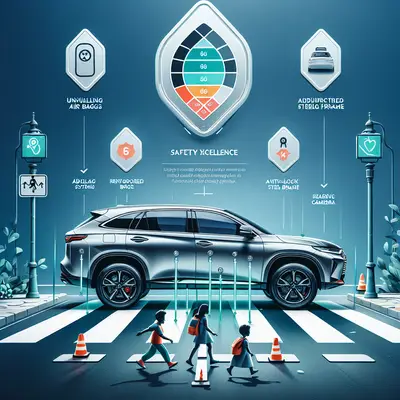
These test programs typically evaluate frontal, side, rollover, and rear impacts under standardized conditions. They may also assess advanced driver-assistance systems (ADAS), such as automatic emergency braking or lane-keeping assistance. However, ratings cannot account for every variable in the real world: different occupant sizes, varied seating positions, complex crash angles, and the ongoing evolution of technology. Sophisticated buyers understand that a 5-star result is a starting point, not the end of the conversation. The most reassuring SUVs are those that pair strong ratings with thoughtful engineering in the quieter corners of the cabin—child-seat interfaces, seatbelt design, impact management for third-row passengers, and the way driver-assistance systems behave in everyday use.
The Hidden Significance of Third-Row Safety
For many families, the third row is the entire reason to consider an SUV in the first place. Yet safety discussions and marketing materials often focus on front-row protection, or at best, the second row. The reality is that third-row occupants—frequently children or teenagers—face a different risk profile, particularly in larger SUVs where the rear-most seats sit close to the tailgate.
Leading organizations have begun to scrutinize rear-occupant safety with more precision, but third-row dynamics are still underrepresented in mainstream ratings. When evaluating a family SUV, examine crash-test details, not just overall scores. Look specifically for side-impact results, rear-occupant protection commentary, and whether the vehicle offers curtain airbags that extend fully to the third row. Also, assess the third row’s head restraints, seatback solidity, and how close the passenger’s head is to the rear glass. The safest family SUVs treat the third row as more than an afterthought; they engineer it as a fully integrated, protected living space.
Exclusive Insight #1: Third-row protection is often the quiet differentiator between “acceptable” and truly family-ready. Look for curtain airbags that cover the full length of the cabin and for explicit references to rear-occupant protection in crash-test reports.
The Subtle Art of Seatbelt and Airbag Integration
In much of the safety conversation, airbags receive the spotlight. But among engineers, the humble seatbelt remains the star performer. The most advanced family SUVs treat belts and airbags as a coordinated system, meticulously tuned for occupants of different ages, heights, and seating positions.
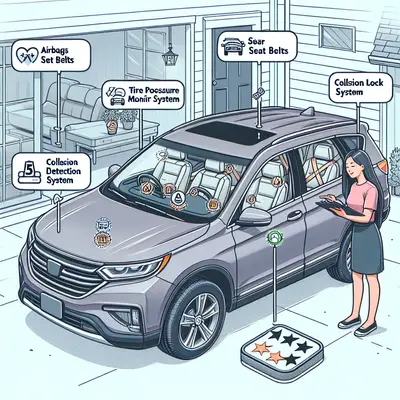
Features such as load limiters and pretensioners in second- and third-row seats can dramatically influence injury outcomes, especially for smaller passengers. Some premium SUVs offer inflatable rear seatbelts designed to spread forces across a wider area of the torso, providing gentler restraint for children and older adults. Airbag sophistication has also evolved: front center airbags that deploy between the driver and front passenger can help prevent head contact in side crashes, and rear side airbags increasingly protect outboard seating positions. Families should pay attention not only to whether a vehicle has “many airbags,” but to where they are located, how they deploy, and whether these systems extend equitably to every row.
Exclusive Insight #2: Ask specifically about rear-seat pretensioners, load limiters, and curtain airbag coverage by row. These rarely appear in headline specs but profoundly shape real-world protection.
Child Seats, Tethers, and the Reality of Day-to-Day Safety
For parents, crash tests and ratings are essential, but the daily ritual of securing a child in a safety seat may be even more critical. An SUV with excellent crash performance can be rendered less effective if its child-seat anchoring and belt geometry make proper installation difficult, inconsistent, or physically exhausting.
Distinguished safety organizations and some consumer evaluators have begun rating vehicles not only on formal tests, but also on the usability of LATCH (Lower Anchors and Tethers for Children) systems. The most family-focused SUVs offer easily accessible anchors with clear labeling, sufficient clearance around seat bolsters, and logical tether anchor placement—even in the third row. This detail is particularly important as families graduate from rear-facing infant seats to larger forward-facing seats and then to boosters; each transition changes the way belts and anchors interact with the child and the seat.
Exclusive Insight #3: LATCH usability can be as consequential as crash scores. Prioritize SUVs that earn high marks for child-seat installation ease, and test your actual seats in multiple rows before committing.
Advanced Driver Assistance: Calibration Matters More Than a Feature List
Driver-assistance technologies—automatic emergency braking, blind-spot monitoring, adaptive cruise control, lane-centering—are increasingly woven into safety evaluations. Yet for a family SUV, the mere presence of these features is not enough; how gracefully they operate can profoundly shape both safety and fatigue on long journeys.
Some systems brake too abruptly, issue frequent false alarms, or steer the vehicle in a way that feels imprecise or unpredictable. Others achieve a rare balance: they assist without nagging, correct gently, and provide clear, intuitive feedback to the driver. Evaluations from independent bodies and detailed road tests from reputable publications can reveal how these systems behave in real-world conditions. For a family, a refined calibration means fewer surprises for the driver, less startle for sleeping children, and a calmer, more composed cabin.
Exclusive Insight #4: When comparing SUVs, focus less on how many driver-assistance features are listed and more on how consistently and calmly they intervene. Smooth, predictable assistance is a premium safety advantage.
Crash Avoidance vs. Crash Survival: Understanding the Full Safety Arc
Traditional safety thinking focuses heavily on what happens once a collision is unavoidable. Modern family SUVs, however, distribute safety across three phases: avoiding the crash, managing the crash, and protecting occupants afterward. This broader view can help families separate marketing gloss from truly holistic engineering.
Crash avoidance encompasses visibility, braking performance, tire choice, steering response, and driver-assistance systems. Crash management involves the energy-absorbing structure, crumple zones, and the interplay of seatbelts and airbags. Post-crash safety includes fuel system integrity, automatic crash notification, easy-to-reach door handles and locks, interior emergency release mechanisms, and features like automatic collision notification through connected services. The most thoughtfully designed SUVs excel across all three phases, pairing their high test scores with robust active safety and post-crash resilience.
Exclusive Insight #5: Seek SUVs that combine strong crash-test ratings with proven crash-avoidance tech and thoughtful post-crash safeguards—such as automatic emergency calling and accessible interior releases. Safety is not a moment; it is an arc.
Conclusion
For families who expect more than a star rating on a window sticker, safety becomes a study in nuance. A refined approach to evaluating family SUVs looks far beyond the headline number: it asks how the third row is protected, how seatbelts and airbags collaborate, how easily children can be secured, how gracefully driver-assistance systems behave, and how the vehicle performs before, during, and after the unexpected.
The most reassuring family SUVs do not shout about safety; they embody it quietly in the architecture of their cabins, the tuning of their systems, and the thoughtfulness of their details. When you understand how to read between the ratings, you are not only buying an SUV—you are curating a mobile sanctuary, designed to protect what matters most with quiet confidence.
Sources
- National Highway Traffic Safety Administration (NHTSA) – 5-Star Safety Ratings - Official U.S. government crash-test results and explanations of testing protocols
- Insurance Institute for Highway Safety (IIHS) – Vehicle Ratings - Independent crash-test and crash-avoidance ratings, including child-seat and rear-occupant evaluations
- IIHS – Evaluations of LATCH Ease-of-Use - Detailed assessments of how easily and securely child seats can be installed in various vehicles
- U.S. Department of Transportation – Advanced Driver Assistance Systems - Overview of driver-assistance and automated safety technologies and their role in crash avoidance
- Centers for Disease Control and Prevention (CDC) – Child Passenger Safety - Evidence-based guidance on child restraints and the importance of correct installation
Key Takeaway
The most important thing to remember from this article is that this information can change how you think about Safety Ratings.