For many families, choosing an SUV is less about theatrics and more about thoughtful refinements that quietly transform everyday life. The school run, the weekend escape, the late-night airport pick-up—these are not events, but rituals. When an SUV is chosen well, it supports those rituals with grace, comfort, and a sense of composed assurance. This is where family features move beyond marketing checklists and become the subtle architecture of your daily experience.
Below are five exclusive, often-overlooked insights that discerning families will appreciate—details that don’t shout for attention, but consistently earn it.
The Art of the Second Row: True Comfort, Not Just Capacity
Many spec sheets celebrate seven seats, but far fewer deliver seven genuinely usable places to sit. The second row, in particular, is where a family SUV either quietly succeeds or steadily disappoints.
Look beyond simple “legroom” numbers. Focus on second-row seat contouring, thigh support, and the angle of recline. A flat, bench-like cushion may accommodate three child seats, but adults and older children will feel the difference on any journey longer than a quick errand. SUVs that offer fore-aft sliding seats, individually adjustable backrests, and slightly thicker cushioning often provide a noticeably calmer, more relaxed cabin on long drives.
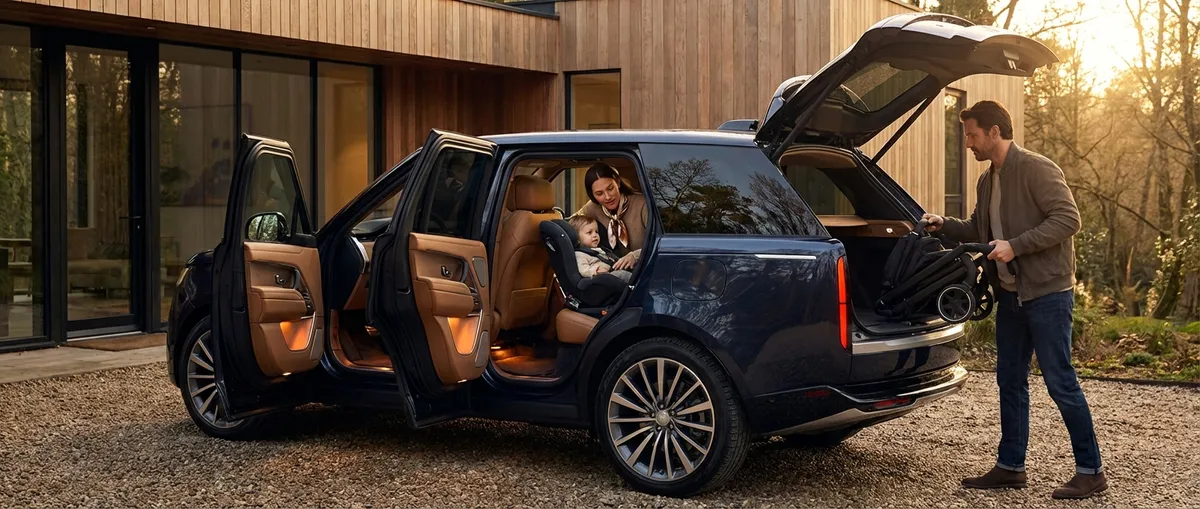
Isofix/LATCH anchor placement is equally crucial. Some SUVs tuck them deep within the upholstery, making daily buckle-ins unnecessarily fiddly. Others conceal them behind neat flaps or rigid guides that allow a clean, quick, one-handed connection—subtle, but invaluable when you’re managing children and bags simultaneously. Also note the door opening width and sill height: a generously opening rear door and a low, flat floor make it easier for grandparents, teens, and toddlers alike.
In practice, the true test is simple: can adults sit in the second row for two hours without stretching or fidgeting, while child seats remain installed? If the answer is yes, you’ve found a second row designed with genuine family life in mind.
Cabin Quietness: The Understated Luxury Families Don’t See Coming
For families, serenity is not a luxury; it is a form of safety and sanity. A quieter cabin reduces fatigue, allows conversations at natural volumes, and keeps children settled for longer stretches. Yet cabin refinement is rarely discussed with the same enthusiasm as horsepower or screen size.
When you test-drive, switch off the audio and pay attention to the layers of sound: wind noise around the mirrors and pillars, the thrum of tires on imperfect roads, the subtle resonance from the rear of the vehicle. Premium family SUVs use a combination of acoustic glass, strategic insulation, and sophisticated sealing around doors and tailgates to mute these signatures.
Powertrain refinement is just as important. A well-tuned hybrid or smooth gasoline engine that holds lower revs at highway speed can make late-night drives feel distinctly more composed. If you’re considering an electric SUV, listen for how it manages road and wind noise without the masking effect of an engine. The best examples feel more like a well-appointed lounge than a traditional vehicle—quiet, unhurried, and allowing every occupant to exhale.
A quieter SUV is not merely indulgent; it keeps the driver more alert, the children more relaxed, and conversations more civilized. Over years of school runs and road trips, that refinement quietly repays you, day after day.
Intuitive Storage: A Place for Everything, Without Visual Clutter
Families carry more than passengers; they bring a constantly changing ensemble of bags, bottles, devices, jackets, and sports gear. The difference between a vehicle that “has storage” and one that has been intelligently organized is profound.
Look for storage that is both generous and discreet. Deep, rubberized door bins that can securely cradle water bottles and umbrellas; a center console that can house a small handbag or tablet without needing to be wedged in; and a hidden compartment beneath the cargo floor for valuables or items you prefer to keep out of sight. Design that keeps surfaces visually clean while quietly increasing capacity will make your SUV feel composed rather than cluttered.
Pay special attention to how accessible these spaces are from each seating position. Can a front passenger easily reach the glovebox and console without contorting? Are there slim pockets on the backs of the front seats that hold tablets or slim books without bulging into second-row knee space? Are there hooks in the cargo area for grocery bags that prevent them from sliding and spilling across the floor?
The most family-friendly SUVs feel as though the designers studied real households: where you place your handbag, the way children shed jackets, how you stash snacks for the drive home. When storage is both intuitive and elegantly integrated, the cabin maintains an air of calm—even when life is anything but.
Lighting, Climate, and Mood: Subtle Comforts That Shape Every Journey
Ambient conditions inside the cabin—light, temperature, and air quality—have an outsized impact on how a family experiences each drive. These elements are rarely discussed at the dealership with the same fervor as engine output, yet they are experienced continuously.
Begin with lighting. Panoramic roofs can bathe the cabin in natural light, especially for children in the second and third rows, but ensure there is an effective shade to prevent overheating in summer. Thoughtful ambient lighting, subtly integrated along the doors and dashboard, can gently illuminate the cabin on evening drives without causing glare or distraction.
Climate control deserves close attention. Multi-zone systems allow each row to maintain its own comfort without a constant negotiation of “too hot” or “too cold.” Rear-seat vents positioned both at floor level and on the back of the center console can help distribute air more evenly for young passengers in child seats. Some SUVs now incorporate air purification or advanced filtration; for families in urban environments or areas with seasonal wildfires and pollen, this can make a tangible difference in comfort and wellbeing.
Even the tactile details—the feel of temperature-adjusted seats, the softness of frequently-touched surfaces, the ease with which you can adjust settings without digging through complex menus—contribute to a sense of quiet luxury. These are subtle, daily luxuries that make the routine school commute feel less like a chore and more like a considered experience.
Digital Restraint: Tech That Enhances Family Life Without Overwhelming It
Family SUVs are increasingly defined by their technology, yet more screens and features do not automatically translate to a better experience. Discerning families benefit from what might be called digital restraint—the right technology, in the right places, working with grace rather than spectacle.
Examine how the vehicle integrates driver-assistance systems such as adaptive cruise control, lane centering, and parking aids. Are the alerts respectful and informative, or shrill and incessant? Can you quickly adjust or mute certain warnings without wading through layers of confusing menus? A well-designed system supports the driver’s concentration rather than competing for it.
For rear passengers, smart connectivity matters more than sheer screen count. Multiple fast-charging USB-C ports, a dedicated space for devices, and seamless smartphone integration (Apple CarPlay, Android Auto) are often more valuable than built-in entertainment systems with dated interfaces. The most refined cabins avoid visual chaos: screens dim elegantly at night, interface graphics are restrained rather than cartoonish, and physical shortcuts are available for frequently used functions like temperature, volume, and defrost.
Finally, consider how the vehicle’s technology evolves. Over-the-air updates can refine performance, address bugs, and add features, extending the SUV’s tech relevance over years of ownership. This quiet, ongoing improvement aligns with a premium family experience: capable today, and gracefully current tomorrow.
Conclusion
A family SUV is more than a spec sheet of dimensions, horsepower, and trunk volume. It is an everyday environment—your family’s moving living room, reading nook, and quiet refuge between obligations. When you look beyond headline features and focus on refined details—second-row comfort, cabin quietness, intuitive storage, ambient conditions, and thoughtful technology—you begin to see which vehicles are truly orchestrated around family life.
For the discerning household, these understated distinctions are the difference between an SUV that simply transports and one that quietly enriches every journey. The most rewarding choice may not be the loudest on paper, but the one that feels effortlessly right, trip after trip, year after year.
Sources
- [National Highway Traffic Safety Administration (NHTSA) – Car Seats and Booster Seats](https://www.nhtsa.gov/equipment/car-seats-and-booster-seats) - Authoritative guidance on child seat fitment, anchorage systems, and safe installation in rear seats
- [U.S. Department of Energy – Fuel Economy: Rolling and Aerodynamic Resistance](https://www.fueleconomy.gov/feg/atv.shtml) - Explains how factors like tires and aerodynamics influence noise and efficiency, relevant to cabin refinement on the road
- [Environmental Protection Agency (EPA) – Indoor Air Quality: Basic Information](https://www.epa.gov/indoor-air-quality-iaq/introduction-indoor-air-quality) - Background on air quality and filtration concepts, useful when evaluating in-cabin air purification and filtration features
- [IIHS – Seat and Head Restraint Evaluations](https://www.iihs.org/ratings/seat-head-restraints) - Research on seat and head restraint design, supporting the importance of proper seat ergonomics and comfort
- [BMW Group – Over-the-Air Software Updates](https://www.bmw.com/en/innovation/bmw-connecteddrive-over-the-air.html) - Example of how modern vehicles use OTA updates to enhance technology and functionality over time
Key Takeaway
The most important thing to remember from this article is that this information can change how you think about Family Features.