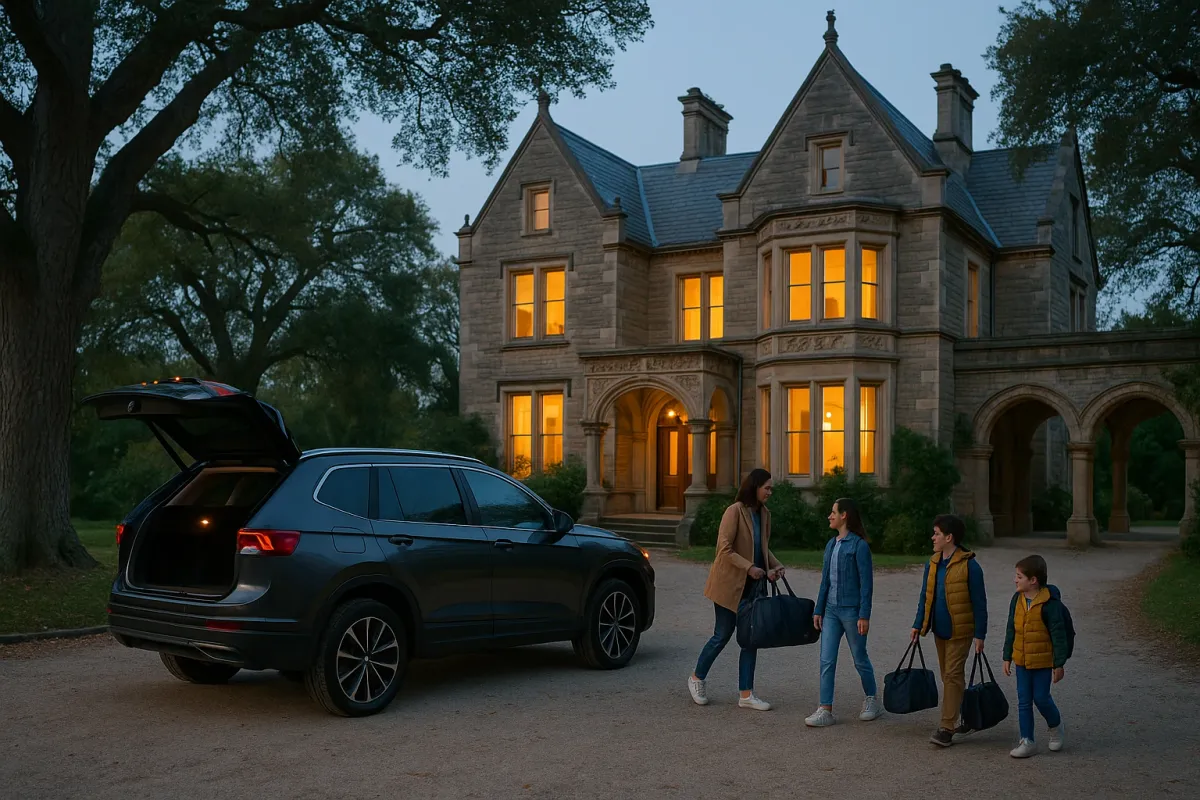
There is a reason we fall in love with beautifully preserved old houses. Sunlight on real wood, doors that close with a satisfying weight, craftsmanship you can feel rather than see. That same quiet, enduring quality is quietly reshaping the top tier of family SUVs right now—especially as design-conscious parents look for vehicles that feel less like gadgets and more like well-designed living spaces on wheels.
Inspired by the current fascination with historic craftsmanship—like the “Beautiful Old Houses” galleries trending this week—premium automakers are leaning hard into materials, ambiance, and long‑term livability. The result: a new generation of family SUVs that behave less like appliances and more like thoughtfully curated homes, built to be lived in every single day.
Below, five exclusive, design‑driven insights for families shopping the current crop of refined SUVs—whether you’re eyeing a Volvo XC90, BMW X5, Genesis GV80, or the latest three‑row entrants from Lexus and Mercedes‑Benz.
1. The New “Heritage” Luxury: Real Materials, Not Glossy Imitations
The same way those century‑old homes trending online captivate us with real wood floors and hand‑finished trim, today’s best family SUVs are stepping away from shiny plastic excess.
Look closely at current standouts like the Volvo XC90, Genesis GV80, and Mercedes‑Benz GLE. Their cabins use open‑pore wood with visible grain, matte metal accents, and leather (or high‑end synthetic alternatives) that feel more like a boutique lounge than a tech showroom. Families with young children will appreciate that these materials don’t just look expensive—they age gracefully. Minor scuffs on genuine wood and quality leather soften into patina; scratches on piano‑black plastic simply look damaged.
If you’re shopping now, run your hands across the door tops, the lower dash, and the back of the front seats—areas kids’ shoes and elbows will constantly find. Premium SUVs that prioritize durable, tactile surfaces in these “high‑contact” zones will feel more like a well‑kept house a decade from now, not a worn‑out appliance.
2. Light, Space, and Sightlines: Designing a “Great Room” on the Road
Trending photo series of old homes often linger on tall windows and rooms designed to capture natural light. That same instinct—prioritizing light and sightlines—is becoming a subtle but crucial differentiator in family SUVs.
Panoramic roofs are now almost expected in luxury‑leaning models like the Kia EV9, Hyundai Palisade Calligraphy, and BMW X7, but the best designs do more than add glass. They pair that openness with slim pillars, generous side windows, and clever seat heights to reduce the tunnel‑like feel that can trigger motion sickness and back‑seat grumpiness on longer drives.
When you test‑drive, sit in all three rows in the middle of the day. Can smaller children see out easily, or are they staring at headrests and headliners? Do you feel like you’re in a conservatory or a corridor? SUVs that echo the airy feel of beautifully windowed old homes—particularly Volvo’s EX90 and Lexus TX with their expansive glass and light interiors—tend to keep families calmer, quieter, and less fatigued on road trips.
3. The Return of “Built‑In” Craft: Hidden Practicality Over Flashy Tech
In the same way old houses reveal clever, built‑in storage under stairs or inside thick walls, the smartest new SUVs are shifting from ostentatious screens to thoughtful, almost invisible practicality.
Look at how the latest Range Rover, Audi Q7, and Acura MDX integrate storage: lidded compartments that disappear into the console, double‑hinged armrests that hide charging pads and device organizers, under‑floor cargo wells that swallow sports gear without visual clutter. These aren’t gimmicks; they’re the vehicular equivalent of a well‑planned mudroom.
Families should pay close attention to how “quietly useful” a cabin feels. Are USB‑C ports where your children actually sit, or only in the front? Are cupholders shallow afterthoughts or adjustable, rubberized, and solid enough for heavy stainless bottles? Can the third row fold flat with a single pull while you hold a toddler, or does it require a two‑handed choreography? Premium family SUVs worth their price will feel pre‑edited, as though a seasoned parent collaborated closely with the design team.
4. Acoustic Serenity: Why the Right Silence Feels Like Real Luxury
Step into a well‑built old home and close the front door; the outside world softens. The most sophisticated 2025 SUVs are chasing that same feeling, and for families, it matters more than any power number.
Models like the BMW X5, Genesis GV80, and Lexus RX and TX use laminated glass, sound‑deadening in the floor and firewall, and even active noise cancellation to create a calm, cocooned interior. That’s not just indulgence: a quieter cabin allows children to sleep more easily, reduces driver fatigue on school‑run traffic days, and makes conversations at highway speed feel civilized rather than strained.
On a test drive, turn off the audio system and simply listen. How much road texture do you hear on imperfect pavement? Do you have to raise your voice to speak to someone in the third row at 65 mph? Subtle differences in noise isolation are where “premium” genuinely reveals itself—and where families will feel the benefit every single day.
5. Timeless Layouts in a Rapidly Changing (Hybrid and EV) World
Those trending old houses impress not just because they’re beautiful, but because their layouts still work brilliantly for modern life: clear circulation, logical room placement, and spaces that adapt over decades. With electrification accelerating—three‑row EVs like the Kia EV9 and upcoming Volvo EX90 arriving as serious family contenders—families should look for that same sense of timelessness in an SUV’s interior architecture.
Ask yourself: Does the cabin feel like it will still suit your family five, eight, ten years from now, regardless of how screens, apps, or driver‑assist tech evolve? The most future‑proof SUVs anchor their innovation in classic proportions and flexible seating: upright, supportive chairs; a genuinely usable third row; and a cargo area that stays square and practical even with all three rows raised.
Whether you choose a plug‑in hybrid (BMW X5 xDrive50e, Volvo XC90 Recharge) or a full EV (Kia EV9, Mercedes‑Benz EQS SUV), prioritize a layout that behaves like a well‑planned home: clear zones for kids and adults, easy access to every seat, and storage that doesn’t vanish the moment you deploy the third row. Software can be updated; good architecture cannot.
Conclusion
As our collective attention turns to heritage homes and enduring craftsmanship, it’s no coincidence that the most desirable family SUVs now feel less like rolling gadgets and more like carefully considered living spaces. Real materials, luminous cabins, discreet practicality, and hushed refinement are no longer frivolous extras; they’re the new essentials for parents who spend countless hours on the road.
If you’re shopping right now, look beyond the spec sheets and screen sizes. Step into each SUV the way you might step into a beautifully restored old house. How does it feel? How does it sound? Can you imagine your family growing up in this space, year after year, without it feeling dated or tired?
The best family SUVs of this moment don’t shout their luxury. They whisper it—through every surface you touch, every quiet mile you drive, and every journey that ends with children fast asleep in the back, as if they’d never left home at all.
Key Takeaway
The most important thing to remember from this article is that this information can change how you think about SUV Reviews.