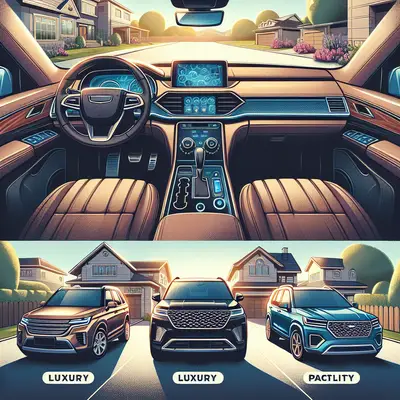
For families who value composure over flash and thoughtfulness over trend, the right SUV is less a status symbol and more a quietly capable partner. Beyond horsepower figures and screen sizes lies a more nuanced question: how does this vehicle delicately improve the rhythm of your family’s day? The difference often emerges in refined, almost invisible features—those that prevent friction, preserve calm, and make every departure feel marginally more graceful.
This guide explores five exclusive, often-overlooked insights that sophisticated families should seek out when considering their next SUV. These are not the headline options in the brochure, but the elegant, real-world enhancements that are felt more than seen.
Insight 1: Cabin Architecture That Respects Personal Space
Families quickly learn that “roomy” is not the same as “well-designed.” A truly family‑focused SUV respects physical and emotional boundaries, arranging space in a way that diffuses tension before it begins.
Look for second and third rows with sliding and reclining functionality rather than fixed benches. Independent fore‑aft adjustment allows older children to negotiate their own space, while reclining backrests make longer drives less fatiguing. Pay attention to how easily the third row can be accessed without dismantling child seats—side steps, wide door openings, and smart seat-tilt mechanisms can turn a daily struggle into a single smooth gesture.
Cabin architecture should also acknowledge that not every passenger wants to share the same temperature, lighting, or entertainment. Tri- or quad-zone climate control, subtly placed rear controls, and ceiling-mounted vents spread air more gently than aggressive dash vents. Thoughtful ambient lighting in rear rows reduces harshness at night and makes reading or quiet play possible without disturbing the driver.
Ask yourself: can everyone, from toddler to grandparent, sit in their preferred way without negotiation? When the answer is yes, the entire vehicle feels calmer—and notably more luxurious.
Insight 2: Storage That Anticipates, Rather Than Reacts
Refined family SUVs solve the “where does this go?” problem without forcing you to think about it. Instead of one cavernous boot and a few token door bins, the best designs incorporate layered storage: shallow trays for devices, deep wells for larger items, discreet compartments for valuables, and flexible cargo systems that adapt to the moment.
Focus on three dimensions of storage:
- Immediate access: Covered center-console organizers for everyday essentials—tissues, sanitizer, sunglasses, charging cables—should be reachable without contortion. Door pockets that comfortably fit large water bottles keep the cabin decluttered and hydrated.
- Transition zones: Families live between destinations: school drops, sports, music lessons, weekend escapes. Look for underfloor cargo storage to hide backpacks or laptops, integrated grocery bag hooks to prevent spills, and low, wide load sills that make strollers and luggage feel weightless to load.
- Discreet security: Lockable gloveboxes, hidden compartments in the cargo floor, or secure areas behind retractable cargo covers add peace of mind when you must leave valuables in the car. This is less about paranoia and more about quietly maintaining your standards wherever you park.
A clever test during a test drive: mentally “live” a full weekday—school drop-off, work, market, activities—and map where each item would naturally go. If the SUV supports that routine without improvisation, you’ve found storage design that genuinely anticipates your life.
Insight 3: Technology That Serves, Then Disappears
In a premium family SUV, technology should feel like an intuitive extension of your habits, not a complicated new system to manage. The goal is not to impress passengers with screen real estate but to minimize distraction, friction, and repetition.
Look for interfaces that favor clarity over clutter: clean menus, tactile knobs for essential functions, and quick access to climate, navigation, and audio without wading through submenus. Wireless Apple CarPlay and Android Auto, multiple USB-C ports across all rows, and well-placed device trays with integrated charging pads turn tech from a source of conflict into a shared resource.
Driver-assistance features deserve particular scrutiny. Systems such as adaptive cruise control, lane-centering assistance, and traffic-jam assist can reduce fatigue on monotonous routes, but refinement matters. The most elegant executions behave predictably, engage and disengage smoothly, and allow you to customize sensitivity and alerts. Overly intrusive beeps and harsh corrections add stress; nuanced feedback and subtle haptic alerts feel like an invisible co-pilot.
Finally, consider software longevity. Over-the-air update capability means your SUV can quietly improve over time—bug fixes, new features, and refined algorithms—without a dealership visit. In a world where tech ages quickly, this is the difference between a cabin that slowly dates itself and one that gracefully keeps pace.
Insight 4: Sound, Ride, and the Art of Arriving Unruffled
For families, true luxury is often measured not in the number of cylinders but in how everyone feels when they step out of the vehicle. Do passengers emerge slightly drained, or quietly restored? Two details are critical here: sound management and ride quality.
The most sophisticated family SUVs employ a suite of techniques—acoustic laminated glass, generous insulation, well-sealed doors, and tuned suspension components—to keep harshness at bay. You are not seeking silence for its own sake, but a curated soundscape: the gentle murmur of conversation, high-quality audio at reasonable volumes, and road noise that fades into the background.
Ride quality is equally nuanced. Overly soft suspensions may initially feel plush but can induce motion sickness in sensitive passengers and feel unsettled at speed. Overly firm setups can send every pothole into the cabin. The ideal is a measured composure: controlled body movements, minimal head toss, and enough compliance to flatten speed bumps and rough patches without float.
If available, test adaptive or air suspension systems on your actual driving routes—suburban streets, highways, and imperfect city roads. Combine this with a quiet-cabin test: lower the volume, drive at your usual speed, and simply listen. If the vehicle encourages softer voices and unhurried conversation, it is likely engineered with a more refined family experience in mind.
Insight 5: Entry, Exit, and Everyday Grace Notes
The most exclusive family SUV features are often the ones no one notices—because they prevent small daily irritations from ever arising. These quiet “grace notes” rarely make the brochure headlines, yet they shape how you feel about the vehicle a year or two into ownership.
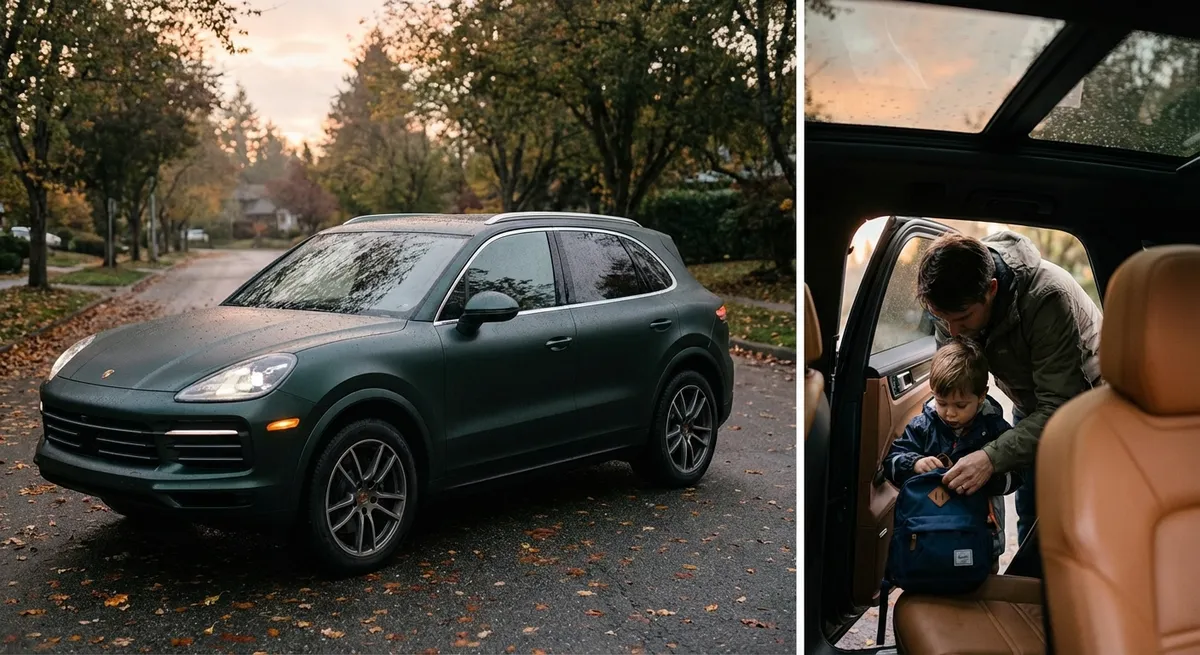
Begin with entry and exit. Door geometry, step-in height, and handle placement determine whether grandparents can enter without strain and children can climb in without climbing over. Wide-opening rear doors, grab handles placed at natural reach points, and third-row access that doesn’t require dismantling the cabin are subtle markers of thoughtful engineering.
Examine the tailgate experience. A hands-free power liftgate that responds predictably (not after an awkward dance under the bumper), a cargo area that lowers slightly for easier loading, and quick-folding rear seats—ideally via side-mounted or cargo-area controls—make everything from grocery runs to weekend trips feel smoother.
Then consider the small but telling details: rear sunshades integrated into the doors instead of inexpensive clip-ons; high-quality, easy-to-clean materials that still look elegant after repeated spills; soft-close storage lids that avoid jarring slams at night; gentle, configurable welcome and farewell lighting that guides you to and from the car in low light without ostentation.
These elements are not about opulence; they are about maintaining a certain standard of ease and composure in the middle of real family life. Over time, they are what make an SUV feel not simply purchased, but properly chosen.
Conclusion
For discerning families, the true value of an SUV is revealed not in a showroom spec sheet but in the almost invisible ways it improves daily life. Cabin architecture that respects personal space, storage that anticipates your routine, technology that gracefully recedes into the background, a calm and composed driving experience, and everyday grace notes that smooth each transition—together, these define a genuinely premium family vehicle.
As you explore your options, look beyond the obvious badges and headline features. Sit in every row. Simulate your weekday rhythm. Listen, rather than merely look. The SUV that best supports your family’s quiet routines will be the one that continues to feel quietly luxurious long after the initial novelty fades.
Sources
- National Highway Traffic Safety Administration (NHTSA) – Vehicle Shopping Tips - Offers guidance on evaluating vehicles for safety and usability, including practical considerations for families.
- Insurance Institute for Highway Safety (IIHS) – Ratings & Vehicle Selection - Provides safety ratings and insights that complement a refined feature-focused evaluation.
- Consumer Reports – Guide to Car Interior Comfort and Seating - Discusses seat comfort, access, and ergonomics that directly affect family usability.
- Edmunds – Family Car Buying Guide - Covers practical family-focused considerations, including seating, storage, and kid-friendly features.
- U.S. Department of Energy – Fuel Economy and Vehicle Technology - Explains modern vehicle technologies and efficiencies that intersect with family SUV choices and long-term ownership.
Key Takeaway
The most important thing to remember from this article is that this information can change how you think about Family Features.