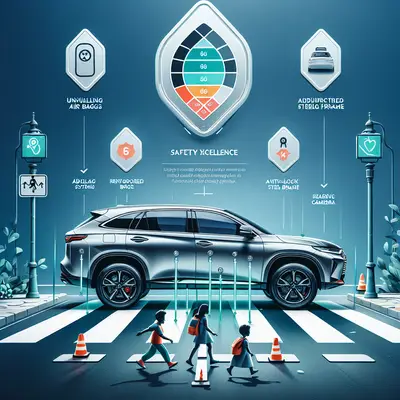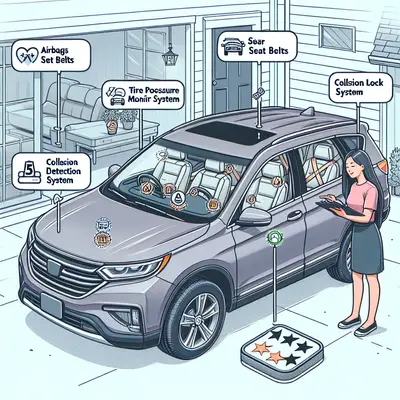
For many families, a new SUV is less a purchase and more a long-term partnership. Yet even highly educated buyers often treat safety ratings as a simple scorecard: five stars good, four stars... acceptable. In reality, those polished numbers conceal a deeper narrative about engineering priorities, subtle trade-offs, and how an SUV will behave in moments that matter most.
This guide is designed for families who appreciate nuance. We’ll stay well beyond marketing slogans and explore how to interpret safety ratings with the same discernment you bring to choosing a school, a neighborhood, or a financial advisor—quietly, confidently, and with an eye toward long-term peace of mind. Along the way, you’ll find five exclusive insights that distinguish a merely safe SUV from a thoughtfully engineered family sanctuary.
Why “Five Stars” Is Only the Opening Line
A five-star rating feels definitive, but it’s actually a summary of layered tests, weightings, and assumptions about how you and your family will use the vehicle. Two SUVs can both wear a perfect overall rating and yet behave very differently in specific crash scenarios.
Modern safety programs—such as the U.S. National Highway Traffic Safety Administration (NHTSA) and the Insurance Institute for Highway Safety (IIHS)—evaluate not just how well an SUV survives an impact, but how well it helps you avoid that impact in the first place. This means crash avoidance technology is now considered alongside traditional crashworthiness measures like structural integrity and airbag performance.
For families, the subtlety lies in where the strengths reside. An SUV might excel in frontal impacts but show vulnerabilities in side tests. Another might feature impeccable headlight performance, significantly improving night driving safety—a detail many overlook. Think of the overall rating as the headline; the real story begins when you examine individual test categories and how they relate to your family’s routine: school runs, suburban commutes, weekend highway drives, and occasional long-distance travel.
Insight 1: The Side-Impact Story Behind Those Polished Doors
Side-impact and side-pole tests are among the most revealing for family SUVs, especially if you live in an urban or densely populated suburban area where intersections and parking lots present constant lateral risk. When another vehicle—or a fixed object like a pole—intrudes directly into the passenger cell, there is little “crumple zone” to absorb energy. This is where structural design, door reinforcements, and side-curtain airbags either quietly excel or quietly fail.
A discerning family should look beyond the overall rating to side-impact and side-pole performance, paying attention to how well rear-seat occupants are protected. Ratings for torso and head injury in side tests can differ between rows, and family life rarely keeps everyone in the front seat. If a brand publishes specific injury metrics or color-coded diagrams, those can be revealing, especially for children in booster seats.
This is also the domain where luxury-leaning family SUVs justify their premiums. Reinforced B-pillars, advanced high-strength steel usage, and multi-stage side-curtain airbags that remain inflated longer in a rollover or extended side event are hallmarks of meticulously engineered cabins. When comparing models, prioritize those that pair strong side ratings with robust rear-occupant protection—even if both vehicles share the same overall star count.
Insight 2: The Child Seat Compatibility You Won’t See in a Star Rating
Safety ratings assume a properly restrained occupant, but very few families live in a world of textbook-perfect child-seat installs. This is where specialized evaluations like the IIHS LATCH (Lower Anchors and Tethers for Children) ease-of-use ratings become a sophisticated buyer’s secret weapon.
LATCH ratings examine how accessible the anchors are, how deeply buried they sit within the cushions, and how intuitive the overall setup feels. An SUV can ace crash tests yet make daily life frustrating—and risk-prone—if you find yourself wrestling with anchors, pushing aside bulky leather bolsters, or improvising when tether routes are poorly explained.
For families with multiple children, these nuances compound. A model that earns top ratings for LATCH usability often features clearly labeled anchors, wide access even with premium upholstery, and thoughtful placement that preserves comfort for adults on either side. In practice, that means car seats that are more likely to be installed correctly, more often—arguably one of the most genuine forms of real-world safety.
When shopping, cross-reference crash ratings with LATCH scores and then confirm in person: bring your actual child seat to the test drive, install it yourself, and pay attention to how the cabin supports your routine. A refined family SUV doesn’t just protect children in theory; it makes proper protection easy, repeatable, and dignified.
Insight 3: Headlights and Nighttime Vision—The Understated Guardian
Many families focus on airbags and crash metal, but a significant share of severe collisions happens in low-light conditions. This is where headlight performance steps out of the shadows as an undervalued safety differentiator, especially for evening school events, winter commutes, or late-night airport runs.
IIHS headlight evaluations reveal striking gaps between SUVs that appear similar on paper. A vehicle with “Good” headlight ratings typically offers a wider, more consistent beam, better illumination on curves, and less glare for oncoming traffic. This translates directly into earlier hazard detection—pedestrians stepping off curbs, wildlife on rural roads, or a suddenly stopped vehicle ahead.
Sophisticated SUVs often integrate adaptive or matrix LED systems that adjust their pattern based on steering angle, speed, and surrounding traffic. Even if your region restricts full matrix functionality, the underlying hardware usually delivers superior clarity and beam precision. When reading safety data, treat headlight ratings as an essential line item, not a footnote. For families who regularly drive after dark, this single element may quietly influence safety more than an additional optional airbag.
Insight 4: Active Safety Tech—From Gimmickry to Genuine Safeguard
“Advanced driver-assistance systems” (ADAS) often blur into marketing theater, but major testing bodies now differentiate between basic collision alerts and truly effective crash prevention technology. Systems like automatic emergency braking (AEB), pedestrian detection, lane-keeping assistance, and adaptive cruise control are increasingly factored into safety awards and top-tier ratings.
The nuance lies in execution and availability. Some SUVs receive higher ratings because their most advanced features are standard across all trims, not locked behind premium packages. For a family buyer, this matters: safety that only exists on a top-spec configuration is, in practice, safety that many owners may never access.
When reviewing safety ratings, look specifically for references to:
- Vehicle-to-vehicle and vehicle-to-pedestrian AEB testing
- Lane departure prevention rather than merely lane departure warning
- Performance at higher speeds (relevant for highway use) as well as low-speed urban scenarios
Premium-focused SUVs often integrate smoother, less intrusive ADAS tuning, which encourages consistent use instead of tempting owners to switch features off. During a test drive, engage these systems and note how natural they feel. A genuinely refined family SUV doesn’t nag—it anticipates, supports, and blends its interventions into your driving style.
Insight 5: Roof Strength, Rollovers, and the Confidence of a Solid Shell
For families with roof boxes, bikes, or a preference for taller vehicles, roof strength and rollover ratings deserve far more attention than they typically receive. While rollovers are less common than frontal crashes, they can be particularly severe—especially for vehicles with a higher center of gravity, such as three-row SUVs.
IIHS roof strength tests evaluate how much force the roof structure can withstand relative to vehicle weight. A stronger roof reduces the risk of significant intrusion into the passenger compartment if the SUV ends up on its side or roof. Meanwhile, NHTSA’s rollover resistance ratings model how likely a vehicle is to tip in severe maneuvers, factoring in geometry and weight distribution.
The most thoughtfully engineered family SUVs combine robust roof strength with electronic stability control tuning that gracefully manages emergency inputs. Look for strong roof strength scores, minimal structural deformation in published crash photos or videos, and a rollover rating that reflects both design and software sophistication. When the vehicle’s roof is also tasked with carrying family gear, the peace of mind that comes from a robust upper structure becomes more than theoretical—it becomes part of how confidently you travel.
Bringing It All Together: Curating a Safety Profile, Not Just a Score
Selecting a family SUV through the lens of safety is less about chasing the highest single number and more about curating a profile that matches your life. Start with credible institutional ratings, then refine your shortlist by layering the subtleties:
- Confirm strong side-impact performance with special attention to rear-occupant protection.
- Pair high crash scores with excellent LATCH usability for real-world child safety.
- Insist on top-tier headlight ratings if your routine includes frequent night driving.
- Favor SUVs whose active safety features are standard, well-tuned, and thoroughly tested.
- Ensure robust roof strength and stable rollover ratings, especially for taller or three-row models.
In the end, the safest SUV for your family is not simply the one with the most awards; it is the one whose invisible engineering choices align intimately with the way you live, drive, and travel together. When you approach safety ratings with the same quiet precision you bring to other important decisions, you transform a showroom figure into something far more meaningful: a considered investment in calm, confident miles ahead.
Sources
- [National Highway Traffic Safety Administration (NHTSA) 5-Star Safety Ratings](https://www.nhtsa.gov/ratings) - Official U.S. government crash test results, rollover ratings, and explanations of test procedures
- [IIHS Vehicle Ratings – Crashworthiness, Crash Avoidance & Headlights](https://www.iihs.org/ratings) - Detailed safety ratings including small overlap tests, headlight performance, and LATCH ease-of-use evaluations
- [IIHS – Child Seat Anchors (LATCH) Ease-of-Use Ratings](https://www.iihs.org/ratings/child-seat-anchors-latch) - In-depth assessments of how easily and correctly car seats can be installed in various vehicles
- [U.S. Department of Transportation – Rollover Prevention and ESC](https://www.transportation.gov/mission/safety/electronic-stability-control-esc) - Background on electronic stability control and its role in reducing rollover risk
- [SaferCar – NHTSA Consumer Safety Information](https://www.safercar.gov) - Consumer-focused guidance on understanding vehicle safety technologies and ratings
Key Takeaway
The most important thing to remember from this article is that this information can change how you think about Safety Ratings.