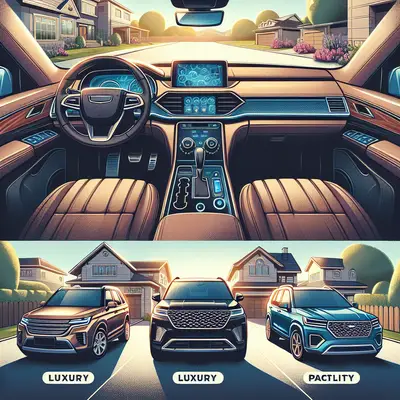
Family SUVs have evolved far beyond simple people-movers. For discerning families, the right vehicle is less about spectacle and more about how intelligently it supports real life: school runs that run on time, long drives that don’t feel long, and cabins that remain calm even when the day is not.
This is where thoughtful family features matter most—not the ones that shout in the brochure, but the ones that quietly work in the background, every single day. Below are five exclusive, often-overlooked insights that can genuinely transform your experience behind the wheel.
1. The “Third-Row Reality Check”: Access, Not Just Capacity
Many SUVs boast three-row seating, but the lived experience of using that third row varies dramatically. For families, the difference between “technically seats seven” and “comfortably moves seven” is huge.
Look beyond the spec sheet and focus on how gracefully passengers can actually reach the third row. Models with true “tilt-and-slide” second-row seats—especially those that slide forward even with a child seat installed—offer a much more elegant daily rhythm. Wide rear door openings, low step-in heights, and generous grab handles make a tangible difference for grandparents, pregnant parents, and kids with backpacks and instruments in hand.
Third-row comfort also depends on vertical space and seat contouring. Flat cushions with raised floor levels push knees uncomfortably high on longer trips. A slightly reclinable third row with proper thigh support, dedicated USB outlets, and individual air vents turns the “back-back” into a genuinely usable space, not a last resort for short rides.
In short, treat the third row like prime real estate. Spend time sitting there—your future self (or your tallest teenager) will thank you.
2. Cabin Calm: The Understated Power of Acoustic Design
For families, true luxury inside an SUV is often measured in decibels. A serene cabin makes it easier to hold a conversation with row three, soothe a fussy toddler, or enjoy a podcast without turning the volume up to “road trip” levels.
Premium family SUVs now leverage sophisticated acoustic engineering: laminated side glass, additional insulation in the firewall and floor, properly tuned door seals, and even aerodynamic mirror designs that reduce wind noise. It’s the difference between arriving drained and arriving composed.
When you test drive, pay attention not only to engine and wind noise but also to subtle vibrations that can cause fatigue over time. Notice how the vehicle behaves on coarse pavement or at highway speeds with crosswinds. A quiet, well-damped cabin doesn’t just feel upscale; it also supports better communication between rows, lowering the cognitive load on the driver.
For families who spend hours a week on the road, this kind of “cabin quiet” isn’t a luxury—it’s a form of wellness.
3. Smart Storage That Respects Real Life (Not Just Luggage)
Cargo volume numbers look impressive on a spec sheet, but what truly matters is how that space is shaped and how cleverly it’s divided. Distinctly family-friendly SUVs treat storage as a design philosophy, not an afterthought.
Look for multi-level cargo floors that can hide valuables or organize sports gear, strollers, and grocery bags without creating a jumble. Side cubbies, underfloor compartments, and hooks that actually hold full grocery bags all contribute to a tidier daily experience. A power tailgate is convenient; a hands-free, foot-activated one is transformative when you’re juggling a sleeping toddler and armfuls of supplies.
Inside the cabin, pay close attention to “micro-storage”: a wireless charging pad that actually holds a phone securely through a turn, door bins that can handle large water bottles, and a center console deep enough for the inevitable collection of snacks, hats, chargers, and wipes. Thoughtful SUVs often offer a blend of open trays (for everyday essentials) and closed compartments (to keep visual clutter down).
The best designs anticipate the mess that comes with family life—and give it an elegant place to disappear.
4. Climate, Comfort, and the Art of Keeping Everyone Happy
Cabin comfort is no longer just about “front seat versus back seat.” High-end family SUVs are increasingly sophisticated in how they manage temperature, airflow, and individual preferences across three rows.
Tri-zone (or even quad-zone) climate control with dedicated rear controls allows older kids and adult passengers to fine-tune their environment without constant requests to the driver. Look for roof-mounted vents that distribute air both forward and backward, rather than only at knee level—this keeps the cabin more evenly tempered and helps child seats cool down faster in summer heat.
Seat design matters here as well. Supportive cushioning with gentle bolstering reduces fatigue on long journeys, while ventilated seats in the front (and in some models, the second row) can dramatically improve comfort in warmer climates. Heated steering wheels and rear seats are more than indulgences; they make cold, early-morning school runs noticeably more pleasant and help everyone settle in without complaints.
Subtle touches—like rear sunshades integrated into the doors, a dark headliner that reduces perceived glare, and UV-reducing glass—collectively create a space that feels cocooned, intentional, and genuinely restful.
5. Integrated Tech That Enhances Focus, Not Chaos
Family SUVs are technology-rich environments now, but the true mark of a refined vehicle is how gracefully that tech disappears into the background. The best experiences prioritize clarity over complexity.
Start with the basics: wireless Apple CarPlay/Android Auto, multiple fast-charging USB-C ports, and a responsive, intuitive central touchscreen. Then, look at how the vehicle supports the driver’s mental clarity. A head-up display projecting speed and navigation reduces the need to glance away from the road. Physical controls for high-use functions—temperature, volume, defrost—are often safer and more intuitive than burying everything in touch menus.
For families, rear-seat tech can either calm or clutter. Built-in rear entertainment systems with simple interfaces and individual headphones can reduce disputes over content—but so can thoughtful screen-mirroring options that let you leverage the devices your children already use. Consider vehicles that include “driver talk” or cabin intercom features, allowing you to speak gently to the third row without raising your voice.
Most importantly, evaluate how all of this feels in motion. Does the interface demand your attention, or does it quietly support your awareness of the road and your passengers? In a truly well-designed family SUV, the technology is a discreet concierge, not a constant distraction.
Conclusion
For families shopping in today’s SUV market, the difference between “good enough” and genuinely exceptional often lies in details that don’t always headline the marketing materials.
Third-row usability, acoustic refinement, smart storage, sophisticated climate comfort, and thoughtfully integrated technology each contribute to a vehicle that not only looks impressive in the driveway, but also supports your family’s real routines with grace and composure.
When you step into your next SUV, consider not only how it drives, but how it feels to live with—on hurried mornings, quiet late-night returns, and everything in between. That is where true family-focused luxury quietly reveals itself.
Sources
- Insurance Institute for Highway Safety (IIHS) – Vehicle Evaluations - Provides detailed crash test results and notes on vehicle structure and design that influence real-world family safety and comfort.
- National Highway Traffic Safety Administration (NHTSA) – 5-Star Safety Ratings - Offers official U.S. government safety ratings and information on features such as LATCH ease-of-use and occupant protection.
- Consumer Reports – Guide to Car Seat and Third-Row Access - Explores how different vehicles accommodate child seats and discusses practical access to second and third rows.
- Edmunds – Car Noise Levels and Cabin Quietness - Analyzes how manufacturers reduce cabin noise and why quieter interiors matter for driver focus and passenger comfort.
- U.S. Department of Energy – Fuel Economy and Vehicle Size Considerations - Provides fuel economy data and explains how vehicle design and configuration impact efficiency, useful when comparing family SUVs.
Key Takeaway
The most important thing to remember from this article is that this information can change how you think about Family Features.