For families who value substance over spectacle, choosing an SUV is less about hype and more about how gracefully a vehicle supports real life. School runs, late flights, weekend escapes, and the occasional cross-country drive all ask one essential question: does this SUV make family life feel calmer, easier, and more considered?
Beneath the brochures and glossy photography, there are details that reveal how thoughtfully an SUV has been engineered for family use. When read carefully, reviews can uncover these subtleties—if you know exactly what to look for.
Below are five exclusive, often-overlooked insights that can quietly transform the way you interpret SUV reviews and, ultimately, how satisfied you feel long after the test drive is over.
1. The “Second Row First” Test: Where Real Comfort Actually Lives
Most reviews begin with power figures or technology, yet families live in the second row. A sophisticated reading of SUV reviews starts by asking: how seriously does this model take its middle seats?
Look for reviewers who measure and comment not just on legroom, but on thigh support, headroom with and without a panoramic roof, and the angle of seatbacks over longer journeys. Reviews that highlight independent sliding and reclining seats, three proper child-seat anchor points (not just two), and flat, wide cushions typically indicate a vehicle engineered with family use at the forefront rather than as an afterthought.
Also pay attention to how reviewers describe entry and exit. Phrases like “wide-opening rear doors,” “sill height that doesn’t catch your calves,” and “easy to access third row without dismantling child seats” are powerful markers of usability. For multi-child families, these details matter more than a few horsepower on paper.
2. Cabin Acoustics: The Invisible Luxury in Everyday Driving
True refinement in a family SUV is often heard—or rather, not heard. Beyond simple comments such as “quiet cabin,” the most insightful reviews will specify what kind of noise intrusion they observed and when.
Notice whether the review differentiates between wind noise around the mirrors, tire roar on coarse asphalt, and engine sound at urban speeds versus highway cruising. Premium models often employ laminated glass, additional body sealing, and active noise-cancellation systems, and well-written reviews will call these out explicitly. This is not just about luxury; it is about fatigue reduction on longer journeys, improved back-seat conversations, and a calmer environment for sleeping children.
If a reviewer mentions having a normal-volume conversation in all three rows at highway speeds, or notes that rear passengers are less exposed to road noise from the wheel wells, that’s a strong indicator of engineering that quietly but profoundly improves family life on the move.
3. Climate Control Subtleties: Comfort That Reaches Every Seat
Many specifications simply list “tri-zone climate control” and move on, but families experience air, not bullet points. When reading SUV reviews, focus on how the system behaves, not just what it’s called.
Insightful reviewers will mention the location of rear vents—are they only at the back of the center console, or also in the B-pillars and ceiling for third-row passengers? This matters hugely in climates with extreme heat or cold. Look for observations about how quickly the cabin reaches a comfortable temperature, whether rear passengers can independently adjust their own settings, and if airflow remains consistent on longer drives.
Subtler still, some SUVs offer humidity sensors, air-quality filtration, or pre-conditioning via a connected app. When a review notes that the cabin can be pre-cooled or pre-heated before you even buckle in the children, that’s a level of everyday refinement that can turn hectic school mornings into a more composed ritual.
4. Tech That Calms, Not Clutters: The Difference Between Gimmick and Grace
Modern SUV reviews often dwell on screens and software, but families benefit most from technology that quietly supports them. A sophisticated reading of tech commentary looks for signs of restraint and clarity rather than raw feature lists.
Pay attention to how reviewers describe menu depth, responsiveness, and the presence of physical controls for high-frequency functions like temperature, audio volume, and defrost. When reviewers praise “intuitive, glanceable icons” or “minimal steps to adjust essentials,” they are indirectly describing a safer, calmer experience—especially with children in the back demanding attention.
Also note whether review tests mention the effectiveness of voice control, profile-based seat and climate memory, and wireless smartphone integration that simply works without constant re-pairing. Technology should lower the cognitive load of driving with a family, not increase it. Reviews that point out clean, low-latency interfaces and reliable driver-assistance features (such as adaptive cruise and lane centering that feel natural rather than “twitchy”) are highlighting the difference between digital clutter and digital composure.
5. The Luggage Reality Check: How Reviews Reveal True Usable Space
Cargo volume is usually stated in liters or cubic feet, but families live in strollers, suitcases, sports bags, and grocery runs—not abstract measurements. The most helpful reviews translate numbers into real-world scenarios.
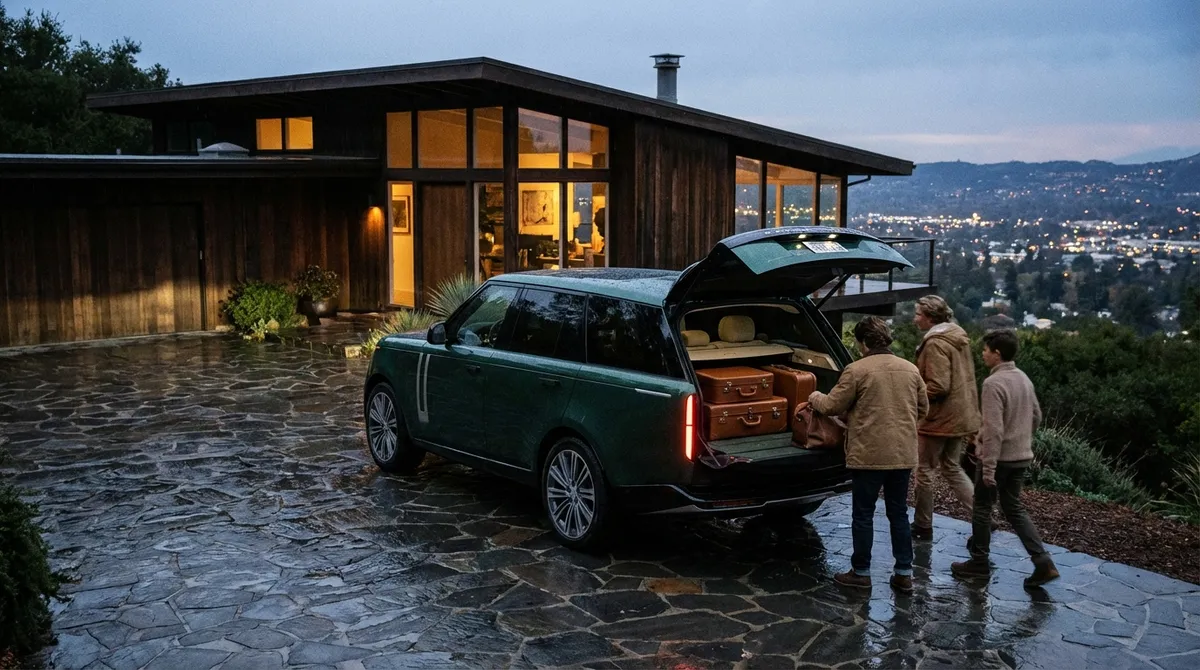
Look for reviewers who reference whether a full-size stroller fits lengthwise without removing wheels, if a week’s worth of luggage for four or five is possible with the third row in use, or whether the floor remains flat when seats are folded. Pay attention to mentions of underfloor storage (ideal for valuables, emergency kits, or muddy shoes) and whether the cargo opening is square and low, which matters when lifting heavier items or helping a tired child step in.
More nuanced reviews will mention powered tailgates with adjustable opening height (a quiet advantage in low garages), one-touch seat releases from the cargo area, and bag hooks or side pockets that prevent items from rolling around. These are understated yet deeply meaningful indicators that an SUV has been shaped with actual family logistics in mind.
Conclusion
For discerning families, an SUV is more than a vehicle—it is a moving extension of home. The most valuable insights often lie not in headline specifications, but in the details of how that vehicle treats its passengers, mitigates fatigue, and simplifies complex days.
When reading SUV reviews through the lens of second-row priority, cabin acoustics, nuanced climate comfort, calming rather than cluttered technology, and genuinely usable cargo space, you begin to see a clearer distinction between SUVs that merely transport and those that quietly elevate every journey.
The right choice rarely announces itself loudly. It reveals itself in the way your family arrives—less tired, less stressed, and more willing to say, “Let’s stay on the road a little longer.”
Sources
- National Highway Traffic Safety Administration (NHTSA) - Official U.S. safety ratings and guidance on evaluating vehicle safety features for families
- Insurance Institute for Highway Safety (IIHS) – Ratings - Independent crash-test data and headlight, crash-avoidance, and LATCH evaluations that inform SUV reviews
- Consumer Reports – SUV Buying Guide - In-depth road tests and owner satisfaction data, including noise, comfort, and usability insights
- Edmunds – Car Reviews & Ratings - Expert and consumer reviews detailing real-world usability, tech, and cargo practicality of modern SUVs
- Kelley Blue Book – Family Car Buying Advice - Guidance and comparisons focused on family-oriented features, space, and day-to-day livability
Key Takeaway
The most important thing to remember from this article is that this information can change how you think about SUV Reviews.