Family SUVs are often discussed in terms of size, price, and safety ratings. Yet for many discerning families, the true luxury lives in the details you barely notice once you drive away—because they simply work. The most thoughtfully designed family features are not the flashy add-ons in the brochure, but the quiet enablers of calm school runs, elegant road trips, and seamless weekly routines.
This is where the right SUV stops being a “family hauler” and becomes an understated, highly functional extension of your home—organized, welcoming, and surprisingly serene.
Below are five exclusive, nuanced insights that matter deeply once you actually live with an SUV every day, but rarely get top billing in conventional reviews.
Insight 1: The Art of “Invisible” Cabin Organization
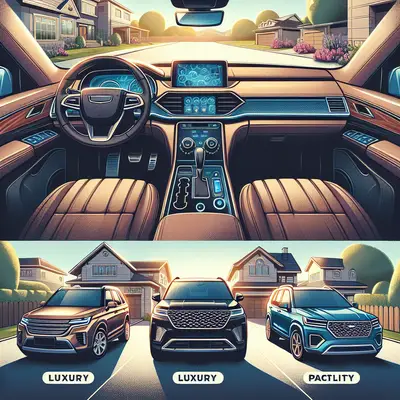
The difference between a car that feels perpetually cluttered and one that feels composed often comes down to storage that disappears into the design. It is not about having the most cupholders or the largest center console; it is about storage that anticipates how families actually move through their week.
Look for door pockets that can gracefully accommodate a reusable water bottle upright rather than forcing it to roll across the floor. Seek out underfloor cargo bins that can hide sports gear, picnic blankets, or emergency kits instead of leaving them to slide around in view. Subtly integrated hooks behind the seats for backpacks or grocery bags prevent everything from becoming a jumble on the floor, and built-in organizers or configurable dividers in the cargo area let you separate “everyday” items from “just in case” essentials.
Premium family SUVs increasingly borrow from high-end interior design: shallow trays for phones and keys lined with soft, non-slip materials; cleverly positioned slots for tablets or slim laptops; and discretely covered storage near the second row so children can access snacks or toys without turning the cabin into a visual avalanche. The families who feel most at ease in their vehicles are often the ones whose SUVs help them stay organized without shouting about it.
Insight 2: Cabin Calm as a Family Wellbeing Feature
Noise, harsh ride quality, and poor climate control are more than mild annoyances; they shape the emotional climate inside the car, especially with children. A considered family SUV treats ride comfort and tranquility as wellbeing features, not luxuries.
Pay attention to the refinement of the suspension rather than just the headline wheel size or ground clearance. A sophisticated suspension setup that softens sharp impacts yet keeps the body composed is the difference between a car that leaves everyone slightly fatigued after a long drive and one that feels genuinely restorative. Listen for road and wind noise at highway speeds—families often underestimate how tiring a subtly noisy cabin can be over time.
Dual- or tri-zone climate control is especially valuable when you have children with different temperature preferences in the second or third row. Thoughtful vent placement—ideally at face level for rear passengers rather than only from the floor—helps reduce complaints and motion sickness. Some high-end models incorporate air filtration and cabin air quality monitoring; for urban families or those with allergies, that is not a frivolity but an investment in comfort and health.
Ultimately, a calm cabin keeps everyone’s shoulders a little lower, voices a little softer, and journeys a little more enjoyable. In a family context, that is priceless.
Insight 3: Third-Row Use Without a Production
Many family SUVs advertise three-row seating, yet only a smaller fraction make that third row genuinely usable on a regular basis. The distinction lies in how gracefully the cabin adapts when you need to bring along extra people, gear, or both—without turning every departure into a logistical event.
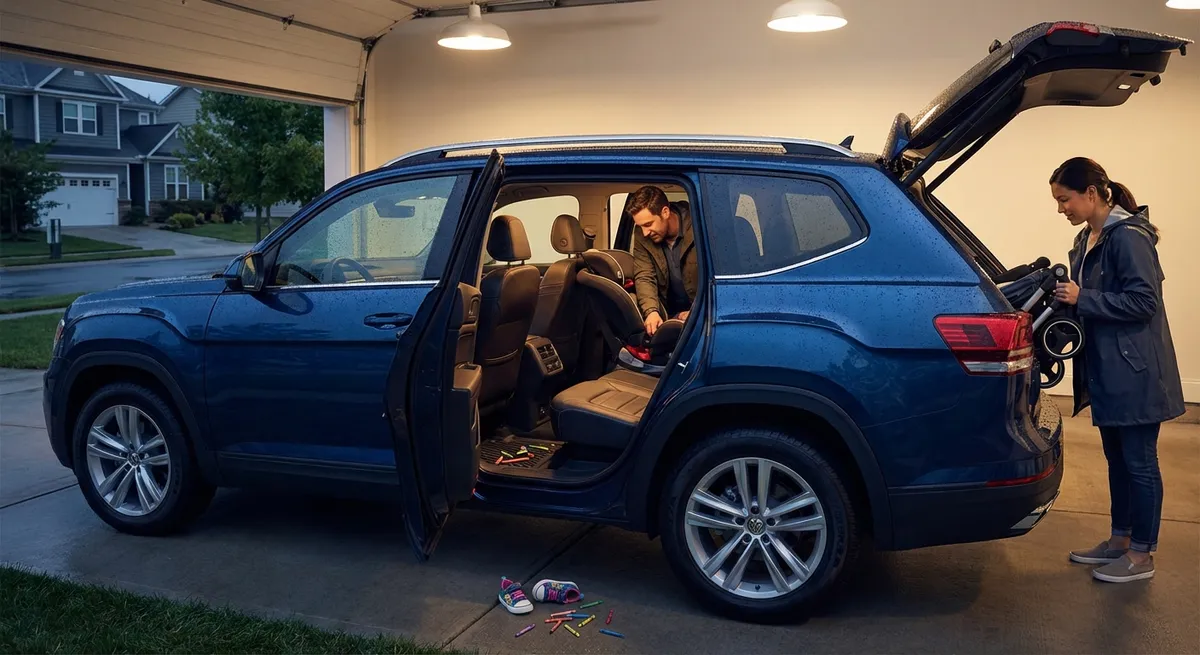
If you anticipate using a third row more than occasionally, evaluate how adults fit back there, not just children. Check for toe room under the second-row seats, reasonable hip and shoulder space, and whether the roofline eats into headroom. Critically, examine the access pathway: a one-touch slide-and-tilt function for the second row—ideally usable even with a child seat installed on the opposite side—simplifies school carpools and multi-generational outings.
Cargo volume with the third row in place is where many families feel let down. Look for an SUV that still offers meaningful space for a weekly grocery run or several small suitcases when all seats are occupied. Rear load height matters as well; a low, wide opening makes it far easier to lift strollers, travel cribs, or sports equipment in and out without awkward angles.
The most refined family SUVs treat the third row not as a marketing checkbox, but as a flexible, thoughtfully integrated part of the cabin—ready when you need it, unobtrusive when you do not.
Insight 4: Charging, Screens, and the Gentle Management of Tech
Families today travel with an ecosystem of devices: phones, tablets, portable game systems, wireless headphones. The difference between technology enhancing the journey and dominating it often comes down to a few highly considered features.
Begin with power. Multiple USB-C and USB-A ports across all rows, including some positioned higher up rather than near the floor, make it easier to keep devices charged without a tangle of cables crossing the cabin. Wireless charging pads should be generously sized and ideally feature side bolsters or textured surfaces to keep phones from sliding on spirited on-ramps or bumpy roads.
Second-row occupants increasingly expect access to their own media. While built-in rear entertainment systems are becoming less common, some of the smartest SUVs now provide well-placed tablet mounts or shelves, paired with robust Wi‑Fi hotspots and strong, evenly distributed audio. This allows each family member to bring their own device while still enjoying a shared, high-quality listening environment.
The most family-friendly setups also incorporate subtle controls for managing distraction: the ability for the driver to limit rear-seat screen mirroring while the vehicle is in motion, easy muting or pausing of individual audio zones, and intuitive voice controls so the driver can adjust essentials without fishing through menus. In a refined family SUV, technology supports presence and comfort rather than fracturing attention.
Insight 5: Subtle Safety and Assistance That Respects Good Driving
Advanced driver-assistance systems are now widely available, but how they are tuned can dramatically affect daily family use. The most sophisticated SUVs assist without nagging, protect without alarming, and support good drivers instead of trying to override them.
Evaluate adaptive cruise control and lane-centering systems not only on their spec sheet, but on how naturally they behave in traffic. Smooth acceleration and braking, gentle rather than abrupt corrections, and logical decision-making in stop-and-go conditions reduce motion sickness and frayed nerves. Families benefit from features such as rear cross-traffic braking, safe-exit alerts for opening doors into cyclists or cars, and surround-view camera systems that make tight school parking lots feel less claustrophobic.
Rear-seat reminder systems—which prompt you to check the back seats when you park—are another understated but significant family feature, especially on busy days with young children or pets. Similarly, well-calibrated driver attention monitoring can offer a quiet nudge during late-night drives home from tournaments or trips without becoming overbearing.
The most premium interpretation of safety tech is not the most aggressive; it is the one that blends seamlessly into your own good habits, catching the rare lapse without making every journey feel supervised.
Conclusion
For families seeking more than just space and a high seating position, the most rewarding SUVs are those that refine the details of everyday use. Discreet storage that keeps life organized, a calm and carefully controlled cabin, third-row flexibility that genuinely works, gracefully managed technology, and assistance systems that respect competent driving—all of these shape how your SUV feels not just on test drives, but on the thousand ordinary journeys that follow.
Choosing a family SUV through this lens is less about chasing the loudest features and more about noticing what disappears into the background. The right vehicle will quietly support your routines, soften your days at the margins, and turn the family car from a necessary tool into a thoughtfully composed companion.
Sources
- [National Highway Traffic Safety Administration (NHTSA) – Vehicle Safety Features](https://www.nhtsa.gov/equipment/car-safety-technologies) - Overview of advanced safety and driver-assistance technologies and how they function
- [Insurance Institute for Highway Safety (IIHS) – Ratings & Safety Technologies](https://www.iihs.org/ratings/safety-features) - Explains the impact of modern safety features and crash avoidance systems
- [Environmental Protection Agency (EPA) – Fuel Economy & Vehicle Technology](https://www.fueleconomy.gov/feg/advancedtech.shtml) - Details on advanced vehicle technologies that can influence ride quality and efficiency
- [Edmunds – Car Interior and Cargo Buying Guide](https://www.edmunds.com/car-buying/car-interior-and-cargo-space.html) - Practical breakdown of interior layout, storage, and cargo considerations for shoppers
- [Consumer Reports – Guide to Car Safety Features](https://www.consumerreports.org/cars-guide-to-car-safety-features/) - Independent overview of safety and convenience systems relevant to family vehicles
Key Takeaway
The most important thing to remember from this article is that this information can change how you think about Family Features.