For families who see their SUV as more than a people-mover, reviews must go beyond star ratings and cargo numbers. They should reveal how an SUV behaves in the quiet moments—the early-school-run hum, the late-night highway glide, the weekend luggage puzzle. At Family SUV Review, we focus on those subtleties. This article distills five exclusive insights that elevate an SUV from “perfectly fine” to “effortlessly right” for a discerning family, and explains how to read reviews with that higher bar in mind.
How to Read Ride Comfort Like an Insider
Most reviews mention “ride quality,” but the difference between acceptable and exceptional becomes obvious only after a few months of family use. For a sophisticated family SUV, comfort is not just about softness; it is about composure.
An insightful review will tell you how the suspension copes with real-world realities: sharp city potholes, broken suburban tarmac, expansion joints on elevated highways, and the crowned two-lane road to grandparents’ house. Look for language that distinguishes between floaty, underdamped motion (which can lead to motion sickness for rear-seat passengers) and well-controlled body movements that settle quickly after a bump. Noise, vibration, and harshness (NVH) play a decisive role here: balanced feedback through the steering wheel and seat can help you feel connected without broadcasting every imperfection in the road to your children in the third row.
You should also pay close attention to how reviews describe comfort with a full passenger load. An SUV that feels plush with just a driver can change character completely with four passengers and a week’s worth of luggage. Enlightened reviewers will note how the suspension, steering, and braking feel when the vehicle is truly being used as a family hauler. When reading, prioritize vehicles that are praised for remaining settled and quiet under load, with consistent brake feel and stable highway manners even when every seat is filled.
The Family-Centric Cabin: Beyond Leather and Screens
In a premium family SUV, the cabin should feel thoughtfully curated rather than simply well-equipped. When you read reviews, look for details that speak to how the space works day in and day out, not just how it looks in photos.
A refined review will comment on the quality of touchpoints where your family actually interacts: the resistance of climate-control knobs, the solidity of door pulls, the ease with which children can buckle themselves in, and the reachability of rear climate controls. Materials matter, but so does where they are placed—soft, durable surfaces at knee and elbow level, wipe-clean areas where little shoes inevitably land, and high-wear zones (like door sills and lower seat backs) that feel resilient rather than decorative.
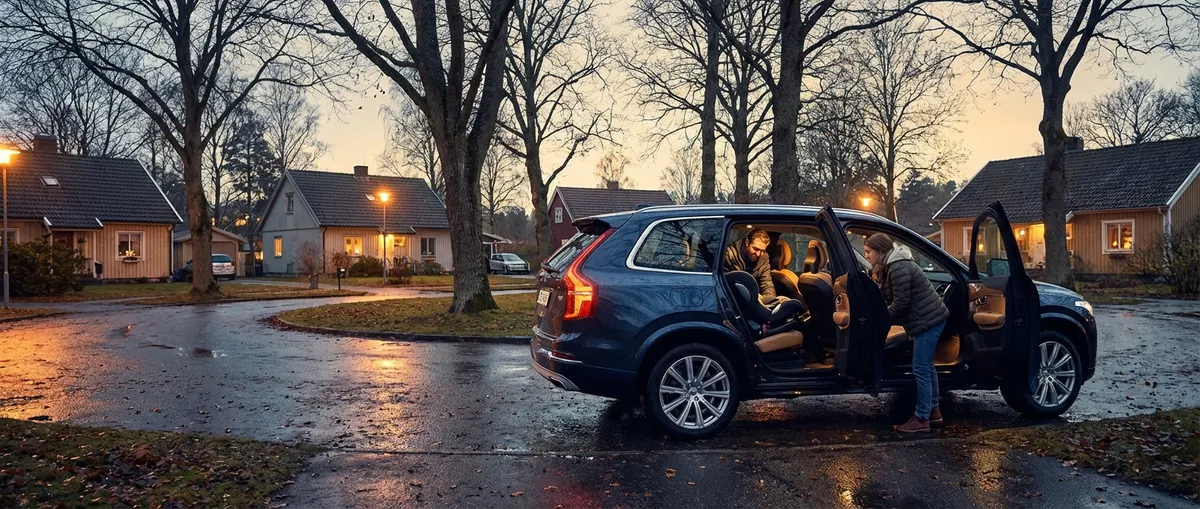
Seating adjustability deserves particular attention. Look for evaluations that mention not just legroom numbers, but how easily the second row slides and reclines with child seats installed, and whether third-row access is intuitive for older children. Critically, the most family-savvy reviews will note if the third row is genuinely an adult-usable space or best reserved for occasional use by younger passengers. Ventilation and visibility across all rows—the availability of side window shades, panoramic roofs that add light without glare, and thoughtful placement of air vents—are subtle yet transformative for family comfort on longer journeys.
Tech That Serves the Family, Not the Other Way Around
Modern SUVs often impress with large touchscreens, sweeping digital dashboards, and ambitious software. For a family, however, technology earns its place only when it feels intuitive, reliable, and quietly supportive.
As you read reviews, seek out commentary on response times, menu simplicity, and how quickly core functions can be accessed without digging through submenus. A family-focused evaluation will highlight whether volume, temperature, and defrost controls are available via physical switches or require tapping shallow icons while driving. Apple CarPlay and Android Auto integration should be described in terms of both stability and ease of connection—does it reconnect seamlessly on every school run, or does it require frequent troubleshooting?
Rear-seat technology deserves scrutiny as well. Look for observations about how easy it is for older children to manage their own charging and media (USB ports, USB-C, and 120V outlets), and whether there is adequate power distribution so devices are not competing for a single port. Over-the-air software updates are increasingly important; insightful reviews will mention whether the manufacturer has a strong track record of improving features and resolving glitches post-purchase, which can extend the feeling of “newness” and relevance throughout your ownership.
Safety That Feels Natural, Not Nervous
Top crash-test scores are essential, but they are only the beginning. The most advanced family SUVs pair strong physical protection with intelligent driver assistance that supports, rather than startles, the driver.
In well-crafted reviews, driver-assistance systems—such as adaptive cruise control, lane-keeping assist, and automatic emergency braking—are assessed for refinement. Systems that constantly ping-pong the vehicle between lane markers or issue frequent false alarms will create fatigue and frustration. Instead, look for descriptions of subtle steering corrections, predictive responses to traffic, and driver-monitoring that feels protective without being intrusive. Pay attention when reviewers praise how consistently these systems behave across highway, urban, and suburban environments.
Rear-visibility and parking assistance are equally important in family life. Reviews that note the clarity of the rear camera (especially in low light or rain), the usefulness of surround-view systems, and the logic of parking sensor alerts are immensely valuable. Sophisticated safety reviews will also mention how easy it is to install and remove child seats using LATCH anchors, whether those anchors are accessible without digging into the seat fabric, and if there is sufficient space for rear-facing seats without forcing the front passengers into an uncomfortable, upright posture.
Cargo, Storage, and the Art of the Unhurried Departure
Cargo space is often reduced to a single cubic-foot figure, but for families, the real question is how elegantly that space can be used. When reading SUV reviews, look for nuanced comments about how the cargo area accommodates actual family items: strollers, sports equipment, grocery runs, and luggage for multi-generational trips.
The most insightful reviewers will describe the shape of the cargo bay—whether it is tall but shallow, low and long, or compromised by wheel arches and sloping rear glass. Pay attention to remarks about loading height, which can make a daily difference when lifting strollers and large bags. Split-folding seats, underfloor storage, grocery bag hooks, side bins for muddy shoes, and a flat load floor when seats are folded all contribute to a more graceful departure routine.
Interior small-item storage is often overlooked but crucial. An SUV that earns consistent praise likely has deep door pockets that can handle large water bottles, a center console that holds both a handbag and charging cables without tangle, and organized solutions for sunglasses, toll transponders, and key fobs. Some of the best family-oriented SUVs provide clever hidden storage for valuables when parked at sports fields or shopping centers—if a review calls out such features, it is usually evidence of a design team that truly understands family life.
Conclusion
For families seeking a premium SUV experience, the difference lies in details that standard reviews often skim over: how an SUV rides when fully loaded, how naturally its tech integrates with daily life, whether its safety systems feel like a calm co-driver, and how intelligently its cabin and cargo space support real routines. By reading reviews with these five insights in mind—ride composure, cabin usability, technology behavior, safety refinement, and practical storage—you gain a more honest picture of how a vehicle will feel not on a test drive, but in your driveway, years from now.
At Family SUV Review, we believe that the finest family SUVs are those that quietly remove friction from every journey. When you find a model that earns praise across all these nuanced dimensions, you are not simply choosing an SUV; you are curating a more graceful way for your family to move through the world.
Sources
- National Highway Traffic Safety Administration (NHTSA) – 5-Star Safety Ratings - Official crash-test ratings and safety information for SUVs and other vehicles
- Insurance Institute for Highway Safety (IIHS) – Ratings & Research - Independent crashworthiness, crash-avoidance, and headlight evaluations
- Consumer Reports – Guide to Car Safety Features - In-depth explanations of modern driver-assistance and safety technologies
- Edmunds – Car Interior and Cargo Space Explained - Overview of how reviewers assess interior comfort and cargo practicality
- J.D. Power – Vehicle Dependability and Owner Satisfaction Studies - Data-driven insights into long-term quality, reliability, and real-world owner experiences
Key Takeaway
The most important thing to remember from this article is that this information can change how you think about SUV Reviews.