For many families, the right SUV is less about spectacle and more about how gracefully it handles the texture of real life—school runs, weekend escapes, late-night airport pickups, and everything in between. The most rewarding features are rarely the loudest ones in the brochure; they’re the quiet, thoughtful touches that make every journey feel more composed, more organized, and more humane.
This is a closer look at five refined, often-overlooked family features that genuinely elevate the experience of living with an SUV every day.
1. Cabin Architecture That Respects Every Passenger
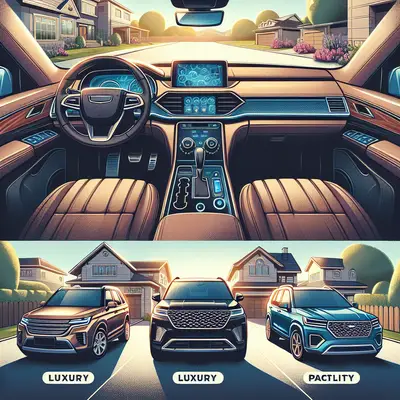
Beyond seat counts and cargo figures, the true test of a family SUV’s interior is how intelligently the space is organized. Sophisticated cabin architecture anticipates how different family members actually use the vehicle—from a toddler in a rear-facing seat to a teenager with a laptop and noise-cancelling headphones.
Look for a second row that slides and reclines independently, allowing you to balance legroom between rows without compromising comfort. A third row that sits slightly higher (a “stadium” arrangement) gives children a better view forward, helping reduce motion discomfort on longer journeys. Wide door openings and a low step-in height make buckling car seats far less contorted, while sculpted front seatbacks create crucial knee room for second-row passengers.
Subtle details matter: thoughtfully placed grab handles make entry and exit more graceful for grandparents, and a flat rear floor (or minimal center tunnel) keeps the middle seat from feeling like a penalty box. When executed well, the cabin doesn’t just accommodate your family; it feels purpose-built for it.
2. Intuitive Access to the Third Row Without a Negotiation
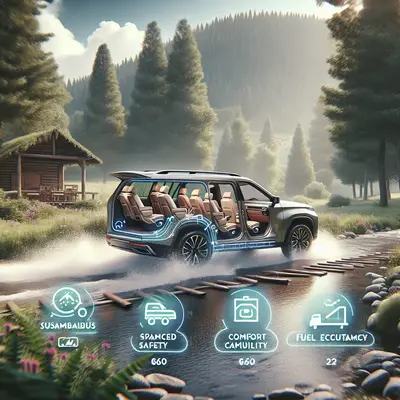
For families who routinely use all three rows, ease of access is more than a convenience—it’s a daily ritual that can either feel seamless or frustratingly theatrical. The most family-friendly SUVs treat third-row access as a priority, not an afterthought.
Refined designs allow the second row to tilt and slide forward with a single, easily reachable lever or button, even with a child seat installed (in some models, when the seat is attached via LATCH to the outboard position). This spares you from repeatedly uninstalling and reinstalling child seats just to let someone into the back. Generous foot clearance under the tilted seat, combined with wide-open door apertures, makes it realistic for older children and adults to reach the third row without contorting.
Thoughtful models often pair this with rear doors that open to nearly 90 degrees, easing both third-row access and car-seat loading. A well-designed third-row experience is felt in small ways: less arguing about who has to “climb in first,” fewer awkward twists for parents, and a cabin flow that feels almost choreographed.
3. Acoustic Refinement as a Form of Family Calm
Many families equate safety with crash ratings and driver-assistance technology, but acoustic comfort plays a quieter, complementary role in overall wellbeing. A calm cabin reduces fatigue for the driver and makes it easier to converse, soothe a child, or simply enjoy a shared playlist without raising your voice.
Advanced SUVs increasingly employ laminated glass in the front (and sometimes side) windows, extensive sound-deadening in the floor and firewall, and active noise cancellation technology to counteract low-frequency road and engine sounds. Combined with well-tuned suspensions and aerodynamic mirrors that reduce wind noise around the A-pillars, these measures create a cocoon-like atmosphere that feels distinctly premium.
On longer drives, this refinement shows up in subtler ways: children nap more easily, conversations aren’t swallowed by background roar, and arriving at your destination feels less exhausting. When test-driving, pay attention not just to how the SUV accelerates and corners, but how naturally you can hold a conversation in the second and third rows at highway speeds.
4. Rear-Zone Technology That Serves, Not Distracts
Screens and connectivity are now expected, but the most sophisticated implementations support family life without overwhelming it. The goal is a balanced ecosystem of power, connectivity, and control that works just as well on a five-minute school run as it does on a six-hour road trip.
Seek out multiple USB-C and USB-A ports distributed across all three rows, ideally accompanied by a household-style 110V outlet for laptops or camera chargers. Rear climate zones that allow passengers to fine-tune their own temperature lend a sense of autonomy—particularly for older children and teens. Integrated rear sunshades and tinting can make screens easier to see while also protecting young passengers from glare.
For families who prefer not to rely on in-seat entertainment screens, robust wireless smartphone mirroring (Apple CarPlay and Android Auto), strong in-car Wi-Fi, and well-placed tablet mounts can create a more flexible, future-proof solution. The most elegant systems are those that let the driver maintain essential control—limiting certain functions while moving—without turning every journey into a negotiation over settings.
5. Intelligent Cargo Solutions for Real-Life Logistics
A family SUV’s cargo space is more than a number on a specification sheet; it is the stage on which your daily life is loaded, stacked, folded, and occasionally spilled. Designs that feel quietly luxurious are those that make this process nearly effortless.
Pay attention to how the third row folds—fully flat floors (without awkward ridges) make groceries and luggage stack neatly, while power-folding seats save time when you’re juggling children, bags, and keys. A hands-free liftgate, triggered by a subtle foot motion under the bumper, quickly becomes indispensable when your hands are full.
Thoughtful touches like adjustable load floors (to create a hidden storage compartment or a flat load surface), grocery hooks to prevent bags from tumbling, and side cubbies for fragile items are all indicators of a brand that understands family logistics. Some models even offer cargo-area controls for folding the rear seats, allowing you to transform the space without walking around the vehicle or reaching awkwardly from the second row.
In everyday use, these details translate into less reshuffling at the curbside, faster departures for weekend trips, and a cargo area that feels organized rather than perpetually improvised.
Conclusion
The most rewarding family SUVs are not defined solely by headline figures or dramatic styling, but by the way they integrate into the subtle routines of family life. Consider how cabin architecture treats every passenger, how effortlessly the third row can be reached, how peaceful the cabin remains at speed, how respectfully the technology is woven throughout, and how intelligently the cargo space adapts to your needs.
When you evaluate these understated qualities with the same seriousness as safety scores and engine specifications, you begin to identify vehicles that do more than transport your family—they quietly enhance the way you move through the world together.
Sources
- National Highway Traffic Safety Administration (NHTSA) – Car Seat and Child Safety - Guidance on child seating positions, LATCH use, and considerations that influence second- and third-row design
- Insurance Institute for Highway Safety (IIHS) – Ratings for Vehicle Size and Safety - Context on how vehicle size, structure, and occupant space contribute to family safety
- U.S. Department of Energy – Fuel Economy Guide for SUVs - Official data on SUV fuel economy, helpful when balancing family space with efficiency
- Edmunds – Guide to Third-Row Seating in SUVs - Comparative insights on third-row comfort and access across modern SUVs
- Consumer Reports – How to Reduce Interior Noise in Your Car - Explains noise sources and how vehicle design and materials contribute to a quieter cabin
Key Takeaway
The most important thing to remember from this article is that this information can change how you think about Family Features.